Some people draw only in complete silence, some can’t without music, and some put on a podcast and draw along to the conversation. The Neurojournal course suggests taking care of the atmosphere — putting on some pleasant music — and includes a playlist for sessions. But there’s no right answer: it depends on you, and on which step of the technique you’re on.
Here’s what each option changes, and how to match the sound to the session.
Silence
What it gives you: nothing pulls you away. You can hear the pen scratching on paper, and that sound becomes part of the session.
Good for: people distracted by any sound; first drawings, when you want to focus on every step.
Downside: true silence is rare at home, and random noises can bother you more than music would.
Instrumental music
What it gives you: a backdrop that doesn’t compete with your thoughts for attention. The music’s tempo quietly passes into your hand: a slow melody, a slow line.
Good for: most people. It’s also what the course suggests.
Tip: for lines, something loose and unrhythmic, so your hand doesn’t start “keeping time” with even waves. For rounding, calm and steady music: it’s a long step, and a monotonous backdrop suits it.
The course has a playlist for sessions — the link and a QR code are in the lesson on tools.
Music with lyrics
What it gives you: mood and energy, especially with songs you love.
Downside: words pull attention toward themselves, and the line sometimes gets hurried with lyrics playing.
When it works: for color — the easiest step, when you don’t have to concentrate on each movement.
A podcast or audiobook
What it gives you: a chance to pair the session with something you’ve been meaning to listen to.
Downside: your attention splits in two. In that mode, a free line easily slides into autopilot, and rounding into a rush.
When it works: for coloring a big page, or for rounding templates, when your hands are busy and your head is free.
Matching sound to the step
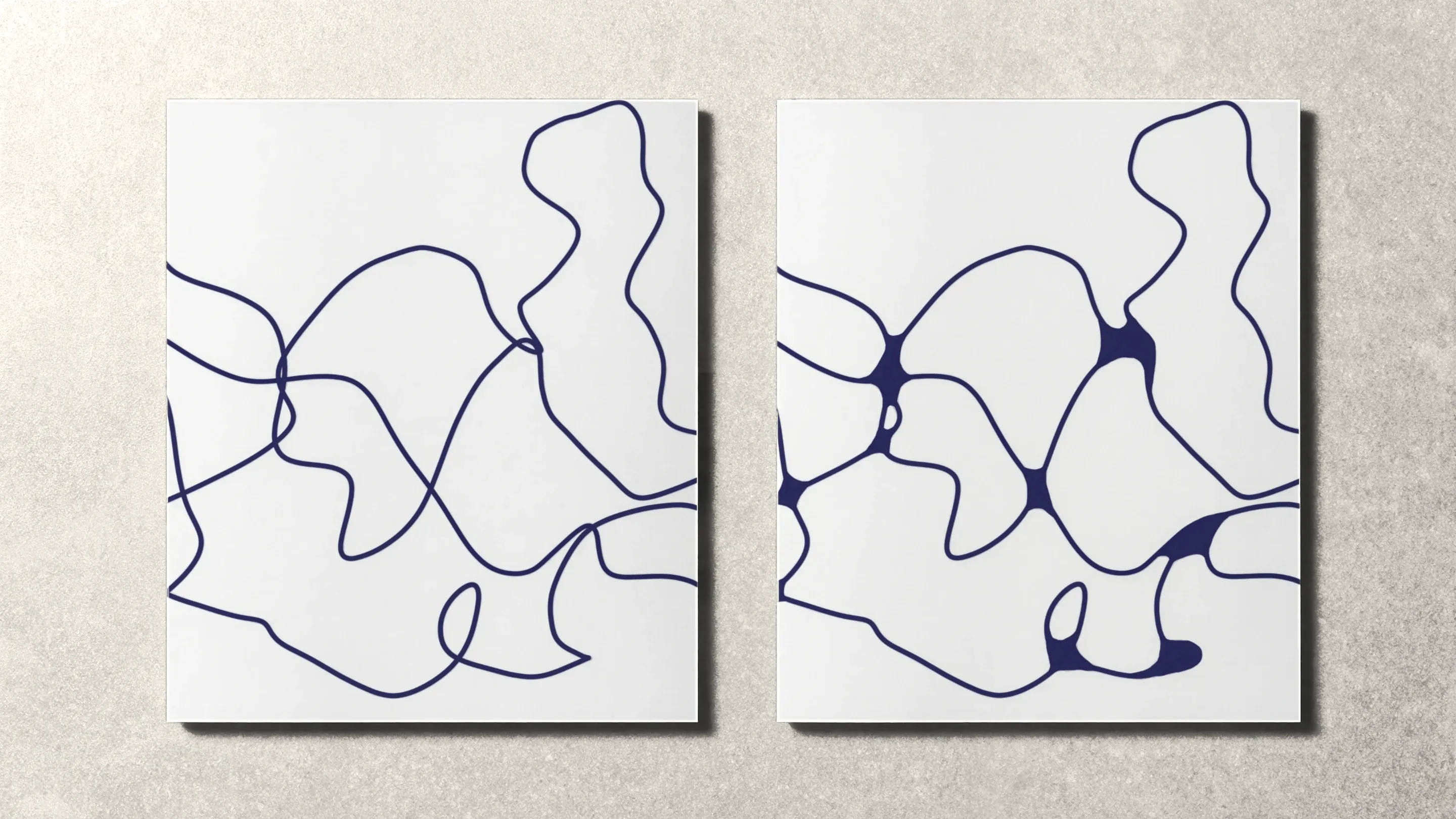
- Lines — silence, or loose music without a beat.
- Rounding — calm instrumental music, or silence.
- Color — anything: favorite songs, a podcast.
- An algorithm — silence or a quiet backdrop: there are many steps to keep track of.
Finding what works for you
- Try three evenings in a row — in silence, with instrumental music, and with a podcast.
- Note it in your journal: what you drew with, and how the session went.
- Compare the drawings. Sometimes the difference even shows on the page: the pace of the lines, the care in the rounding.
What comes next
How to set up your space is in A Drawing Corner at Home, and how to choose your time of day is in Morning or Evening. The lesson on tools, with the playlist, is in “The alphabet” module of the Neurojournal course; the first module is open without an account — start there.