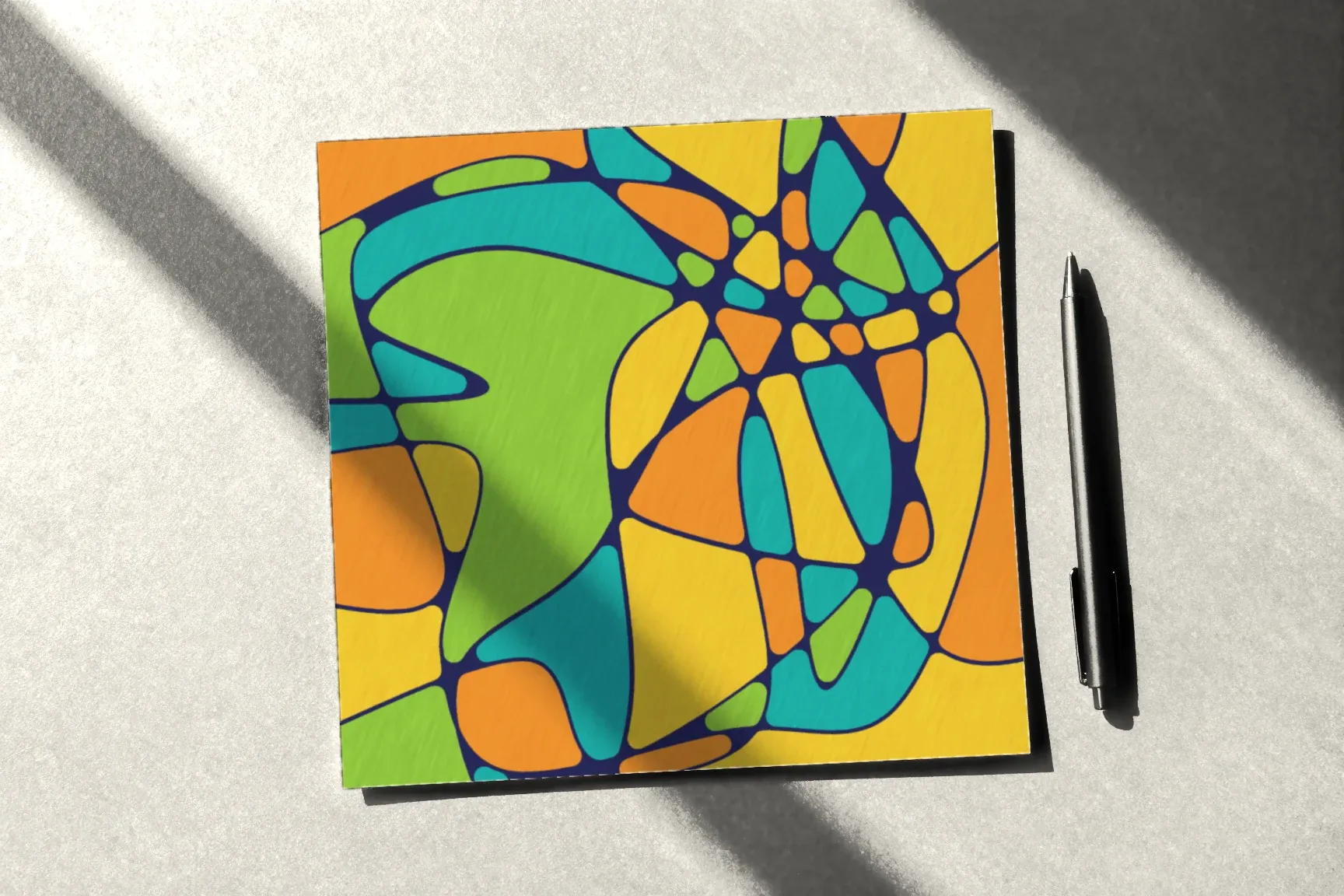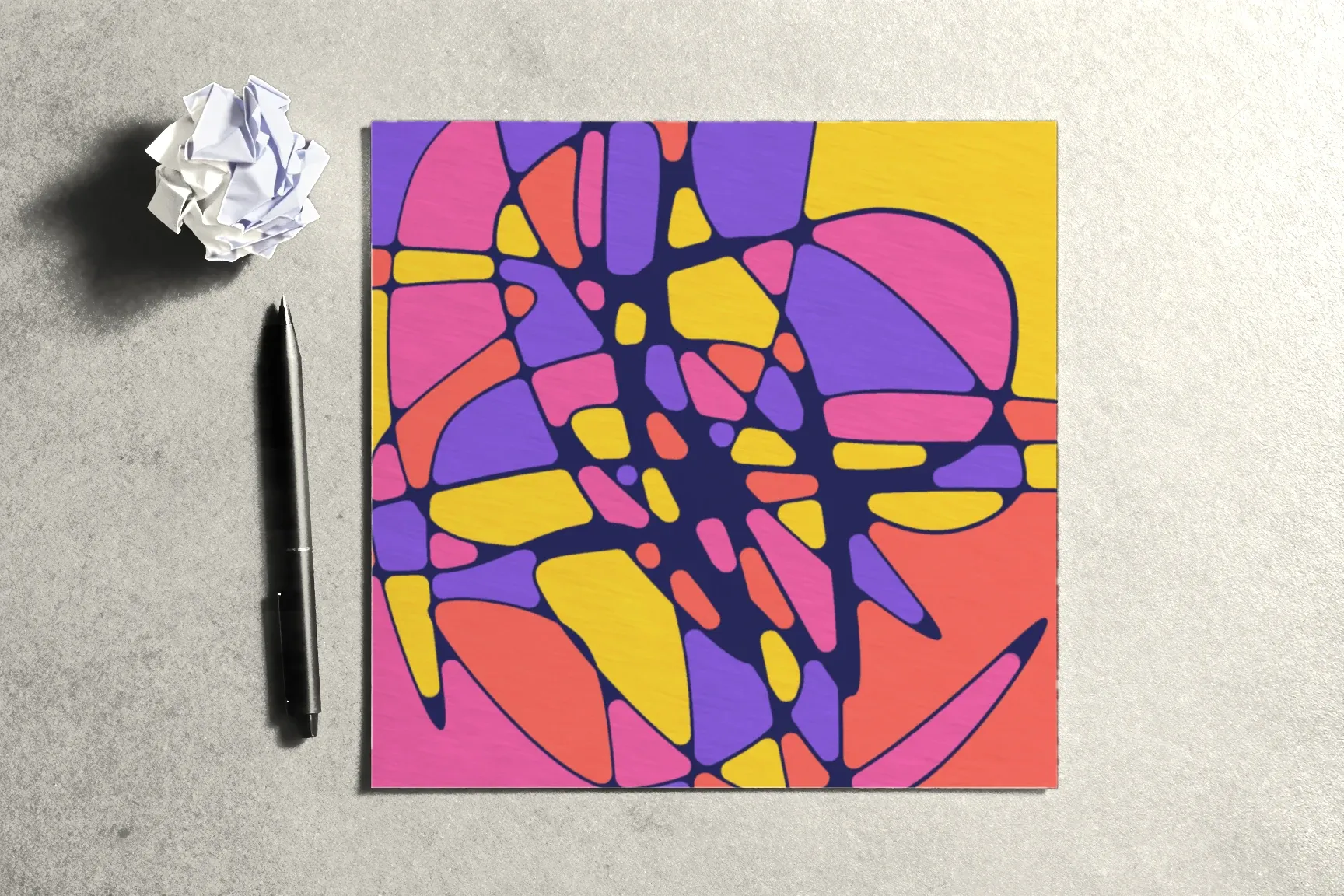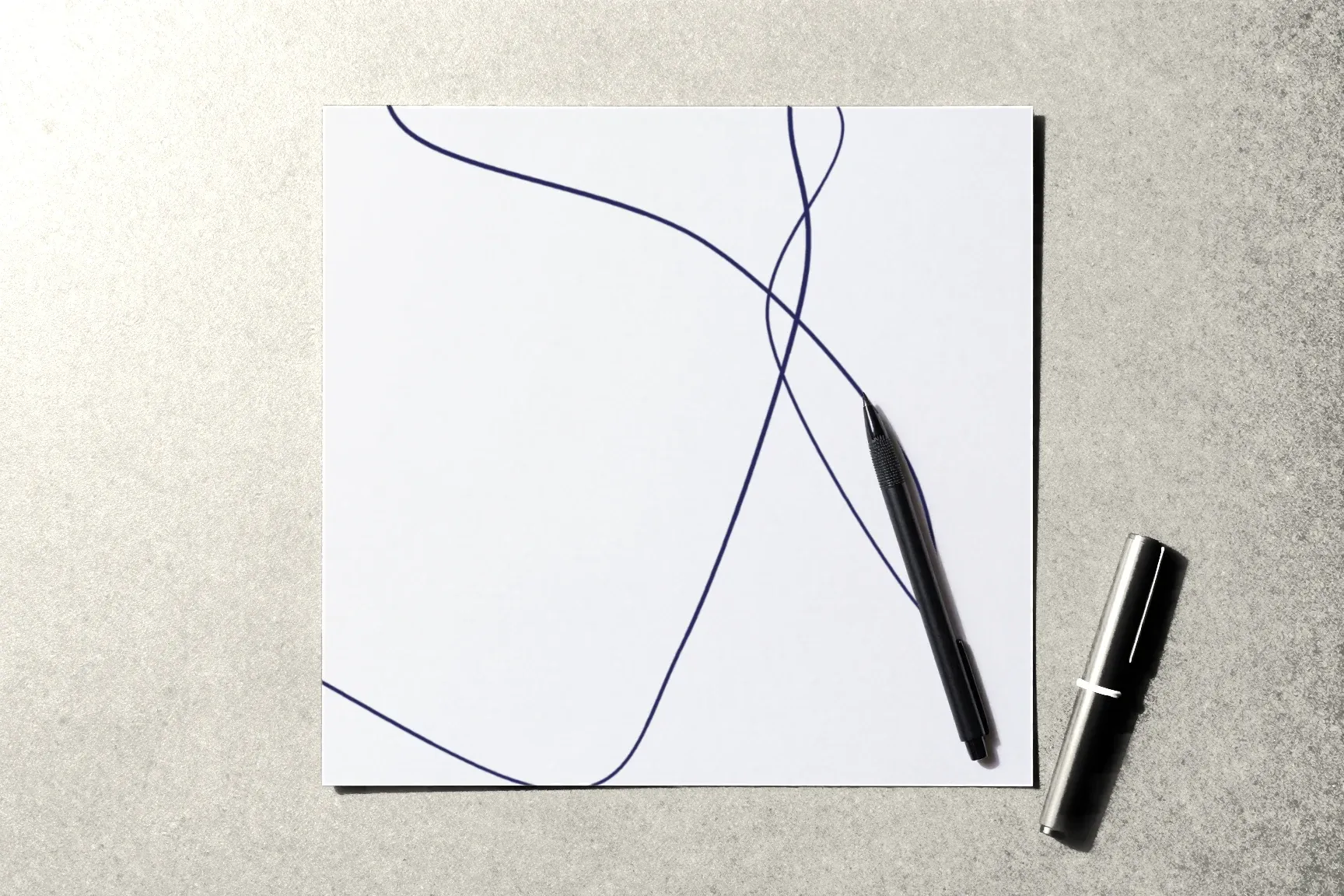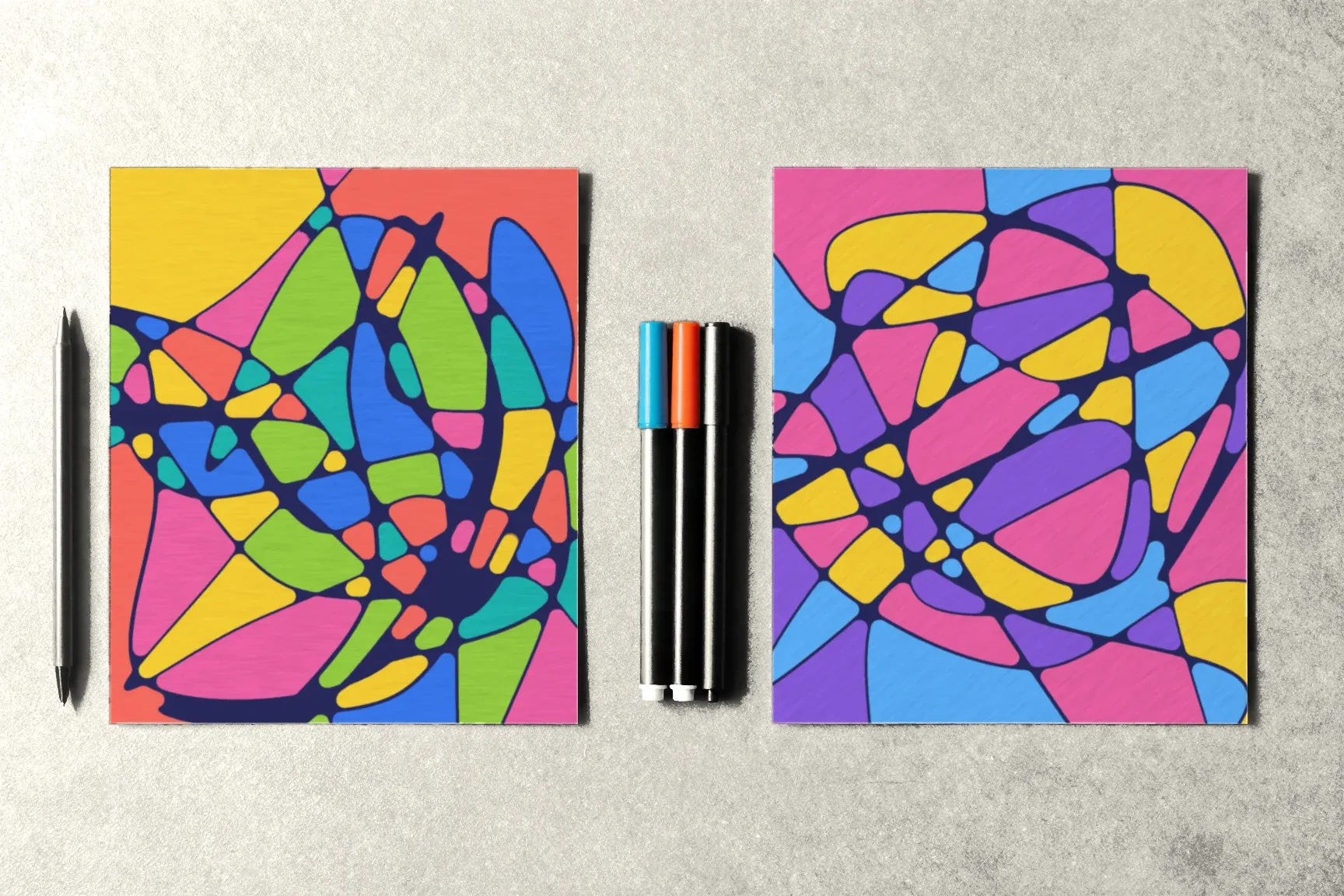
Transformational drawing is usually something you do on your own: a sheet of paper, a pen, some quiet. But it also makes for a shared evening. Nobody needs to know how to draw, so everyone at the table starts even — the person who draws often and the one holding a marker for the first time in twenty years.
Here are five formats for an evening for two or a small group.
1. One page for two
How: take turns drawing free lines on one sheet — one line each. Then round the crossings together: each of you takes half the page, or you alternate. Finish with color, also taking turns.
What you get: a drawing that shows two hands — different lines, a different pace of rounding. It’s fun to look at afterward and figure out who did what.
Tip: use a bigger sheet than usual — 11 × 17 — so there’s room for both of you.
2. Swap pages
How: each person draws lines on their own sheet. Then you trade: you round and color the other person’s lines.
What you get: two drawings, each with one person’s lines and the other’s rounding and color. It’s interesting to see how someone else’s hand “read” your lines.
3. A shared palette
How: each of you draws your own page from start to finish, but you choose the colors together — one palette for everyone.
What you get: a set of different drawings tied together by color. They look great hung side by side.
4. One algorithm for everyone
How: pick an algorithm from the course and work through it at the same time, step by step: someone reads the next step aloud, and everyone does it.
What you get: several drawings made with the same steps, yet completely different. It shows clearly that a free line can’t be repeated.
5. Drawing with kids
How: the child draws the free lines — usually easy and fun for them. The adult helps with rounding, which takes patience. Color together.
Tips:
- for kids, use washable water-based markers;
- tape the page to the table so it doesn’t slide around;
- the rounding doesn’t have to be perfect: the shared process is the point.
How to set up the evening
- Get everything ready ahead of time: paper, a pen for each person, a shared set of markers in the middle.
- Agree on a format — one of the five above.
- No grading. Nobody says “yours is prettier” or “mine didn’t work.” The drawings are different — that’s the whole idea.
- At the end, lay the pages side by side and look at them together.
- Take a photo — a shared drawing is a nice one to have in your journal.
How long it takes
One shared page takes 40–60 minutes. With a bigger group, go for shorter formats: swapping pages, or a shared palette on small sheets.
What comes next
How to spend a first evening with the technique is in How to Start Drawing as an Adult, how algorithms work is in Themed Algorithms, and how to work on a big sheet is in Going Big. The first module of the Neurojournal course is open without an account — start there.