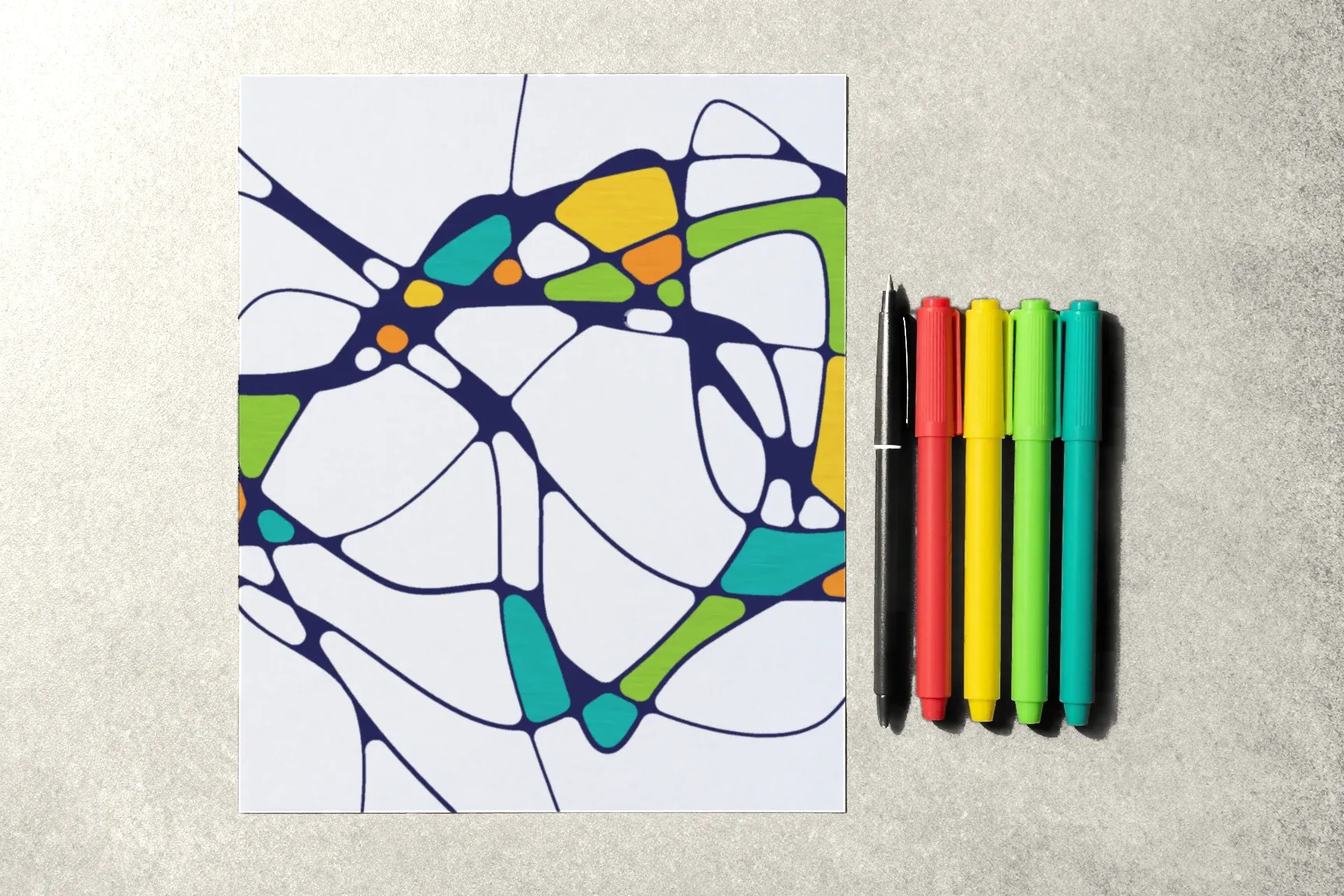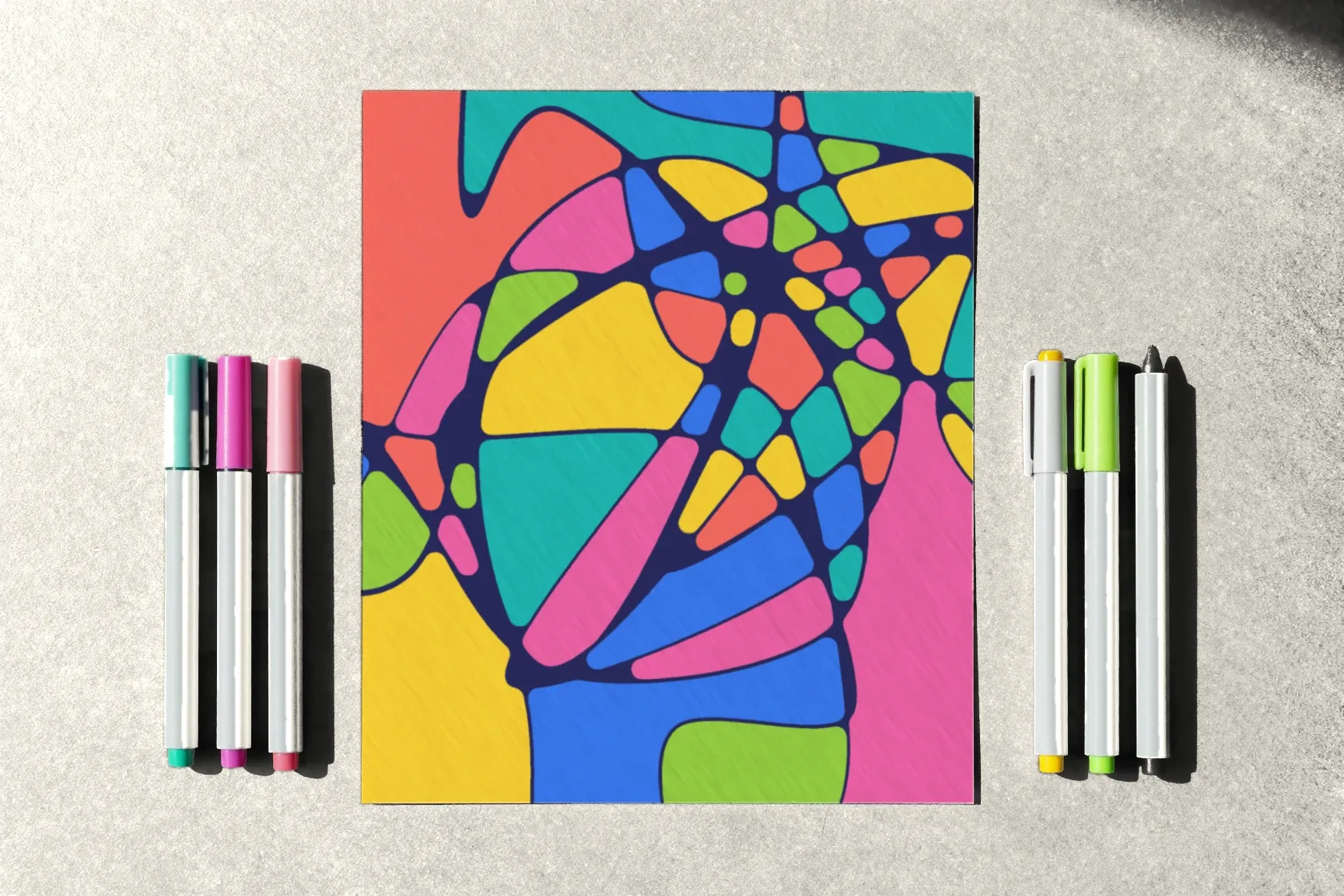
Color is an optional step in transformational drawing, but it’s the step where the question of supplies comes up most. Felt-tip pens from the kids’ drawer, alcohol markers from the art store, watercolor brush markers — they all add color, but in very different ways.
Here’s how the main types differ, how each behaves in the cells of a drawing, and where to start without wasting money.
Water-based felt-tip pens
Ordinary water-based markers — the kind almost every home has.
- Fill: bright, but on a large cell you often see streaks from each stroke.
- Paper: going over an area twice can pill thin paper; heavier paper holds up better.
- Bleed-through: less than alcohol markers.
- The black line: a pigment fineliner won’t smear under them; a gel pen might.
- Price: the lowest.
Best for: first drawings and small cells, where streaks don’t show.
Alcohol markers
Alcohol-based markers, often double-ended with a broad chisel tip and a fine or brush tip.
- Fill: smooth and streak-free, especially if you work quickly before the edge dries.
- Blending: colors flow into each other easily, so you can shade a cell from one tone to another.
- Bleed-through: strong. They go through even heavy paper, so put a backing sheet underneath.
- Smell: noticeable. Draw in a ventilated room.
- The black line: pigment fineliners hold; some gel pens and inks dissolve.
- Price: higher, but many alcohol markers can be refilled.
Best for: people who love color and large cells, and don’t mind using heavier paper.
Watercolor brush markers
Water-based markers with a brush tip; you can blend the color with a damp brush.
- Fill: soft; on a large cell it can look blotchy unless you blend it.
- Effects: watercolor-like gradients when you go over them with a wet brush.
- Paper: blending needs heavy paper, ideally watercolor paper.
- The black line: a water-based fineliner will run when wet; use a pigment one.
Best for: people who want soft, painterly color and enjoy experimenting.
What to start with
Start with what you have: ordinary felt-tips are enough to find out whether you enjoy the color step. If you do, and you want smoother fills, that’s when to try alcohol markers. You don’t need a full set — six to eight colors bought individually will tell you whether they’re for you.
How many colors you need
- 6–8 is enough for most drawings. A single page rarely needs more.
- 12–24 is a comfortable range for the long run, with both bright and muted shades.
- 60 or more is fun, but choosing gets harder, and many colors will sit unused.
A few colors you love beat a big set bought “just in case.”
Make a swatch card
The color on the cap and the color on paper often differ. On a separate sheet, make a small square with each marker and label it. A swatch card makes it easy to pick a palette before a drawing: set it next to you and see right away which colors work together.
If you have both felt-tips and alcohol markers, make a card for each — on the same paper they’ll give you different shades.
Common problems and fixes
- Streaks. Stroke in one direction and don’t go back over an area that has dried.
- Color ran past the line. The black line hides a small overlap; if the spot is big, round its edge off as part of the drawing.
- The color turned muddy. This happens when one water-based color goes over another that’s still wet. Let the first dry.
- Markers drying out. Snap the cap on until it clicks, and store double-ended markers horizontally.
What comes next
How to spread colors across the page and fill the cells is in How to Color Your Drawing, and which black pen keeps the line crisp under color is in Which Pen to Choose. The Neurojournal course has a lesson on colors in “The alphabet” module. The first module is open without an account — start there.