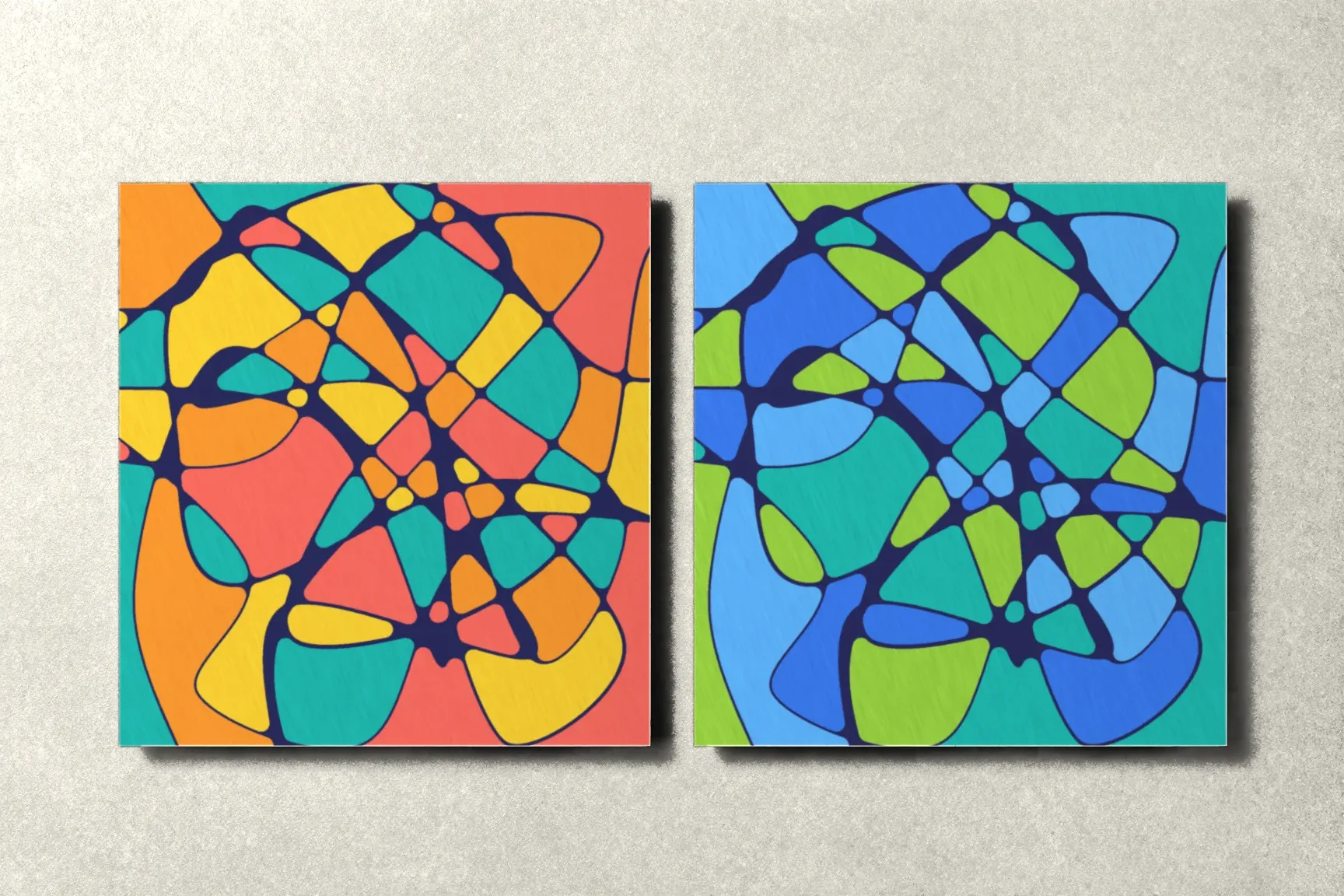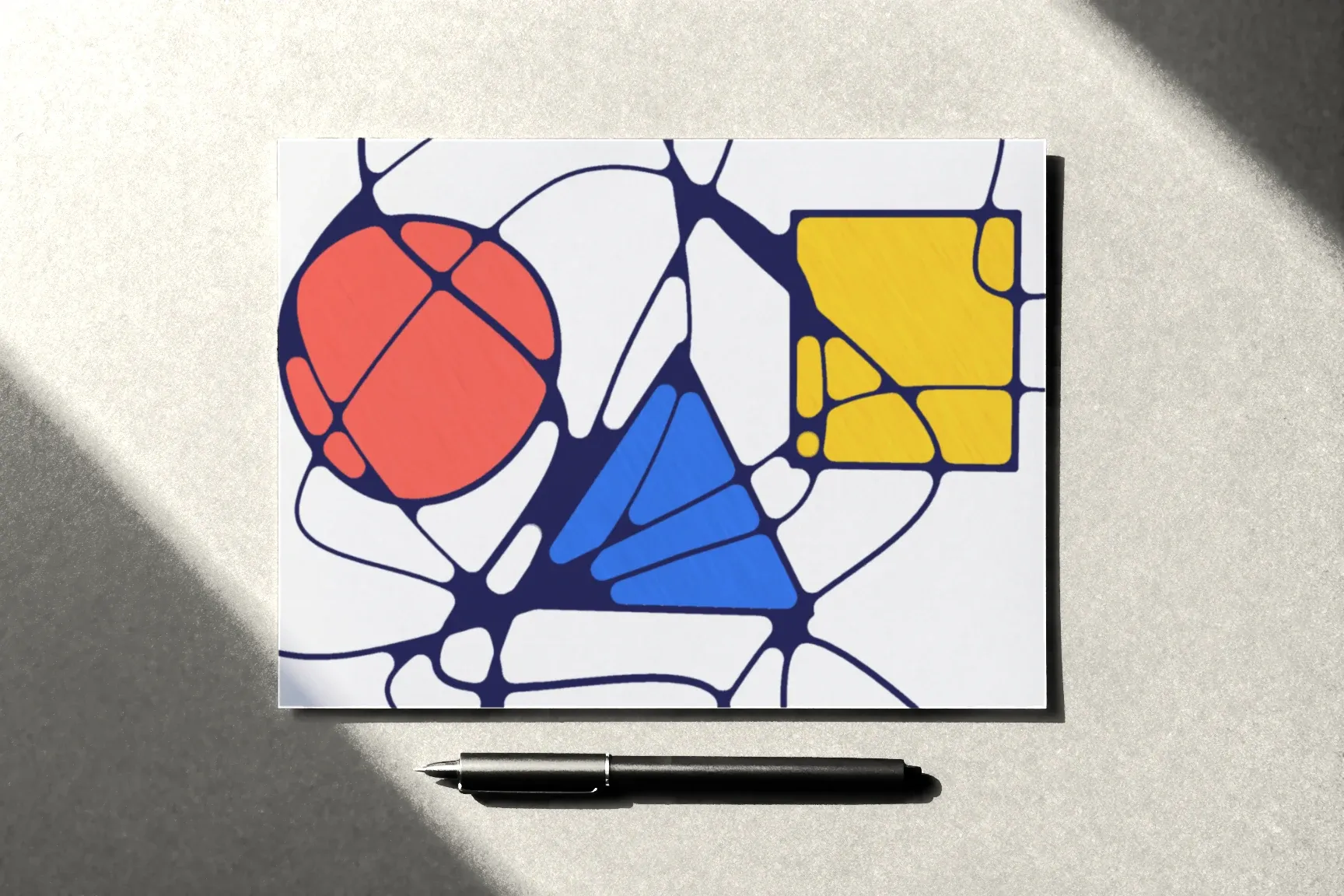
Rounding is the main step of transformational drawing: the sharp corners where lines cross become smooth curves. And many people, seeing a drawing before and after, say the second one is “nicer.” Is that just taste? Perception researchers have long studied which shapes people prefer — curved or angular.
Here’s what that research shows, and what it doesn’t.
Bar and Neta’s experiment
In 2006, the researchers Moshe Bar and Maital Neta published a paper in Psychological Science with a telling title: “Humans Prefer Curved Visual Objects.” Participants were shown images of objects and abstract shapes in two versions — with sharp angles and with smooth curves. On average, the curved versions were liked more.
The authors suggested that sharp contours might be read as a hint of potential threat, but that explanation is a hypothesis and is still debated.
Architecture
In 2013, a group led by Oshin Vartanian published a study in PNAS on architectural interiors. Participants rated photos of rooms, and spaces with curved lines were more often judged beautiful than spaces with straight edges and corners.
The bouba/kiki effect
Back in 1929, the psychologist Wolfgang Köhler showed people two shapes — one rounded, one spiky — and asked which was “maluma” and which was “takete.” Most named the rounded one “maluma.” Later the experiment was repeated with “bouba” and “kiki” (Ramachandran and Hubbard, 2001), with the same result across languages. That’s not about preference so much as about roundness and sharpness having a “character” in our perception — one we even link to sounds.
What this research doesn’t show
It matters not to claim more than the studies do.
- The effect is moderate, not absolute. Not everyone prefers curves, and not always. Other studies have found that preferences depend on the person, the context, and what exactly is shown.
- It’s about how images are perceived, not about well-being. These studies measured whether people liked a picture, not how the mood or health of someone drawing changes.
- They say nothing about drawing. Participants looked at finished images; they didn’t round any lines themselves.
So this research doesn’t prove that rounding lines is “good for you.” It only shows that a liking for smooth shapes is a common feature of perception, not just personal taste.
Where rounding fits
In transformational drawing, rounding is a step of the technique: that’s how it’s built. But it’s interesting to see that step echo what psychologists notice about perception — a drawing with smooth joints looks more unified and more pleasant to many people than a spiky web of lines.
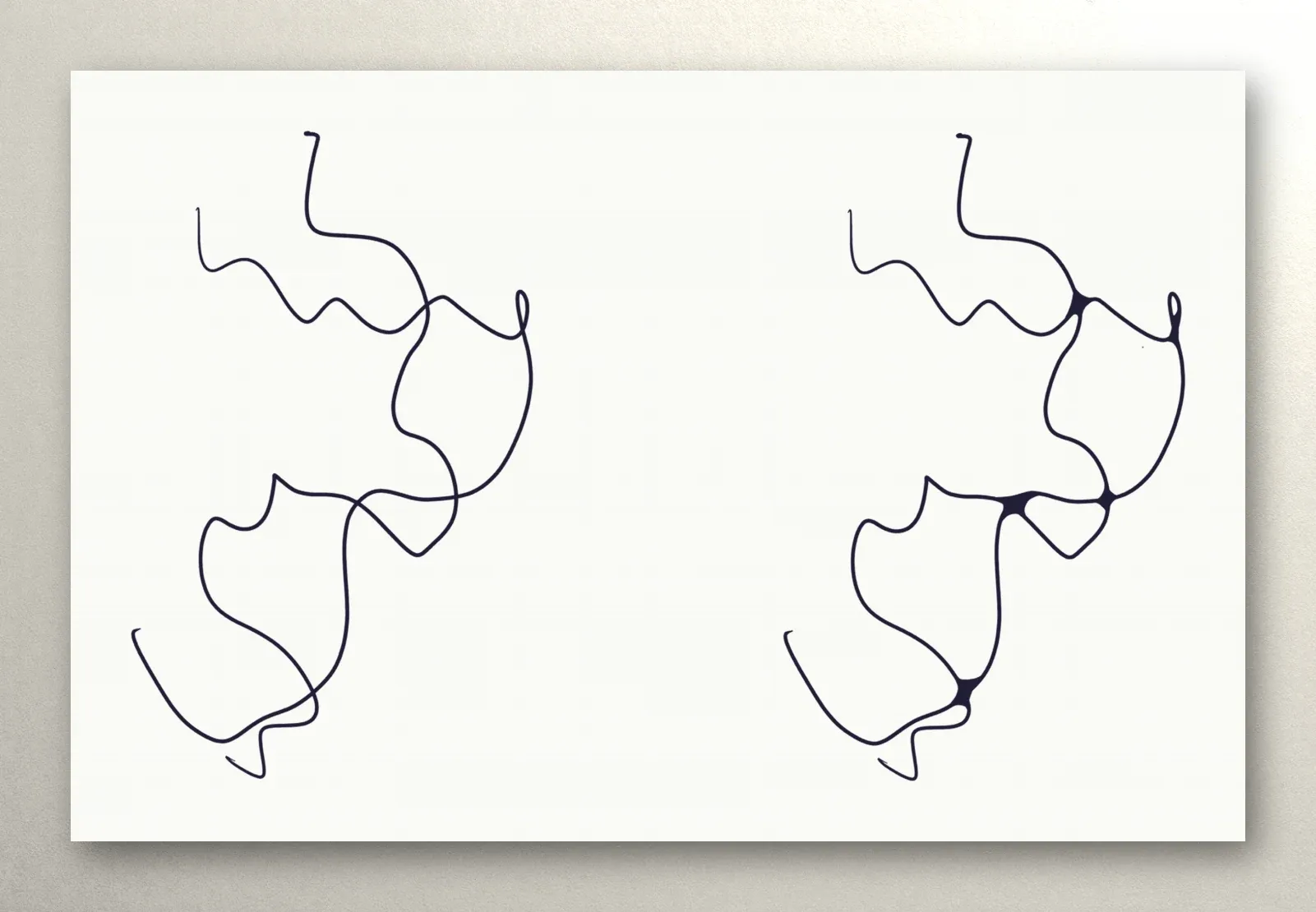
Try it on yourself: look at your drawing before rounding and after. Which do you like better — and why?
What comes next
How to round the crossings is in Rounding the Intersections, Step by Step, and how artists have thought about the line is in The Line in Art. The first module of the Neurojournal course is open without an account — start there.