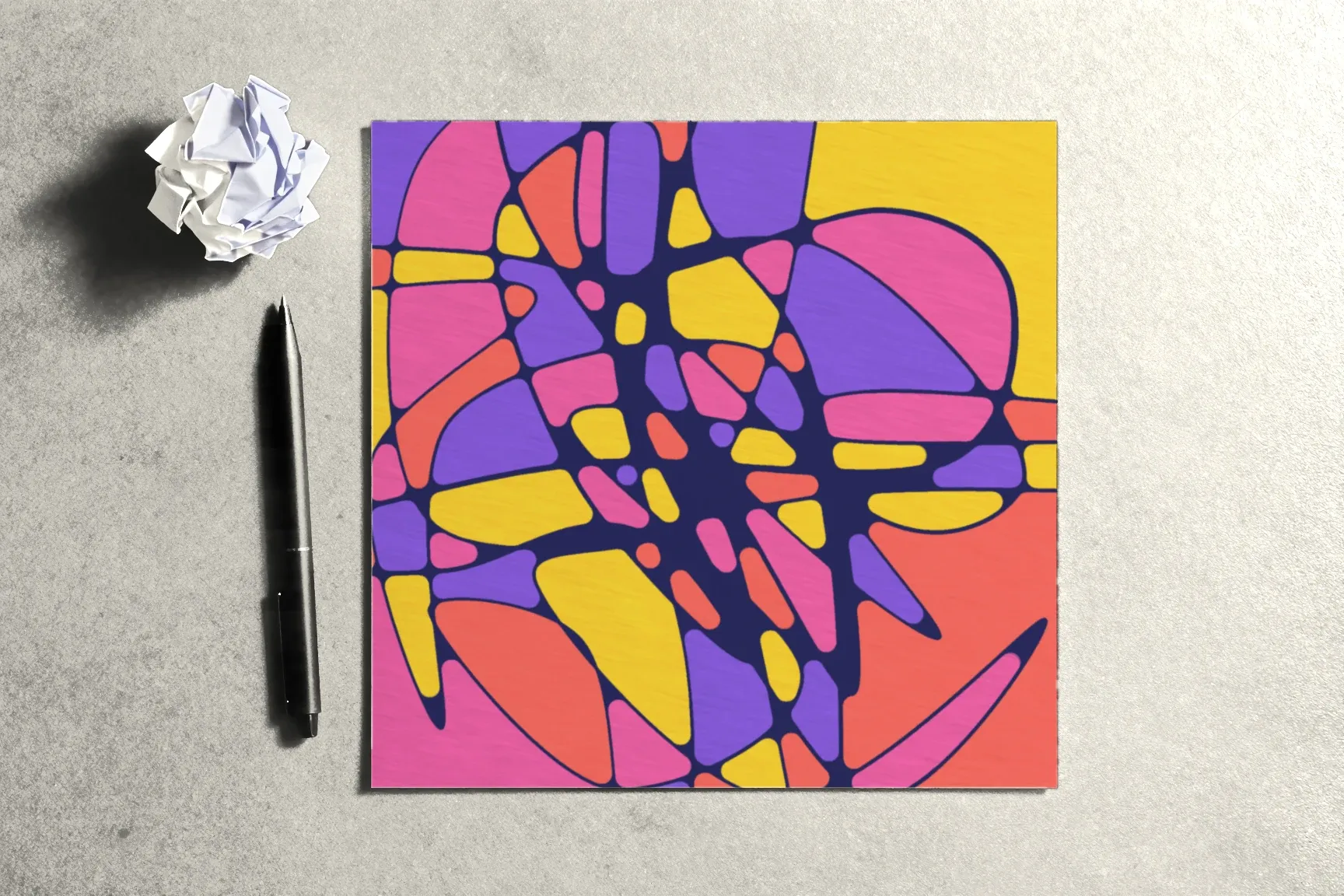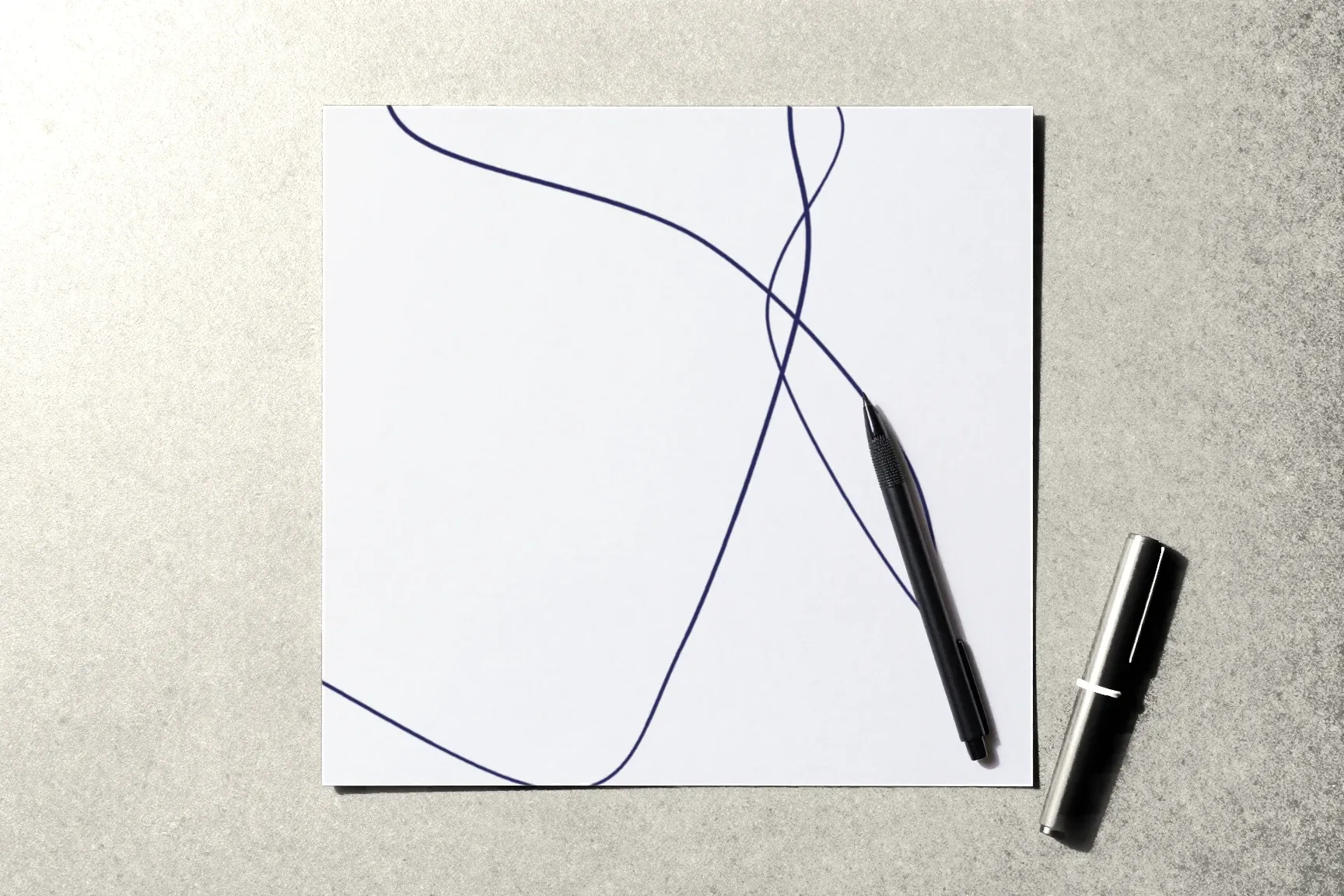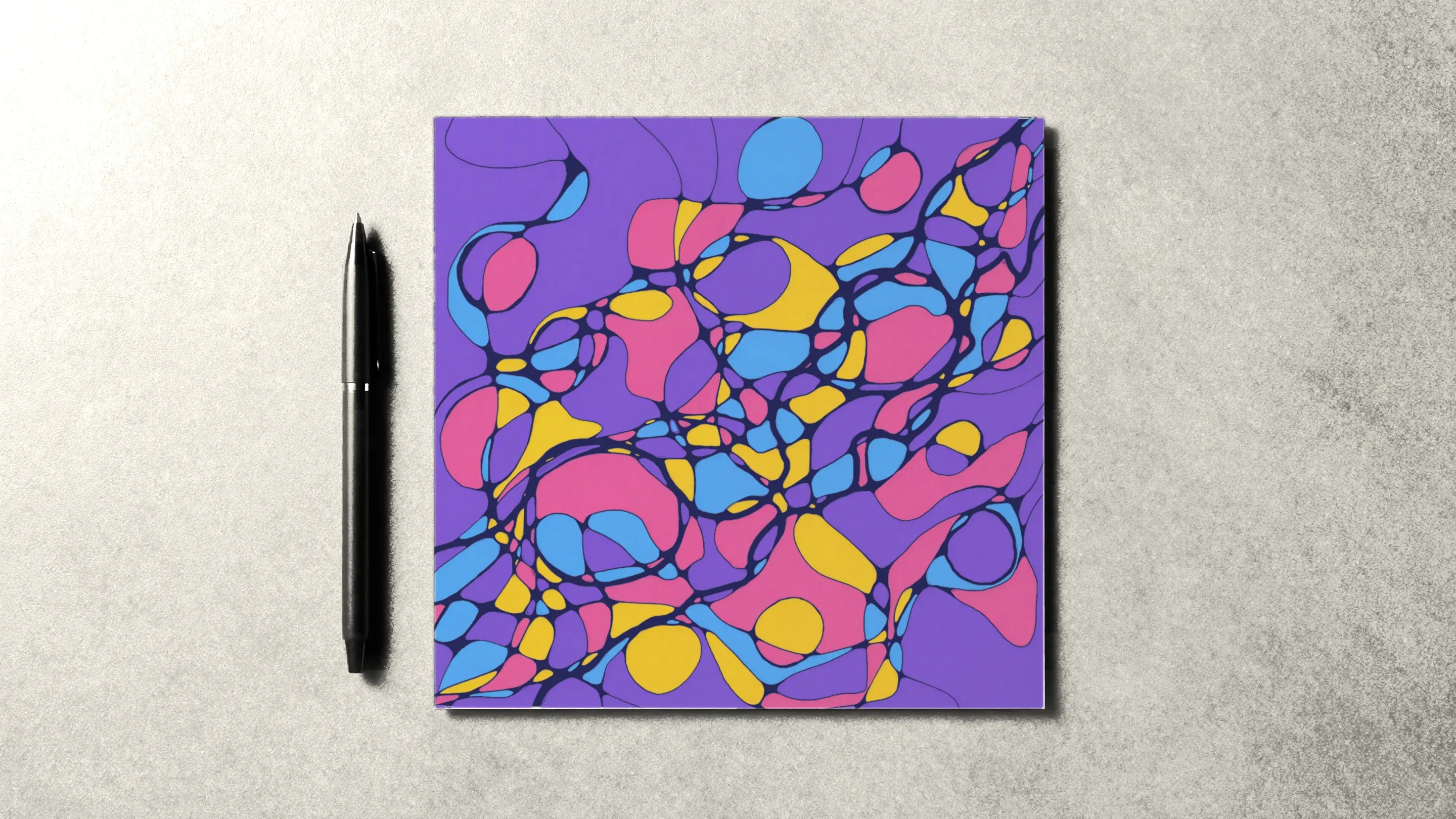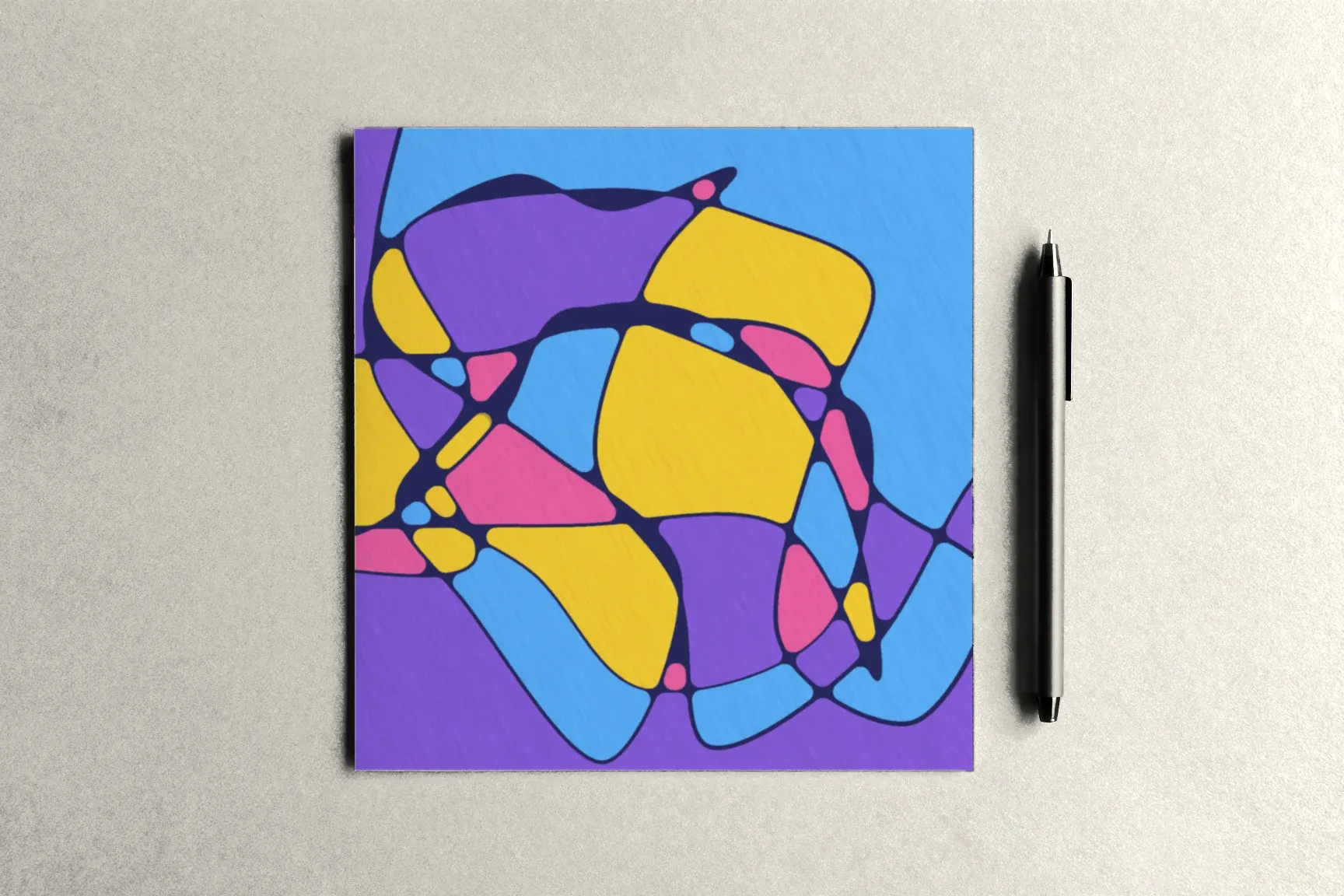
Most of us grew up believing drawing has a goal: make it look like the thing, make it pretty, make it look like an artist did it. That’s exactly why so many people don’t draw — the result seems bound to be bad, so why start? Transformational drawing works differently. There’s no object to depict and no model to compare against. There’s only the process: the line, the rounding, the color.
Here’s why the technique has no “correct picture,” where the habit of grading your drawings comes from, and how to move your attention from the result to the process.
There is no correct picture
The course says it plainly: there’s no right or wrong way to draw, and the focus is on the process itself rather than on an artistic result. That isn’t just a reassuring phrase; it’s built into the technique:
- the line is free — it doesn’t depict anything, so it can’t “not look like it”;
- rounding has one rule — smooth every corner — and you can follow it on any page;
- color is optional, and the palette is a matter of taste.
So a “failed” drawing in the usual sense doesn’t exist here. There are pages you like less, and that’s a very different thing.
Where the urge to grade comes from
The habit of judging our own drawings starts early: grades in art class, comparisons with the kids who “could draw,” other people’s work in your feed. By the time an adult sits down with a sheet of paper, the inner critic is ready: “crooked,” “wrong,” “other people do it better.”
Noticing that voice is half the work. It won’t disappear in one evening, but you can move it to the back.
Five ways to switch to the process
1. Watch the pen, not the drawing
While you draw a line, watch the tip of the pen: where it’s going, how it changes direction. When your attention is on the movement, there’s none left over for judging the whole page.
2. Give yourself permission to make it ugly
Before you start, tell yourself this page can come out any way at all. Many people find it helps to draw a deliberately clumsy first line on scrap paper — and the fear of “ruining” something goes away.
3. Don’t show it right away
Wanting to show a drawing to someone turns the session into preparation for a review. If you want to share, do it later, once the page has sat for a while.
4. Compare only with your own pages
The only comparison that makes sense is with your own earlier drawings. Not “is it good?” but “what changed?” — a bolder line, smoother rounding, different colors.
5. Write, don’t grade
After a drawing, write down a few words — not “good” or “bad,” but what happened: what you drew, where you lingered, what you noticed. A note like that records an experience, not a verdict.
When the critic speaks up anyway
There will be an evening when a page looks terrible and you want to tear it up. Don’t do it right away. Set it aside and look again in a few days — very often it looks completely different. And if it doesn’t, it’s still part of your practice, and your journal will show what came after.
Process doesn’t mean no result
Drawing without a goal doesn’t mean nothing comes of it. At the end of a session there’s a finished page on the table, a photo and a few words in your journal, and half an hour you spent with paper instead of a screen. It’s just that the result here isn’t a grade for the drawing — it’s the fact that you drew.
What comes next
We covered how to spend a first evening with the technique in How to Start Drawing as an Adult, and how to tell when a drawing is finished in How to Know When a Drawing Is Finished. The first module of the Neurojournal course, which walks through how a session goes, is open without an account — start there.