When people first see a transformational drawing, they often ask: is it doodling? A mandala? Like the patterns in adult coloring books? There is some common ground: all of these are non-representational drawing, on paper, at a calm pace. But the steps, the rules, and the whole approach to the page are very different.
Here’s a quick look at each, and how they differ.
Doodling
What it is. Spontaneous scribbles drawn “on the side”: in the margins of notes, during a phone call, in a meeting. Spirals, stars, boxes, faces — anything goes.
How it goes. No plan, no rules, often alongside something else. Nobody intends to finish a doodle.
The difference. Doodling is a background activity; your attention is usually elsewhere. Transformational drawing is a session of its own with a sequence of steps — line, rounding, color — and the page gets finished.
Mandalas
What they are. Circular, symmetrical designs radiating from a center. The word is Sanskrit for “circle,” and in Buddhist and Hindu traditions mandalas carry religious meaning. Today they’re also a popular secular genre, in coloring books and art classes.
How it goes. From the center outward, ring by ring, with elements repeated around the circle. A compass, ruler, or grid is often used.
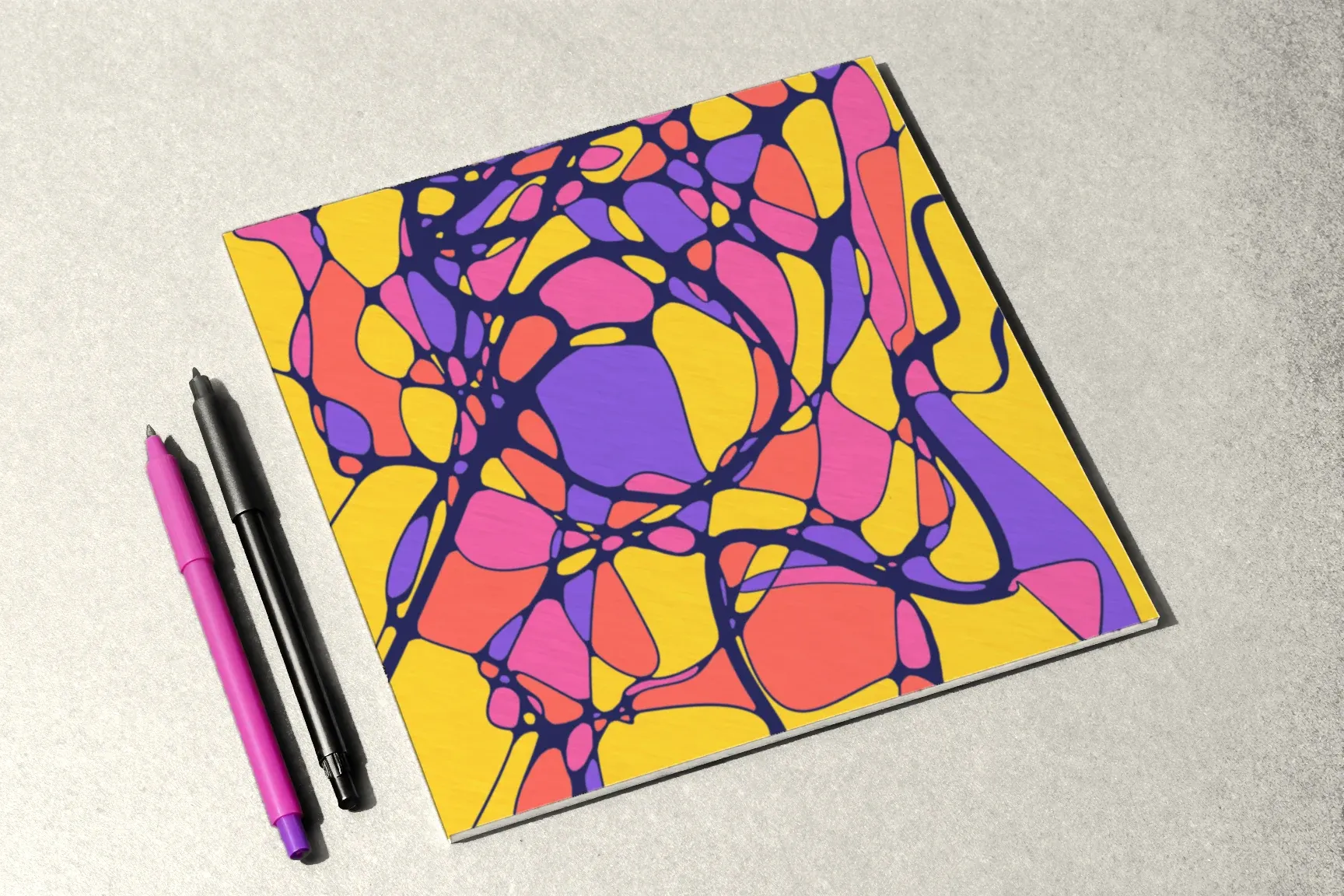
The difference. A mandala is built on symmetry and repetition. In transformational drawing the line is the opposite — asymmetrical, unpredictable, each curve different. There’s no center: the lines run edge to edge.
Pattern-drawing methods
What they are. Drawing in which the page is divided into sections and each one is filled with a repeating pattern: stripes, dots, waves, scales. Several popular methods have their own names and rules.
How it goes. Lines split the page into zones, and each zone gets one pattern, repeated in small, rhythmic marks.
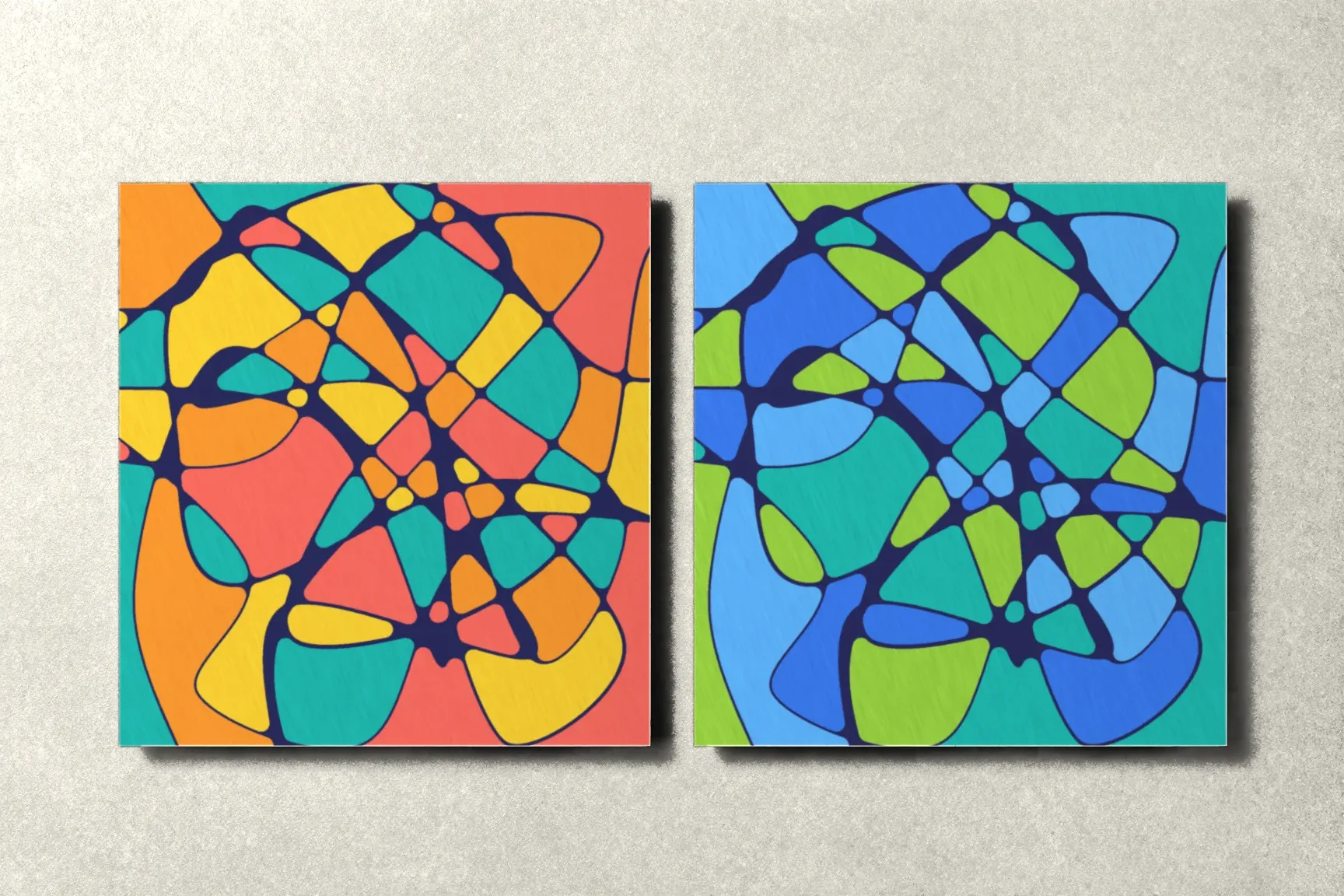
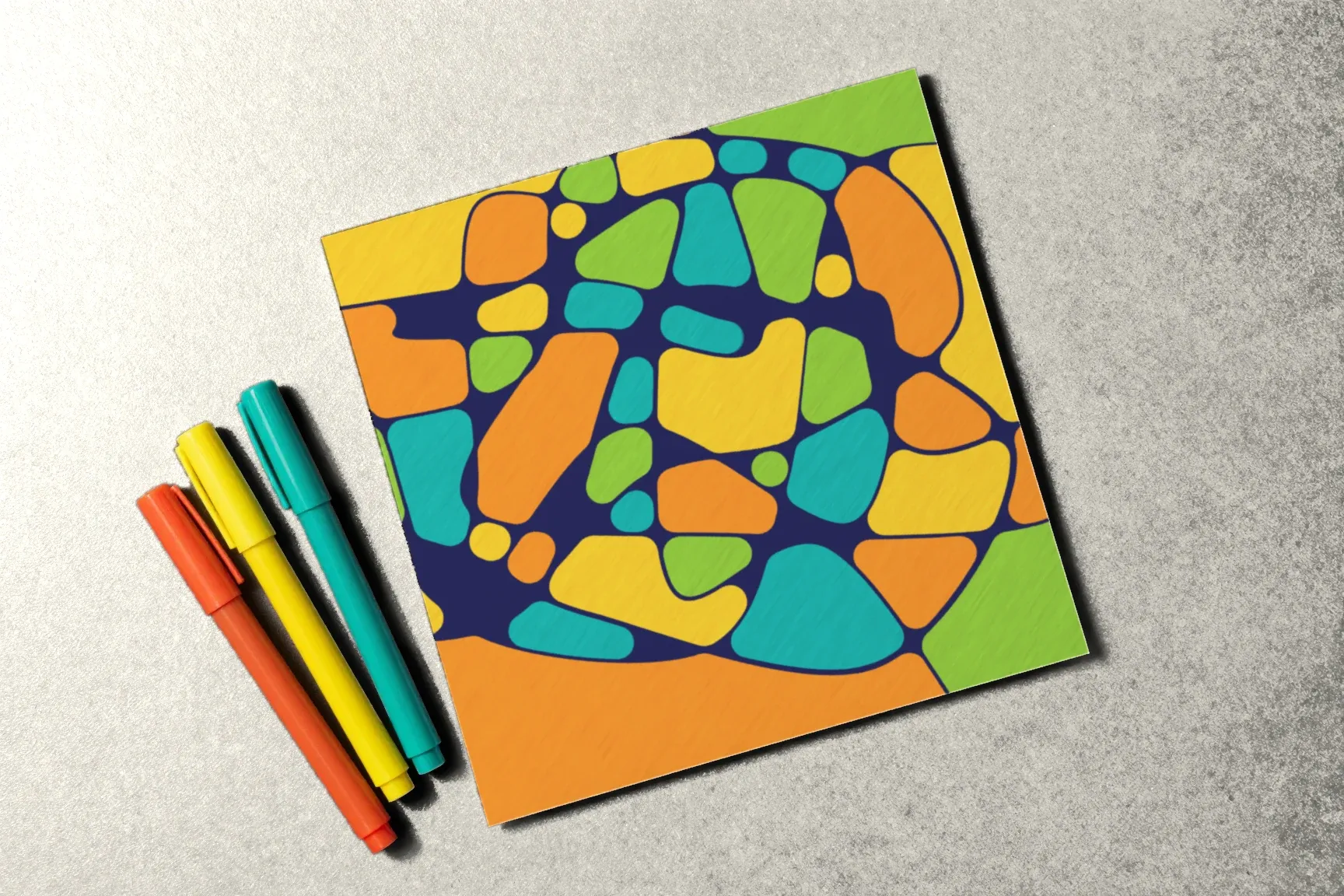
The difference. There, small repeated elements are the point. Transformational drawing avoids repetition: the line never repeats itself, and instead of filling zones with patterns you round the crossings and fill cells with color.
Adult coloring books
What they are. Ready-made outlines that you color in.
The difference. In a coloring book someone else drew the lines, and you choose the colors. In transformational drawing you draw your own lines, and color is only the third, optional step — although the course does include templates with the lines already drawn, for practicing rounding.
What’s distinctive about transformational drawing
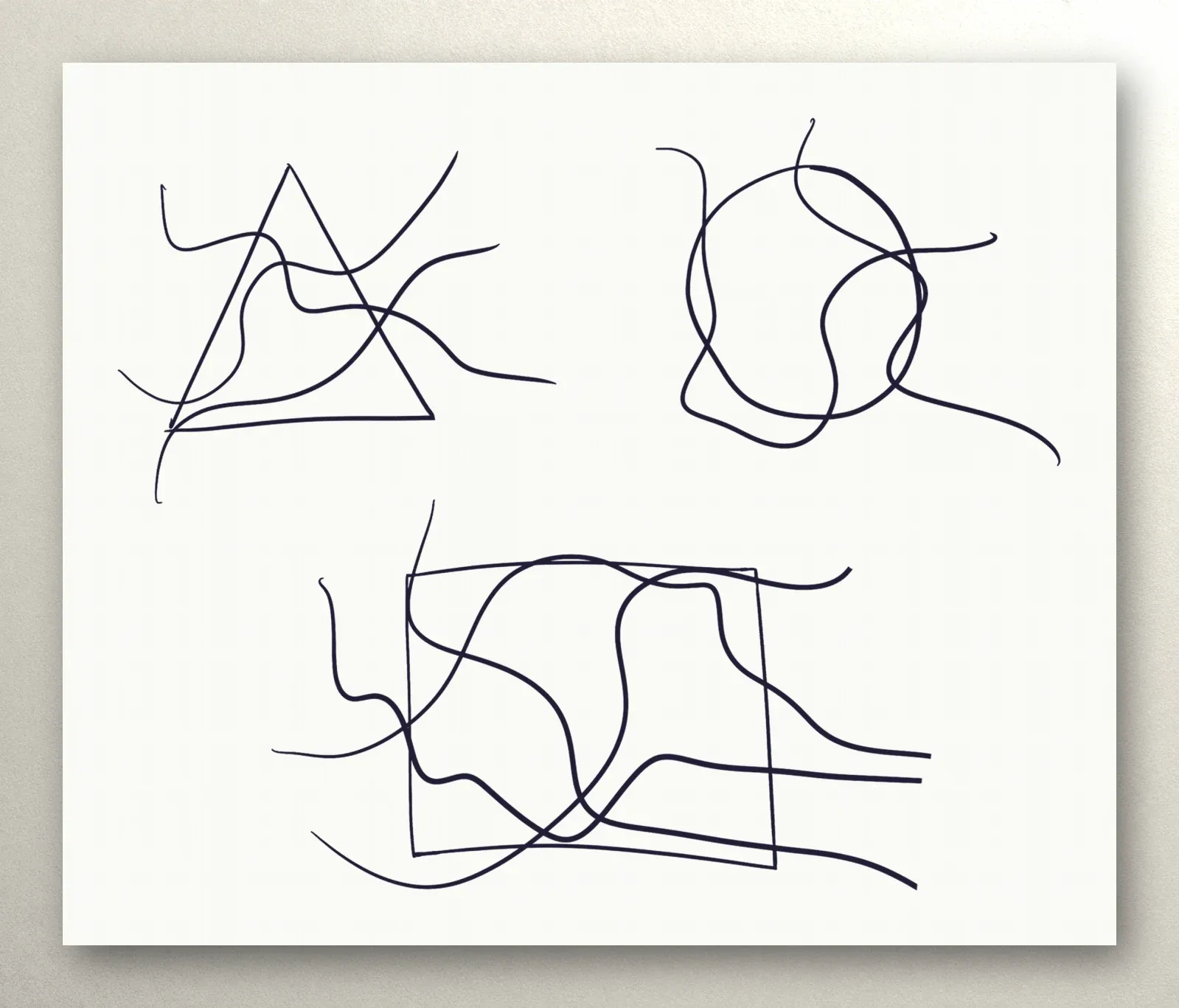
- The free line — unpredictable, with no symmetry and no repeats.
- Rounding the crossings — the main step, found in none of the others: sharp corners are smoothed and the drawing becomes whole.
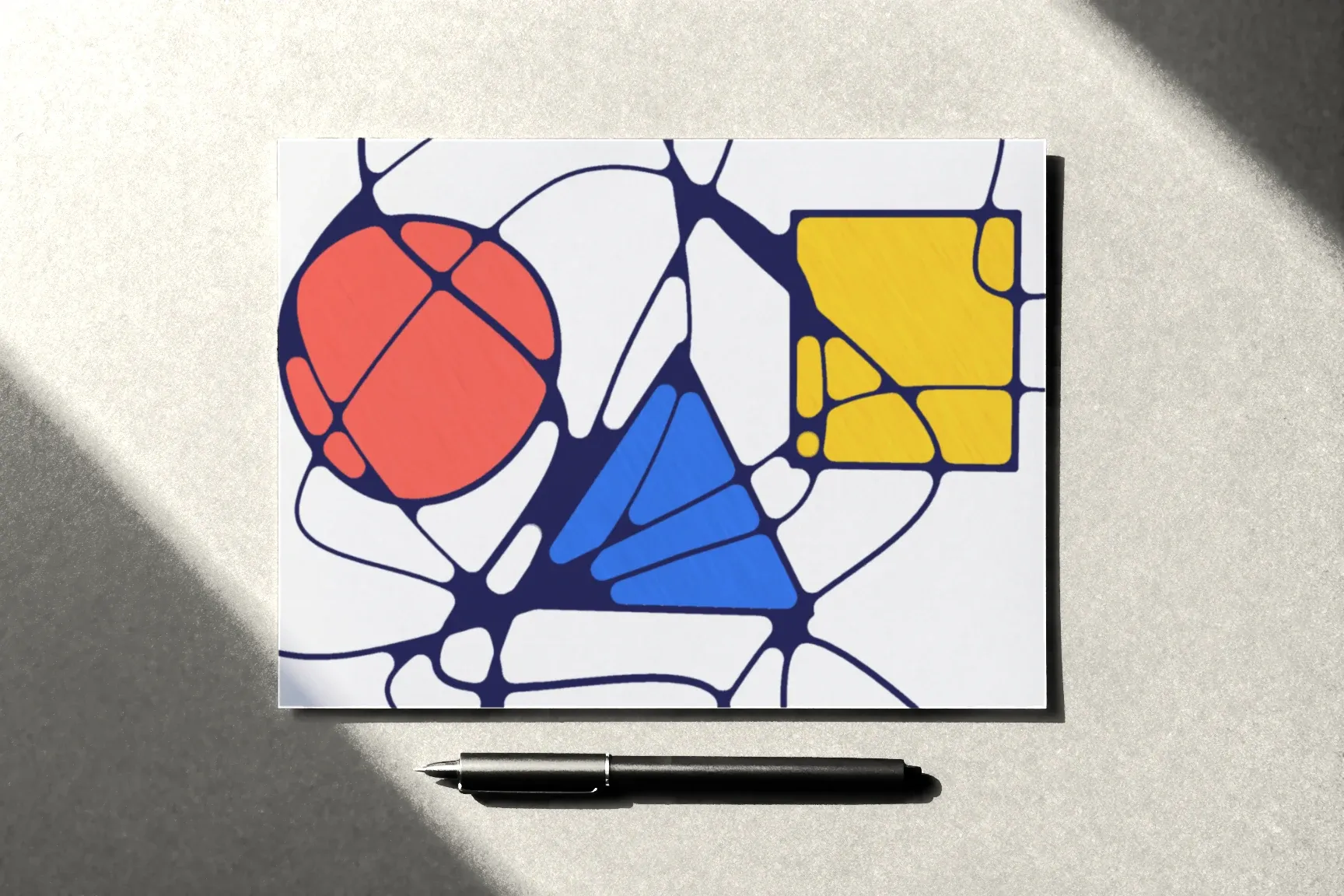
- Shapes and algorithms — circle, triangle, square, and step-by-step sequences around a theme.
- Optional color, with neighboring cells in different colors.
Can you mix them?
Sure. Some people draw a mandala one evening, a transformational drawing another, and doodle in the margins of their notebook in between. They’re different activities, each enjoyable in its own way. What helps is knowing which one you’re doing and by which rules — so you’re not surprised that your “mandala” isn’t symmetrical, or that your “doodle” suddenly needs half an hour of rounding.
What comes next
How the technique itself works is in What Is Transformational Drawing?, and where the idea of drawing without a plan comes from is in Automatic Drawing. The first module of the Neurojournal course is open without an account — start there.