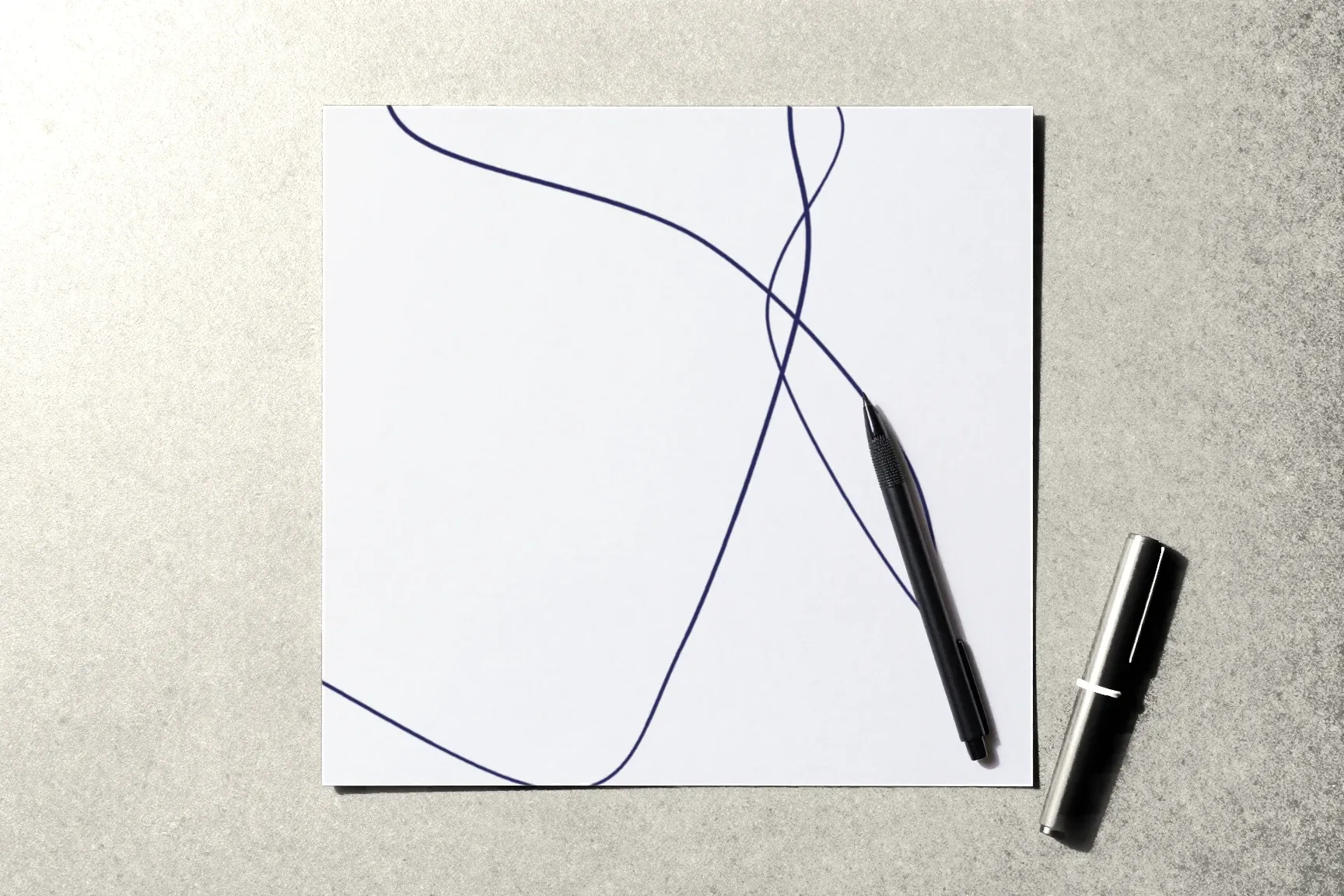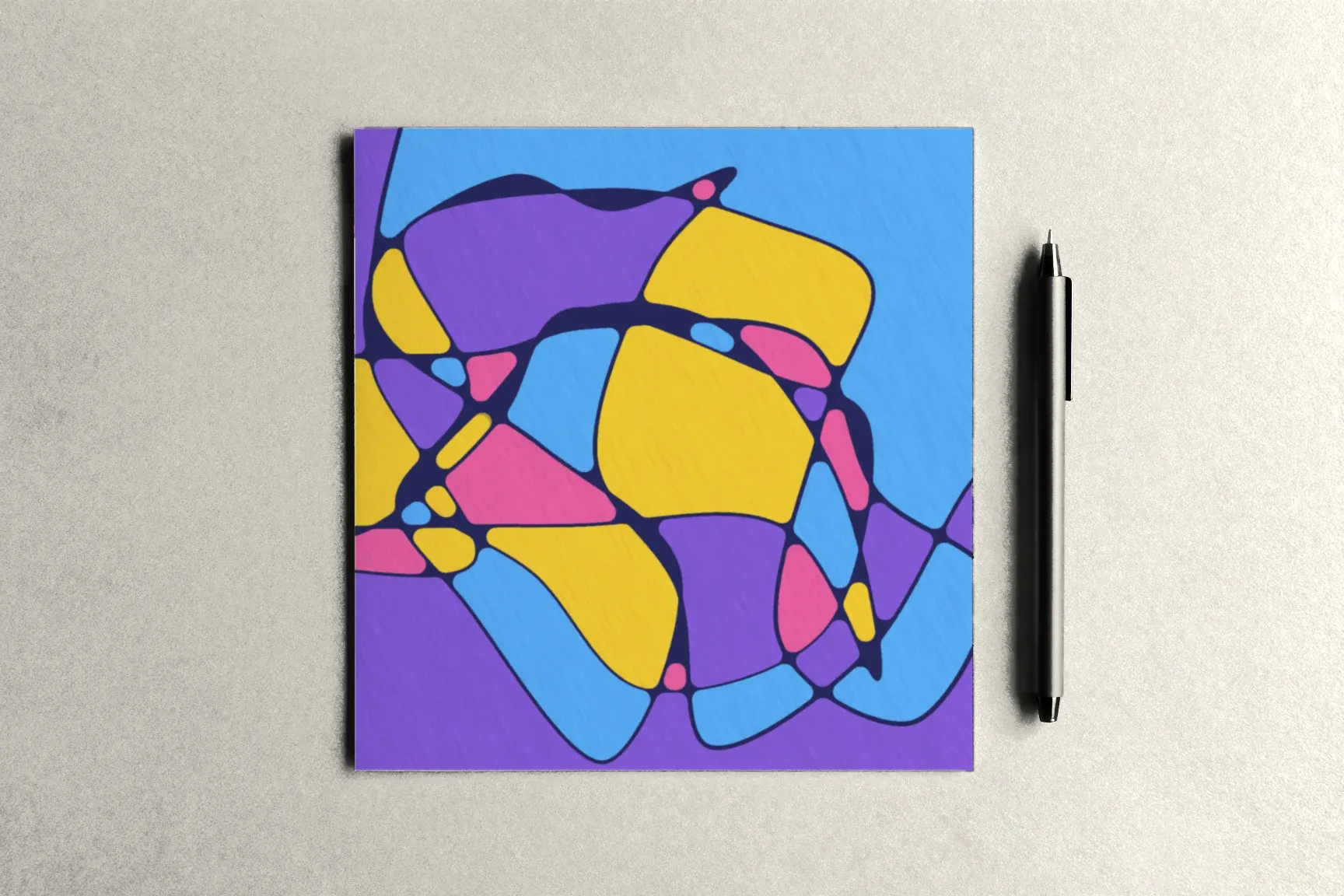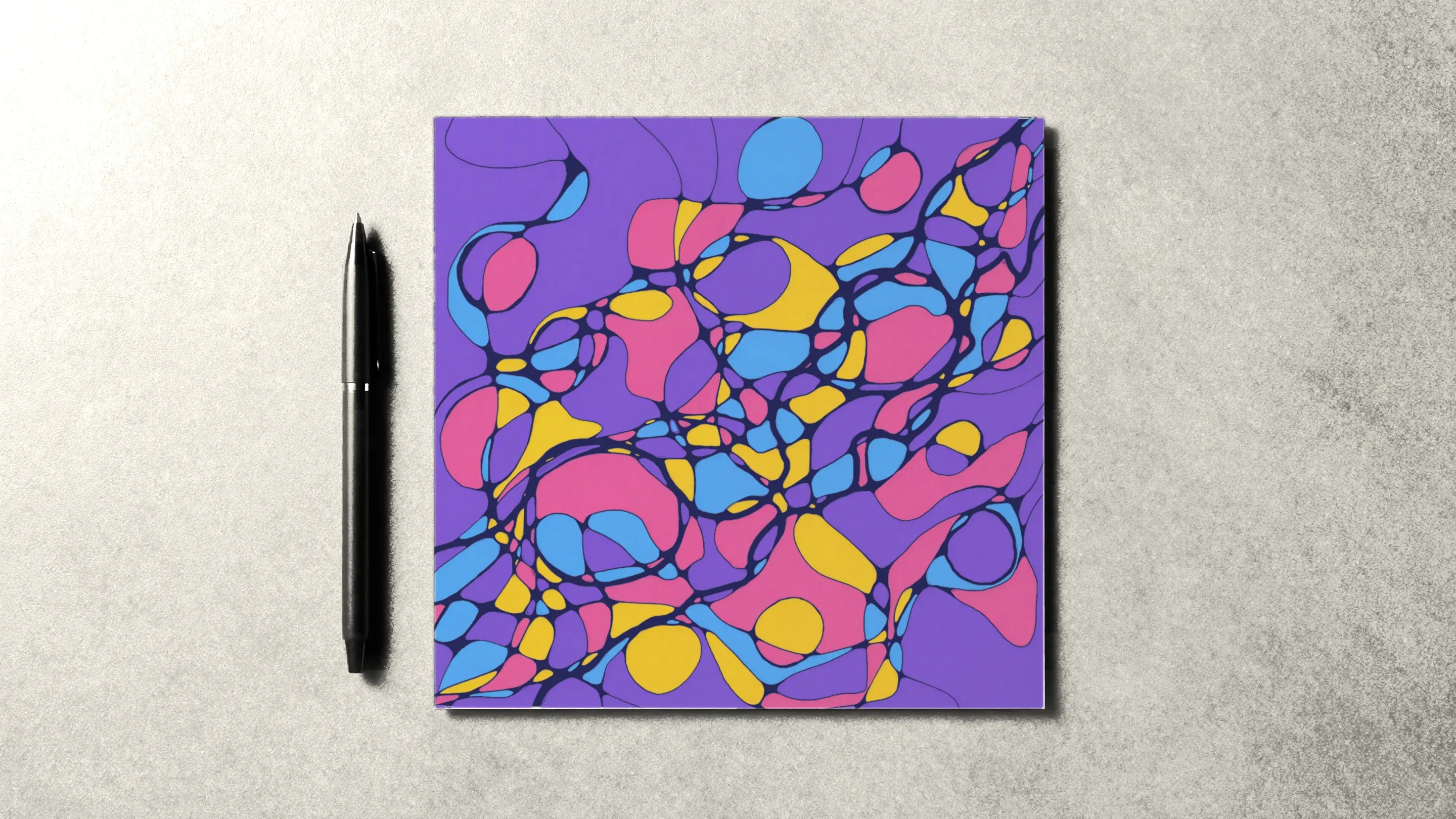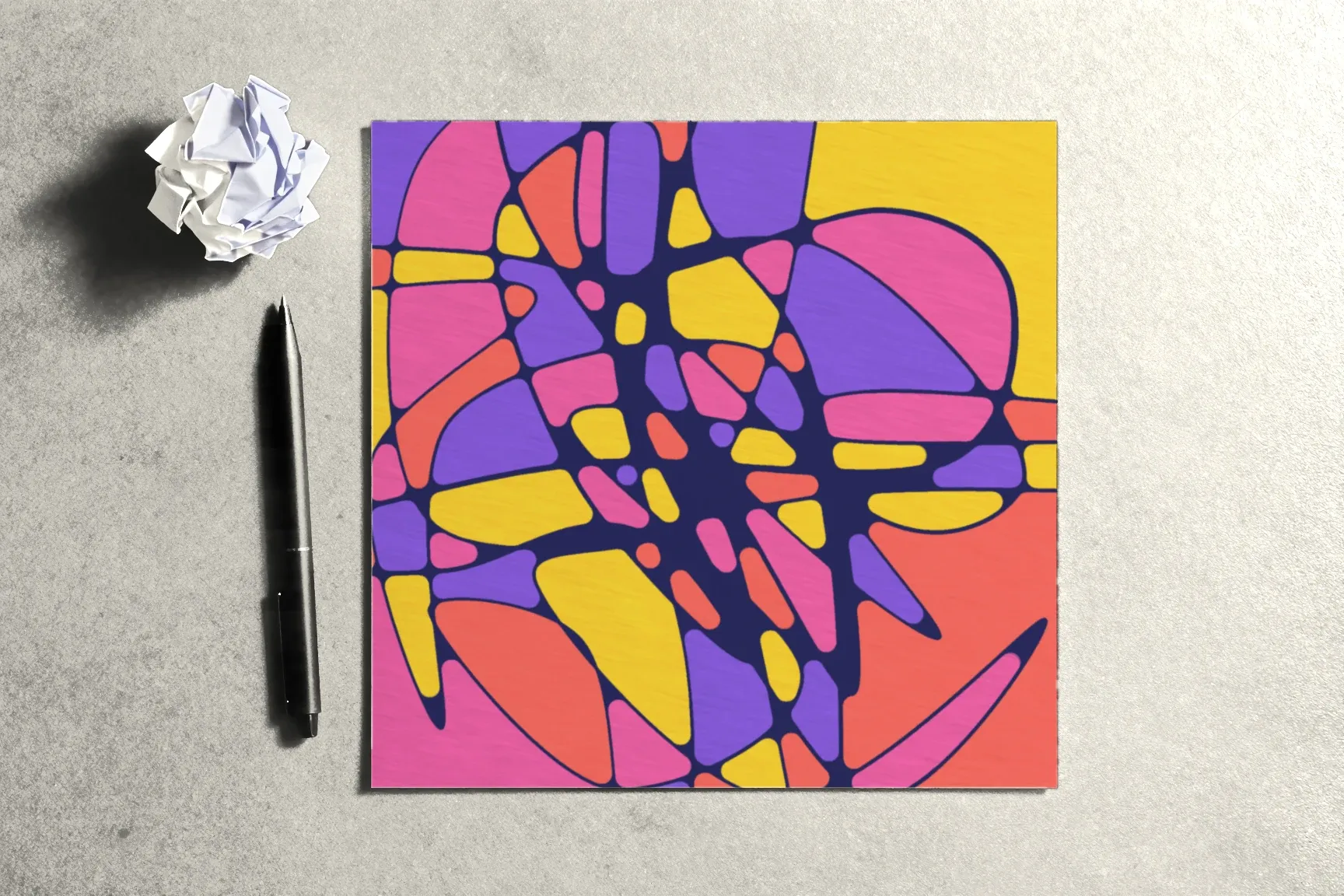
Transformational drawing has no correct result, but that doesn’t mean you’ll like every page. Sometimes the lines landed wrong, a marker bled, the colors clashed — or you simply look at the drawing and it doesn’t feel like yours. The first impulse is to crumple it up. Hold off: there are more useful things to do with that page.
First, pause
Judging a drawing right after you finish is rarely fair. You still remember every “mistake,” and those are what jump out at you. Set the page aside for at least a day. Often the next morning it looks completely different: what seemed crooked yesterday reads as the movement of the line.
What you can do with the page
Keep going
In this technique you can always add to a drawing:
- a new line across the whole page, then round the new crossings;
- a circle or another shape — so the drawing has a point for the eye to rest on;
- color, if the page was black and white — or white cells, if there’s too much color.
A page you keep working becomes a different drawing, and often one you like more.
Fix a specific spot
- A crooked rounding curve — widen it and even out the neighboring corners to match.
- A marker that bled — round off the edge of the spot as if it were part of the drawing, or make the neighboring cell darker.
- A line that stopped short — carry it on to the edge of the page.
- Missed corners — turn the page upside down and round them.
Correction fluid and erasers won’t help here: on ink they’re more noticeable than the mistake itself.
Leave it as it is
The most underrated option. A page that “didn’t work” is part of your practice. A month from now, with all your drawings laid out side by side, you’ll see how your hand has changed — and the earliest, “worst” pages show that difference best.
Start a new one
Sometimes the best move is a clean sheet. Not because the old one is “ruined,” but because you want to try it differently: a different pace for the line, fewer lines, other colors.
Why it’s worth keeping
- A practice journal without the pages that didn’t work looks incomplete: it shows only results, not the path.
- Comparing with your first drawings is one of the most satisfying moments of the practice, and you need those first drawings for it.
- Repeated mistakes only show up across several pages. If your rounding keeps coming out timid, you’ll only notice when you have a few examples side by side.
If you really don’t want to see the page, put it in a separate folder. But take a photo first.
What to write down
After a drawing that didn’t work out, a few words are especially useful:
- What exactly don’t I like — specifically, not “everything”?
- At which step did it happen?
- What do I want to try next time?
A note like that turns the page into a pointer for the next one.
What comes next
The usual rounding mistakes and how to fix them are in 7 Rounding Mistakes and How to Fix Them, and how to stop grading your own drawings is in Drawing Without a Goal. The first module of the Neurojournal course is open without an account — start there.