When you draw from life, it’s clear when to stop: the object is on the page. Transformational drawing has no object, and you can always add one more line, one more circle, one more color. So the question of when to stop comes up with the very first drawings.
Here are the signs of a finished drawing, what to do when you want to add more, and how to keep from overworking the page.
Signs that a drawing is finished
You can call a drawing finished when:
- Every crossing is rounded. This is the main one. A sharp corner on the page is an unfinished step, even if everything else is done.
- The page is evenly filled. There’s no big empty area next to a dense knot — unless that contrast is exactly what you wanted.
- The lines reach the edges. No lines stop in the middle of the page for no reason.
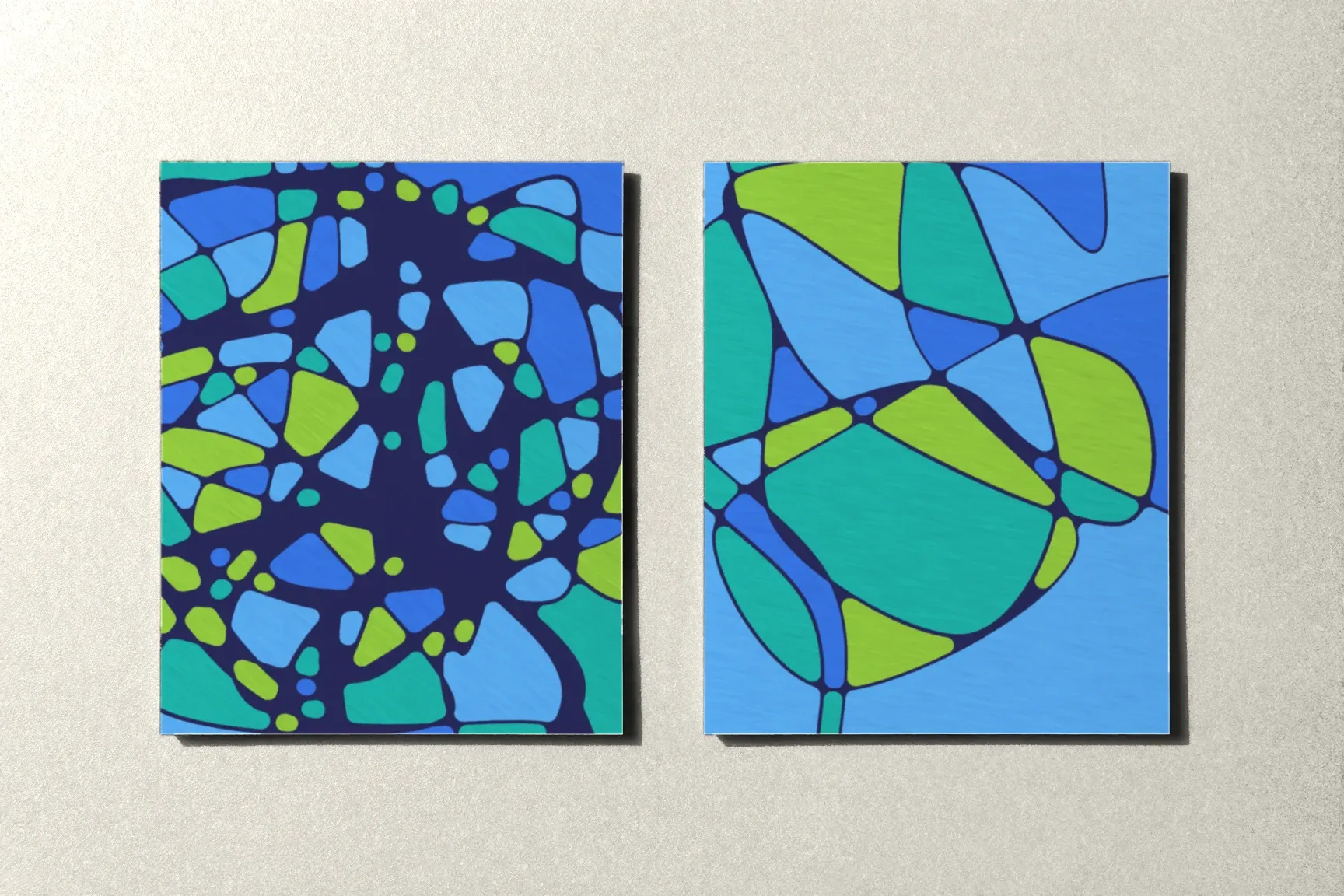
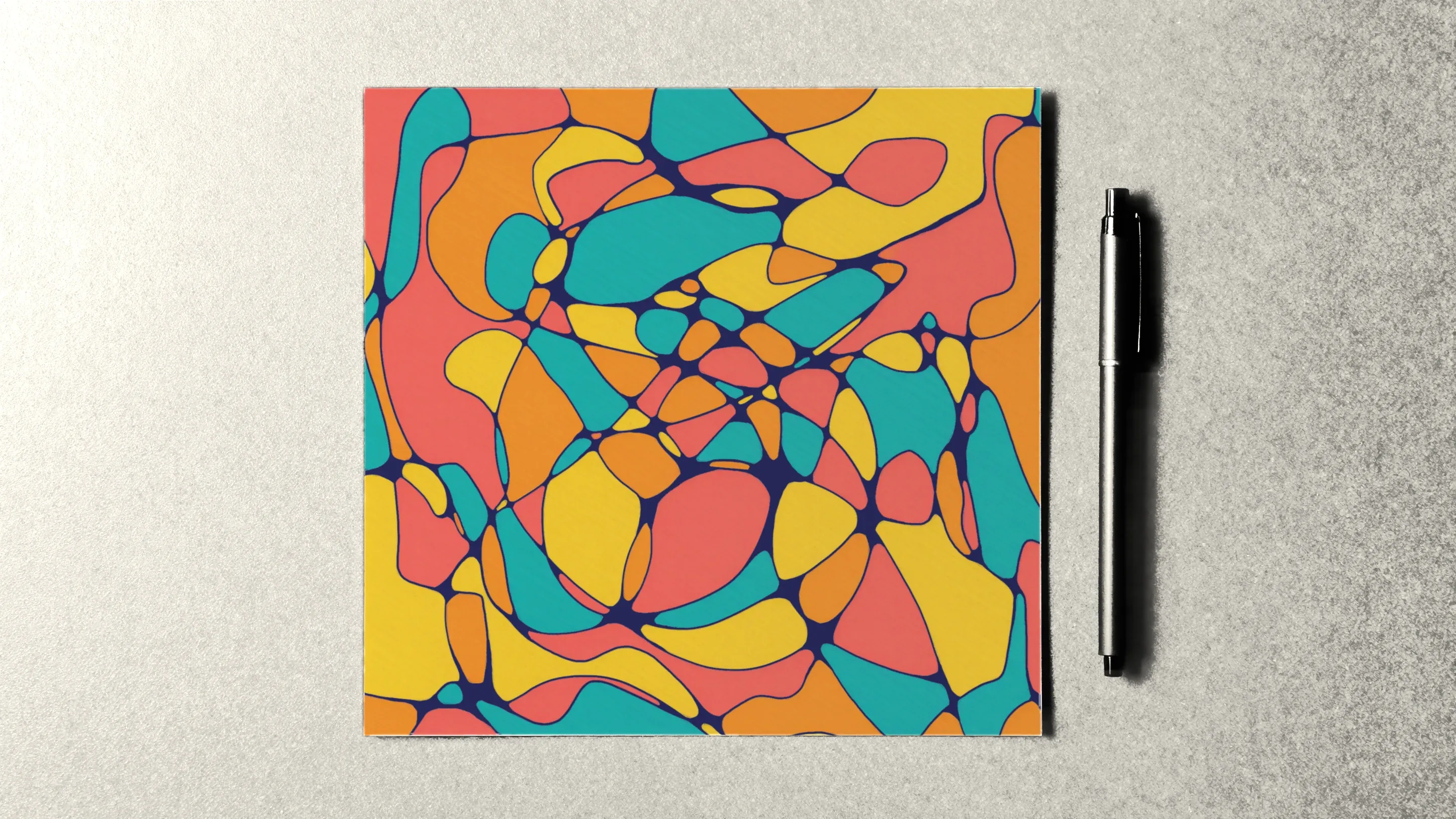
- The color, if you chose to add it, is spread across the whole page, not gathered in one corner.
- Nothing catches your eye when you look from a distance. Step back two paces or turn the page upside down. If your gaze doesn’t snag on anything, the drawing is done.
With algorithms it’s even simpler: the last step is the rounding after the general lines. Once that’s done, the algorithm is complete.
When you want to add more
Sometimes a drawing is technically finished, but it feels like something’s missing. A few ways to find out whether it really is:
- Take a five-minute break. Leave the room, come back, and look with fresh eyes. Often the “something’s missing” feeling goes away.
- Take a photo. On a phone screen the drawing looks different than on the table, which makes it easier to judge as a whole.
- Ask yourself what exactly is missing. If the answer is specific — “the left side is empty,” “one cell is too bright” — there’s something to do. If the answer is “I don’t know,” the drawing is most likely done.
If you decide to add something, do it the technique’s way: a new line across the page, then round every new crossing. That way the drawing is finished again.
How not to overwork the page
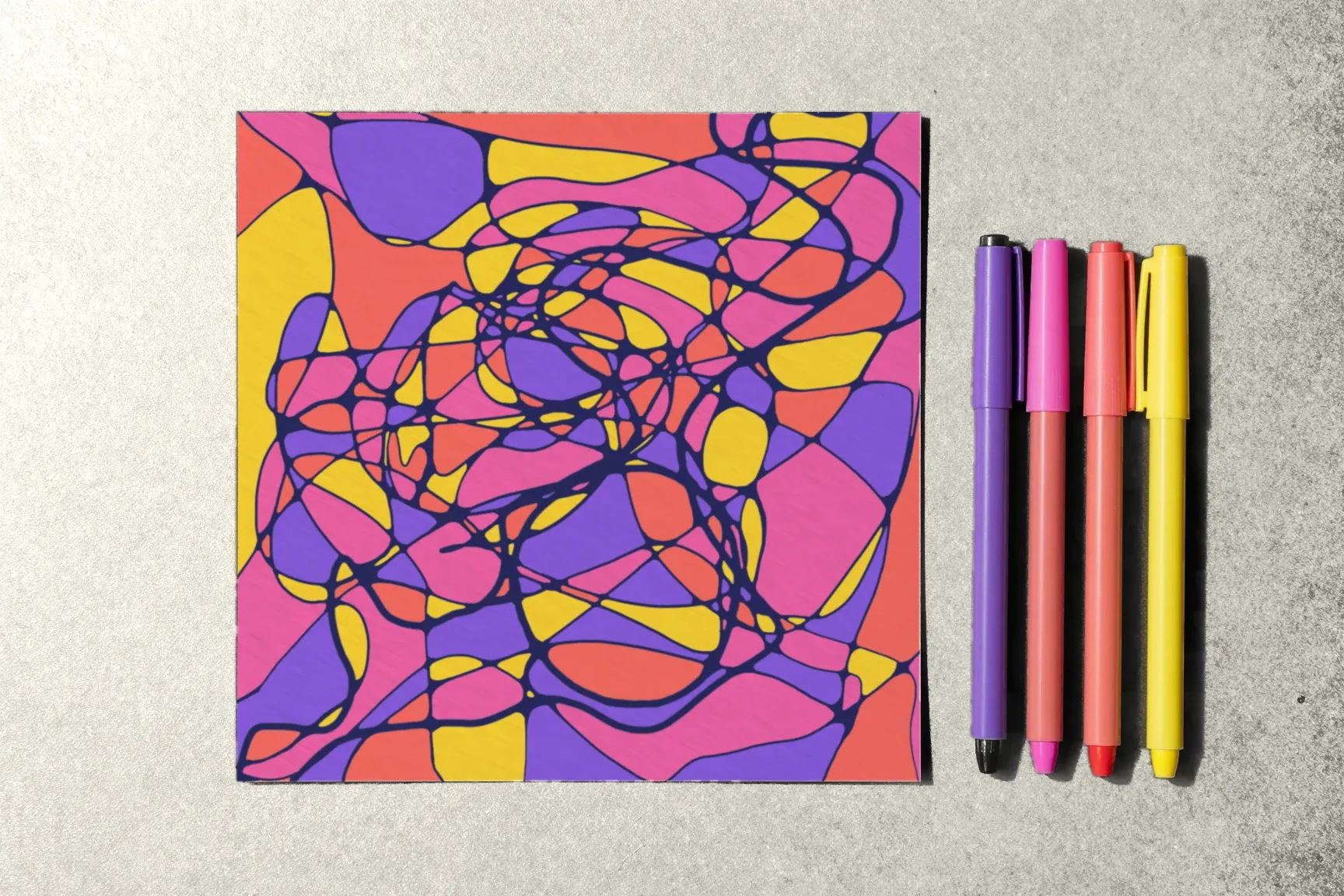
An overworked page has so many lines and so much color that it clumps into a single mass. A few signs:
- the cells are so small that the color in them doesn’t read;
- rounding in tight spots has merged into solid black blots;
- there are so many colors that none of them stands out.
How to avoid it:
- Add in stages. A line, rounding, a pause — not several lines in a row.
- Leave white cells. Uncolored paper is part of the drawing, not something left undone.
- Trust your first impression. If you like the drawing after a break, stop.
A black-and-white drawing is finished too
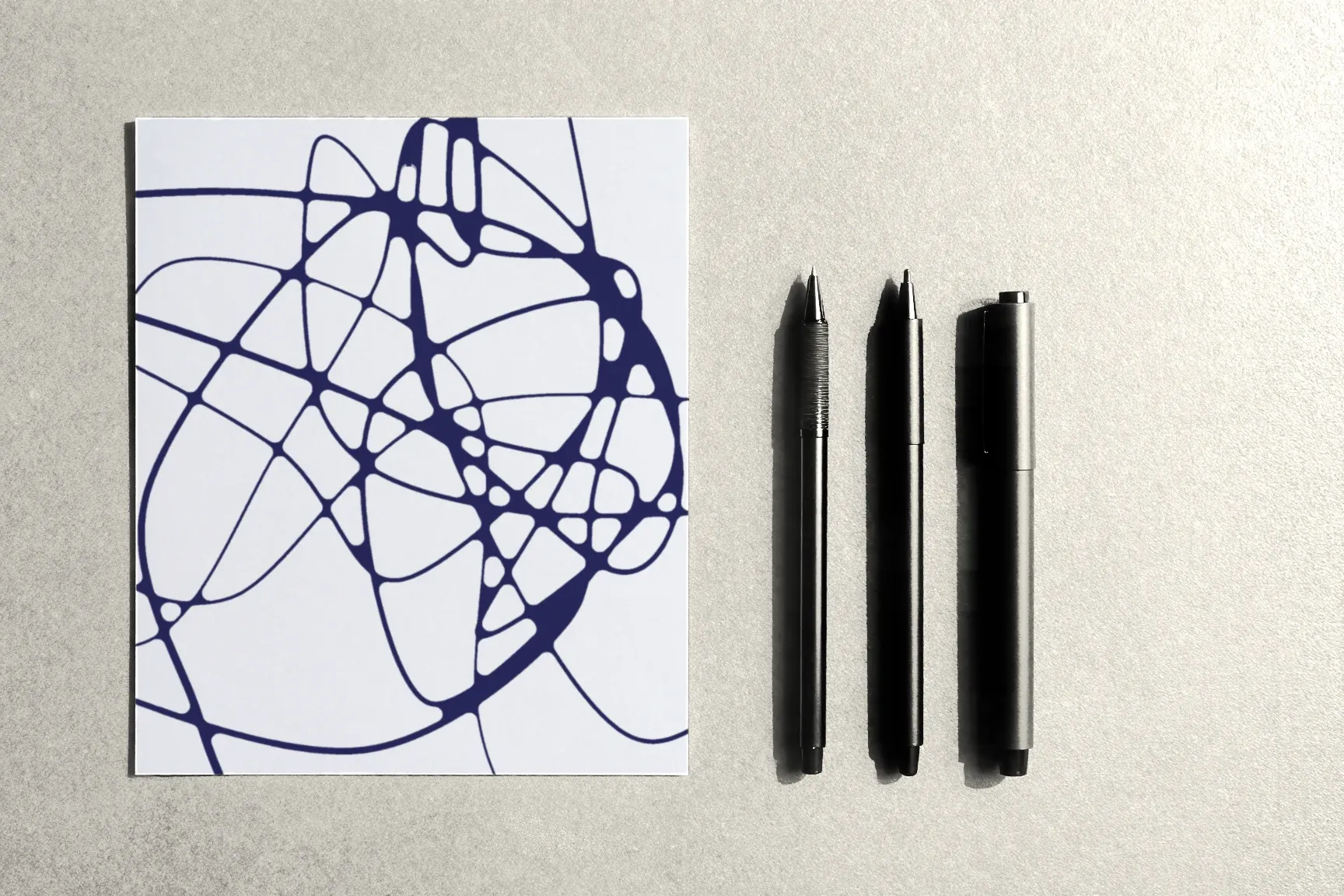
Color is an optional step in the technique. A drawing with its lines and rounded crossings is finished, even without a single color. Some pages actually look stronger in black and white: the lines read more clearly and the form stands out more.
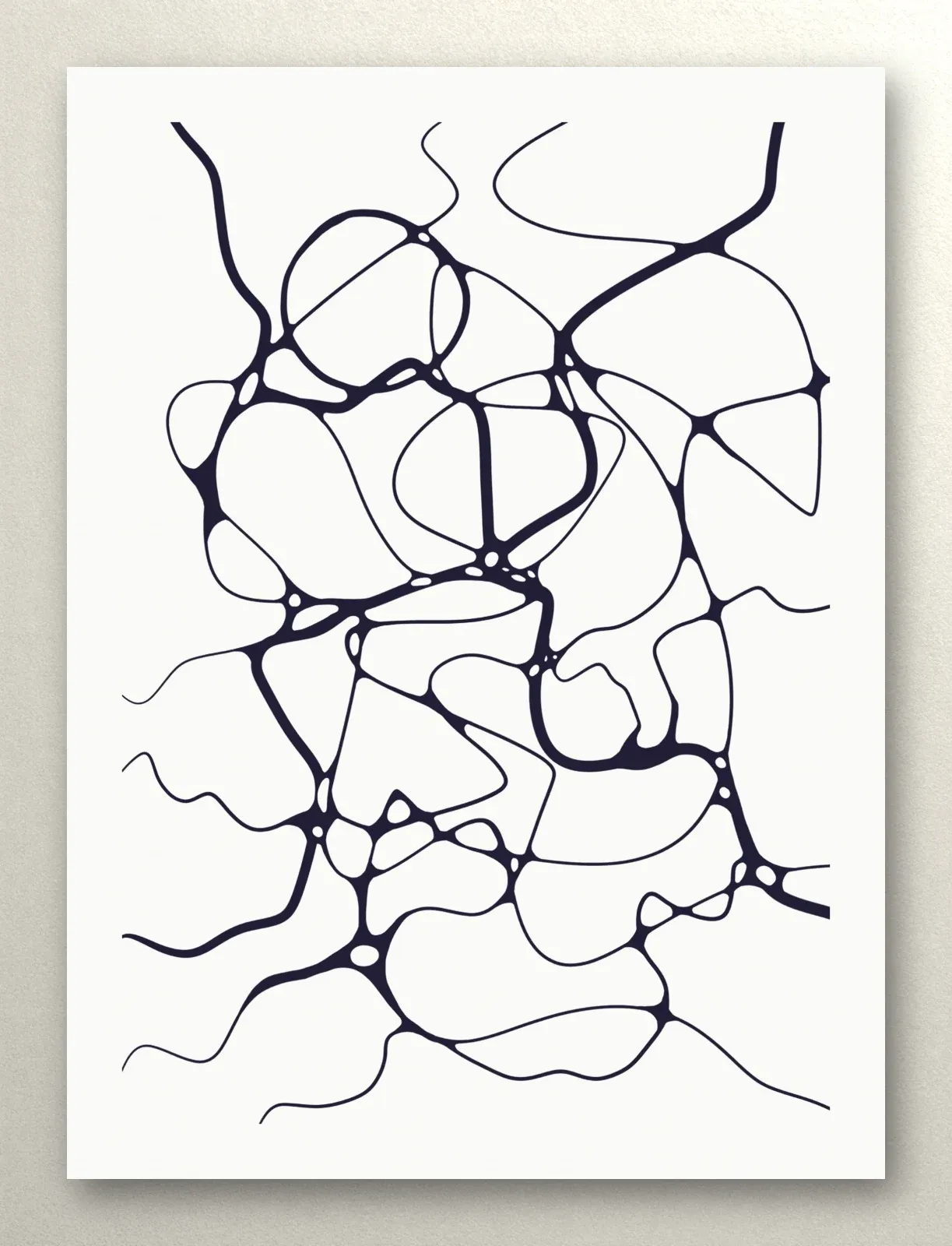
If you’re not sure whether to color, photograph the black-and-white version first. Then you can color it — and compare.
And if you don’t like the drawing?
Finished and satisfying aren’t the same thing. A drawing can tick every box and still not appeal to you. That’s normal: the technique has no “correct” result to measure it against.
With a page like that, you can:
- leave it as it is and start a new sheet — in a few weeks it’ll be interesting to compare;
- keep going: one more line, new crossings, color;
- write down what exactly you don’t like. Notes like that often show what you want to try next time.
The last step: a look and a few words
After the last rounding or the last cell of color, give the drawing a few more minutes. Look at it and write a few words: what you drew, where you lingered, what you noticed. A photo of the page with those words — and the session is truly finished.
What comes next
We covered how to spread lines evenly in Composition, and how many lines to draw for the evening you have in How Many Lines? The first module of the Neurojournal course is open without an account — start there.