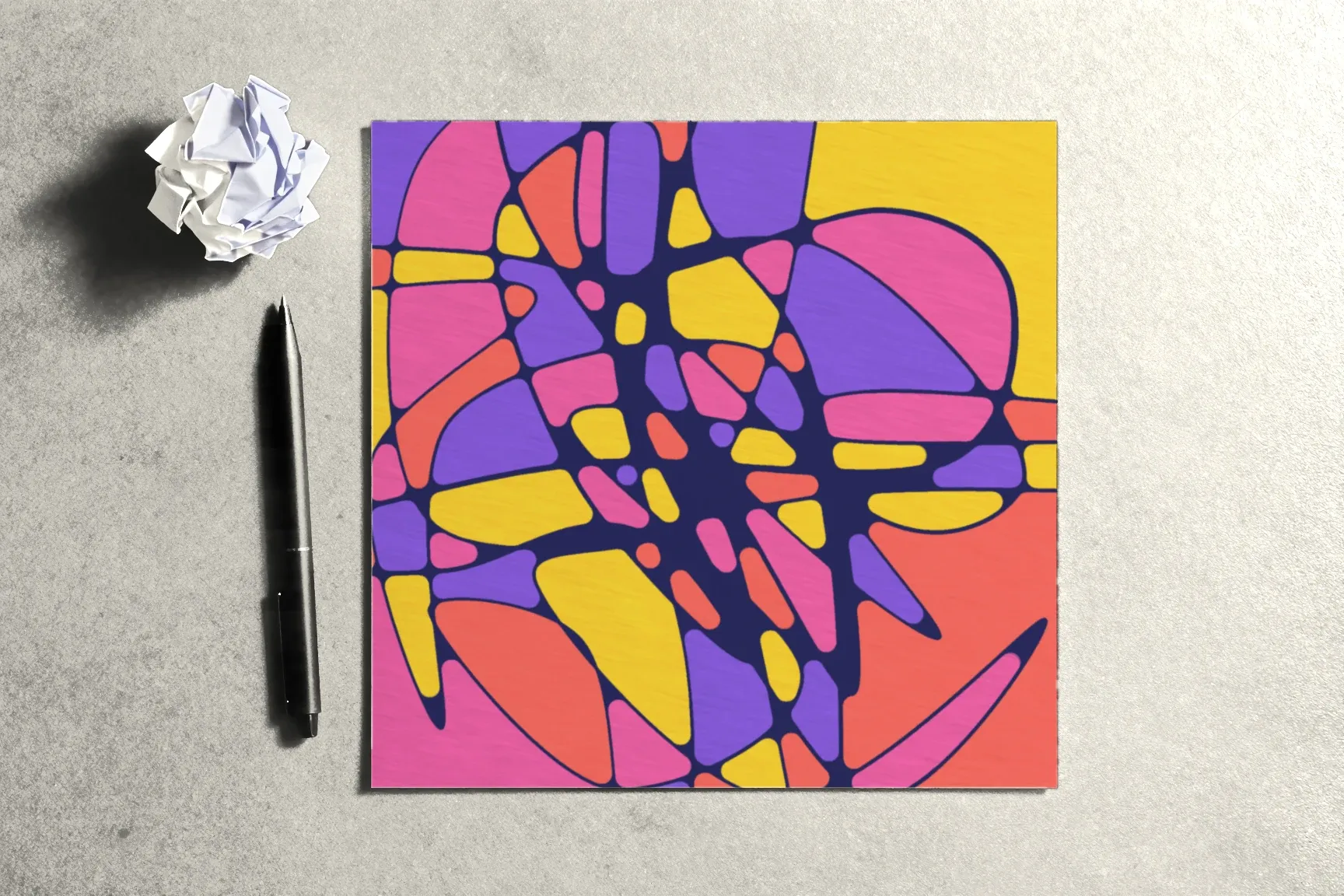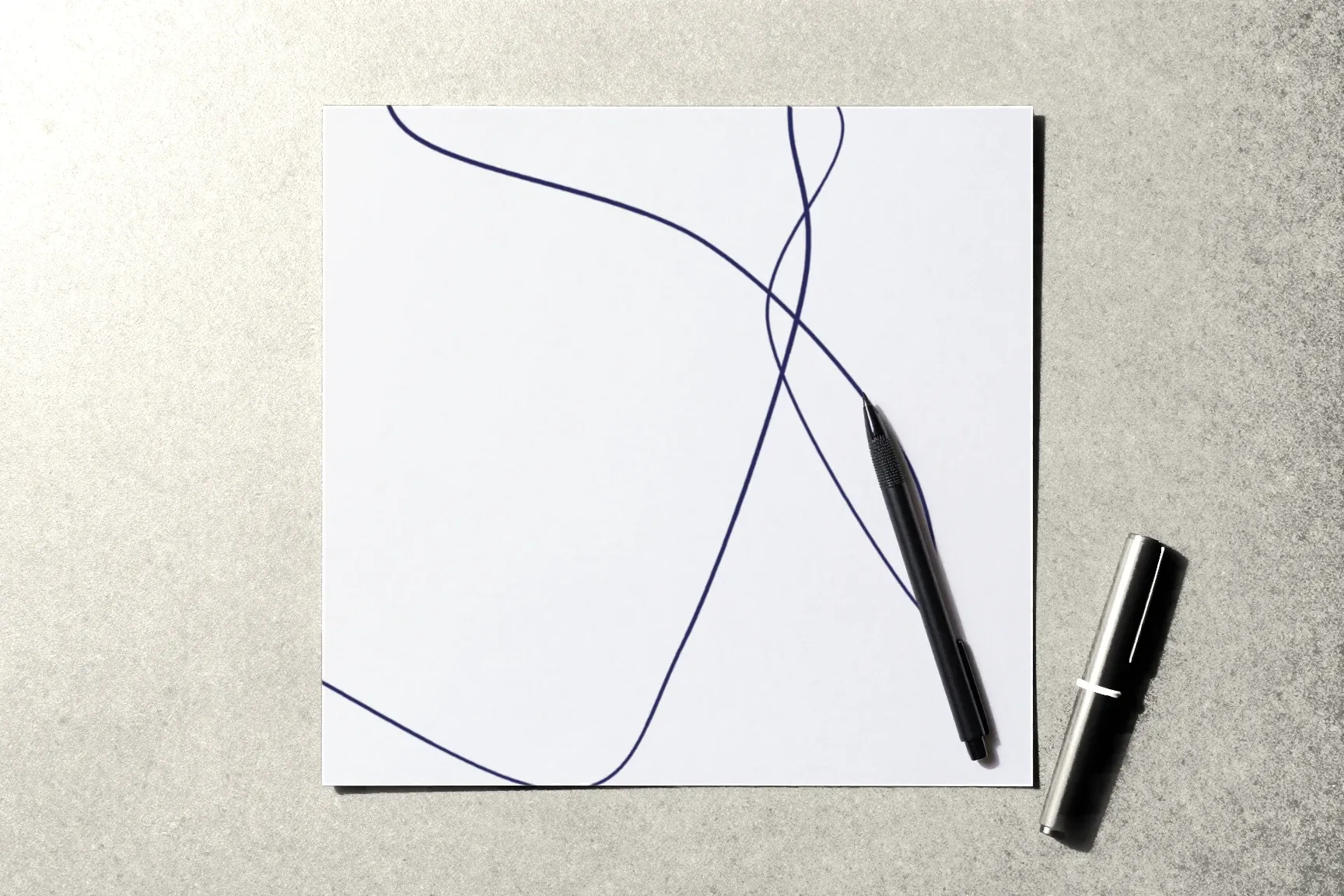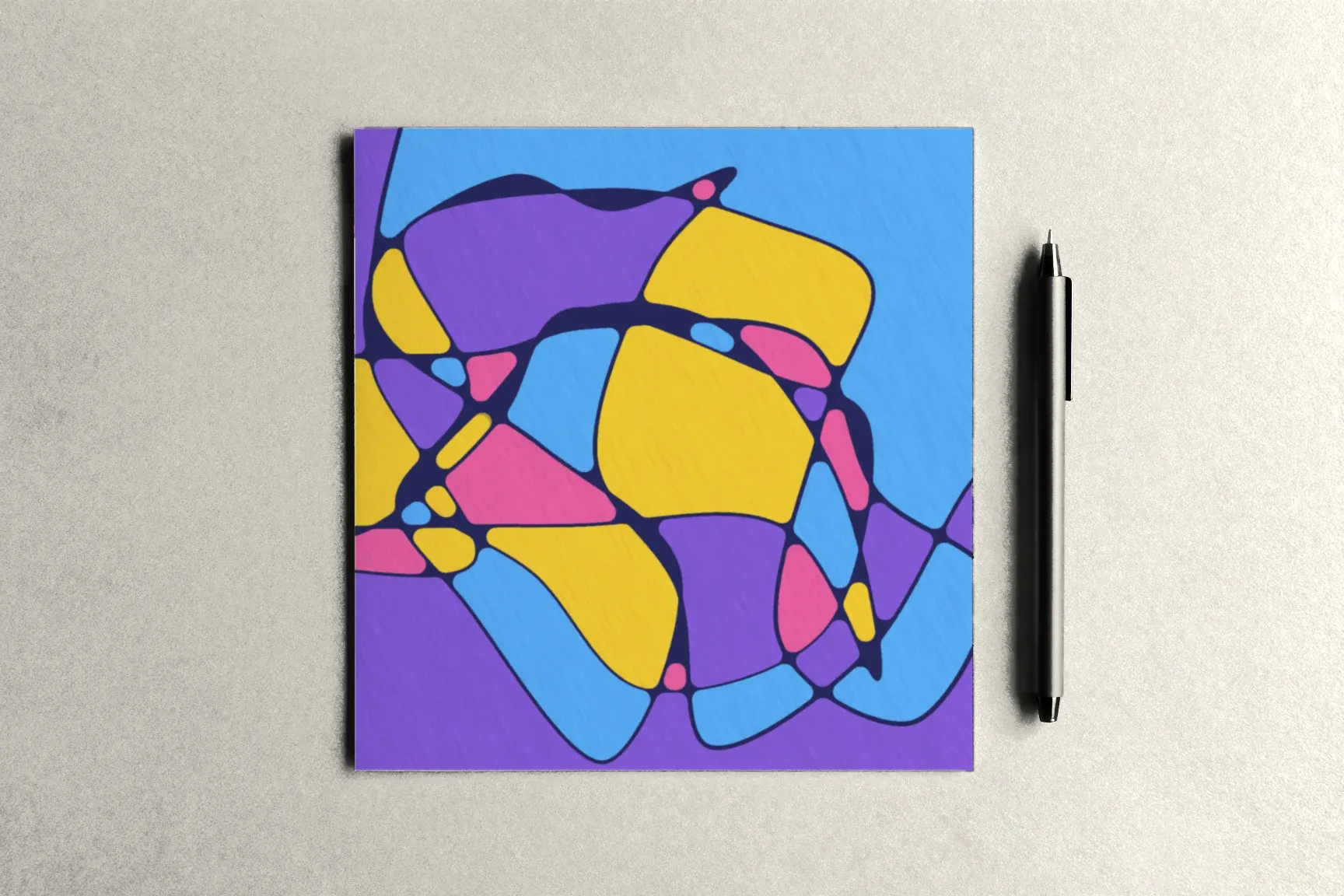
The most common reason drawing stays a “someday” thing is time. A whole free evening is rare, and you can wait months for one. But transformational drawing doesn’t need an evening: a 20-minute session is a real session too, as long as you pick the right format.
Here’s how to fit a drawing into 20 minutes, where to find those minutes in a packed day, and what to do when it doesn’t happen.
What fits into 20 minutes
- A small page: three lines and rounding. On a half-letter sheet, three lines make only a modest number of crossings, and rounding takes 10–15 minutes.
- A template from the course. The lines are already drawn, so all that’s left is rounding. It’s the quickest way to practice the main step.
- Color on a finished drawing. If you rounded a drawing last time, today you can color it.
- A look back. Laying out the past week’s pages and writing a few words about them counts as a session too.
What won’t fit into 20 minutes is an algorithm. Save that for an evening when you have an hour or an hour and a half.
A session in two parts
You can split a drawing into two short sessions — without breaking the main rule: the course suggests finishing the rounding the same day you draw the lines.
- Part one: lines and rounding on a small page.
- Part two, the next day: color.
Two days of 20 minutes each, and you have a finished color drawing.
Where to find 20 minutes
A few options that work for many people:
- Right after dinner. The dishes can wait 20 minutes, and the table is already clear.
- Instead of part of your evening scroll. Phone down, paper out — the same minutes go differently.
- Early in the morning. For people who are up before the rest of the house: quiet, and nobody needs anything from you.
- On a weekend morning. If weekdays are truly full, two sessions on the weekend is a rhythm too.
What matters most is doing it at the same time. When drawing is tied to a familiar moment in your day, you don’t have to “schedule” it every time.
A table that’s ready in advance
It’s easy to spend 20 minutes hunting for a pen, markers, and a clean sheet. So keep everything ready:
- a box or folder with your paper, pens, and markers together;
- a clean sheet on top, so there’s nothing to look for;
- a spare template for days when you don’t have the energy to come up with lines.
Then the time between “I’m going to draw” and the first line is one minute, not ten.
Timer or no timer?
A timer helps when time is genuinely short: you know you can stop in 20 minutes, and you’re not glancing at the clock. But it can also get in the way — an alarm in the middle of rounding makes you rush. A middle ground: set it for 25 minutes and treat it as a reminder, not a hard stop.
When a day slips by
It will happen. A missed day isn’t a reason to “make up for it” with a double session tomorrow. Just pick up where you left off. Regularity matters more than daily streaks here: three sessions every week add up to more practice than seven days straight followed by a month off.
A short session isn’t a lesser one
Sometimes 20 minutes feels like it doesn’t count. But transformational drawing has no minimum length: three lines with rounded crossings is already a finished drawing. And after a month of short sessions, you have a stack of pages worth laying out and looking through.
What comes next
We put together a plan for your first week in A 7-Day Practice Plan for Beginners, and covered how many lines to draw on a short evening in How Many Lines? The first module of the Neurojournal course is open without an account, and each lesson takes just a few minutes to read — start there.