Almost everyone who draws says it calms them down. But a feeling is one thing and a measurement is another. Psychologists have tested what happens to people while they draw several times. Here are four of the most cited studies, and how to read them honestly.
Cortisol after 45 minutes of art making
In 2016, researchers at Drexel University (Kaimal, Ray and Muniz) asked 39 adults to spend 45 minutes making art: markers and paper, modeling clay or collage, with no instructions. Before and after the session they took saliva samples and measured cortisol, a hormone whose level rises under stress.
After the session, cortisol fell noticeably in about three out of four participants. Just as important, the result didn’t depend on experience: people who draw regularly and people who hadn’t drawn since school showed similar changes. Participants described the session as relaxing.
Mandala, plaid or a blank page
In 2005, Curry and Kasser ran an experiment with college students. Their anxiety was raised first — 84 participants were asked to recall and write about a frightening event — and then they colored for 20 minutes: some a mandala, some a plaid pattern, and some drew whatever they liked on a blank sheet. Anxiety dropped the most in the mandala group. Free drawing on a blank page barely helped in this experiment.
The authors’ explanation is structure. When the form is already there, attention has something to hold on to.
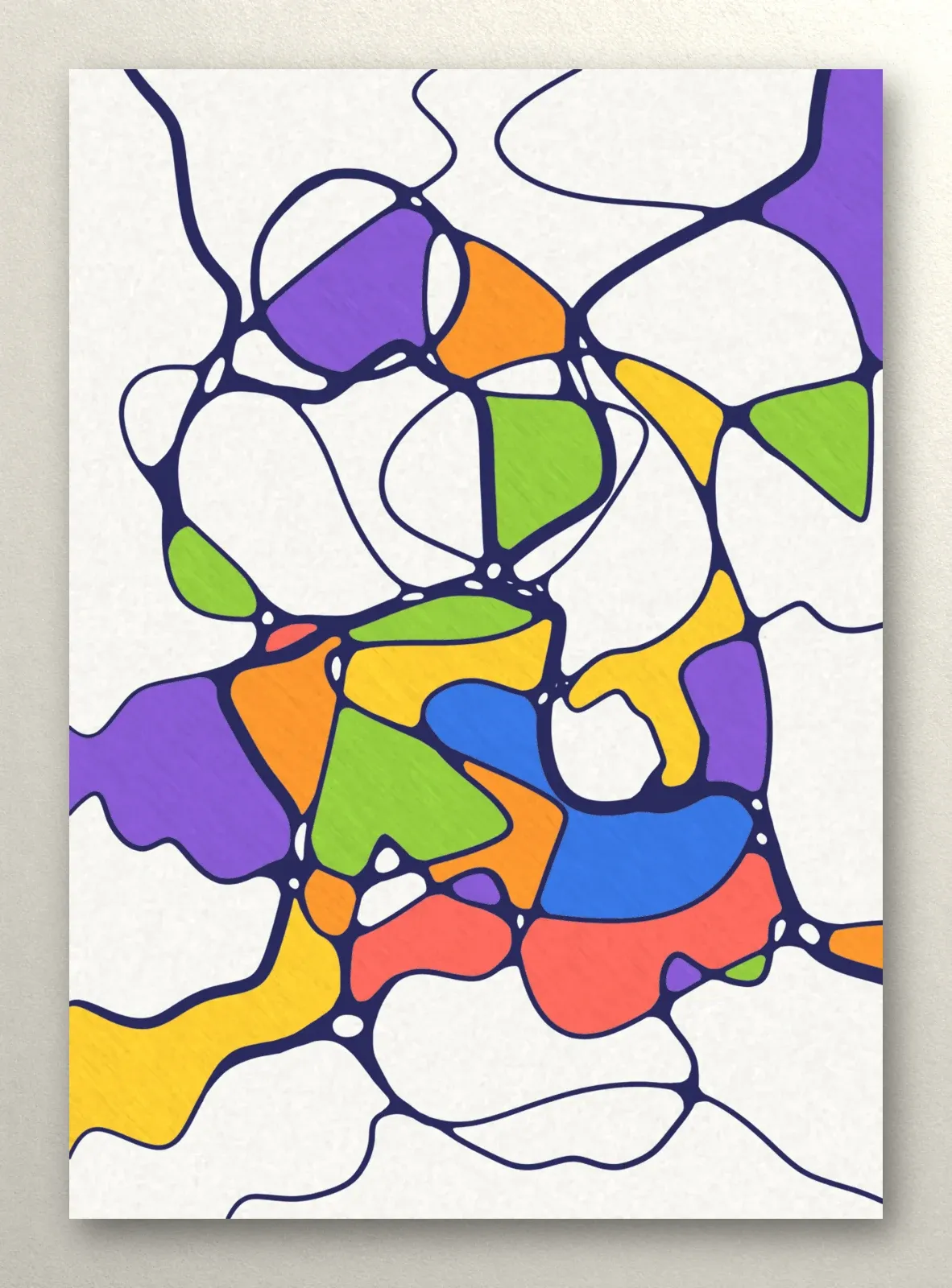
Distract or express
Studies by Jennifer Drake and Ellen Winner found something unexpected. They compared two ways of drawing after a sad memory: drawing your feelings, or drawing something neutral that takes your mind off them. Mood improved more in the people who drew to distract themselves. Later work by the same group repeated the result over several days.
What happens in the brain
In 2017 the Drexel group measured blood flow in the front of the brain, an area linked to the sense of reward, in 26 participants. Coloring a mandala, doodling and free drawing all produced clear activation compared with rest.
What these studies don’t prove
- The samples are small. A few dozen people, often students.
- The effect is short. It was measured right after the session, not weeks later.
- It isn’t treatment. None of these studies tested drawing as a treatment for an anxiety disorder or depression. If stress doesn’t let up for weeks, talk to a licensed mental health professional.
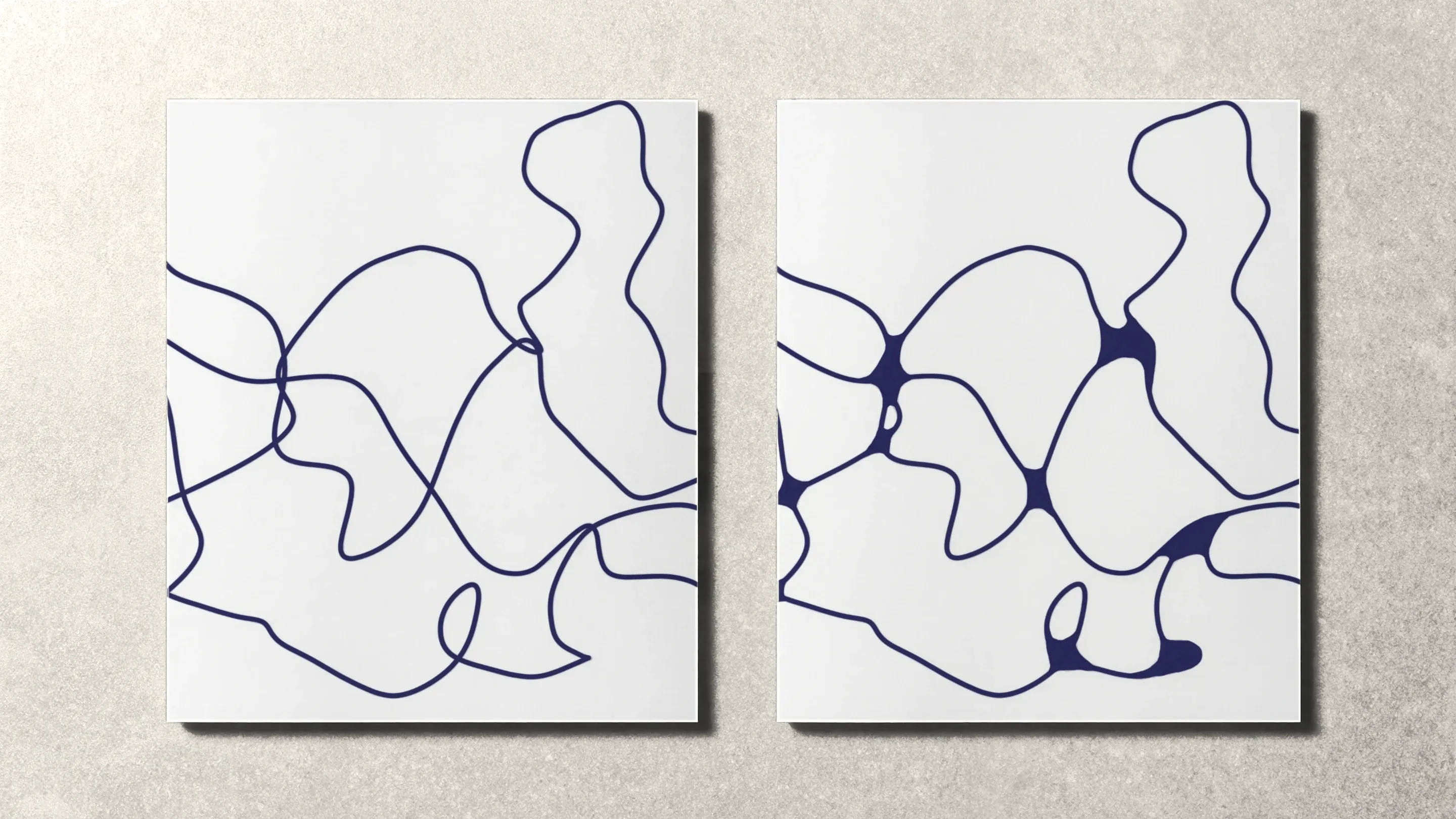
What you can take from this: half an hour of drawing can help many people feel calmer, and structure — lines, rounding, an algorithm — gives attention something to rest on. That’s why transformational drawing is built from steps rather than a blank page.
What comes next
How to draw when you have no energy for it is in What to Do When You Don’t Feel Like Drawing, and how the technique differs from mandalas is in Doodling, Mandalas, and Pattern Drawing. The first module of the course is open without an account — start there.