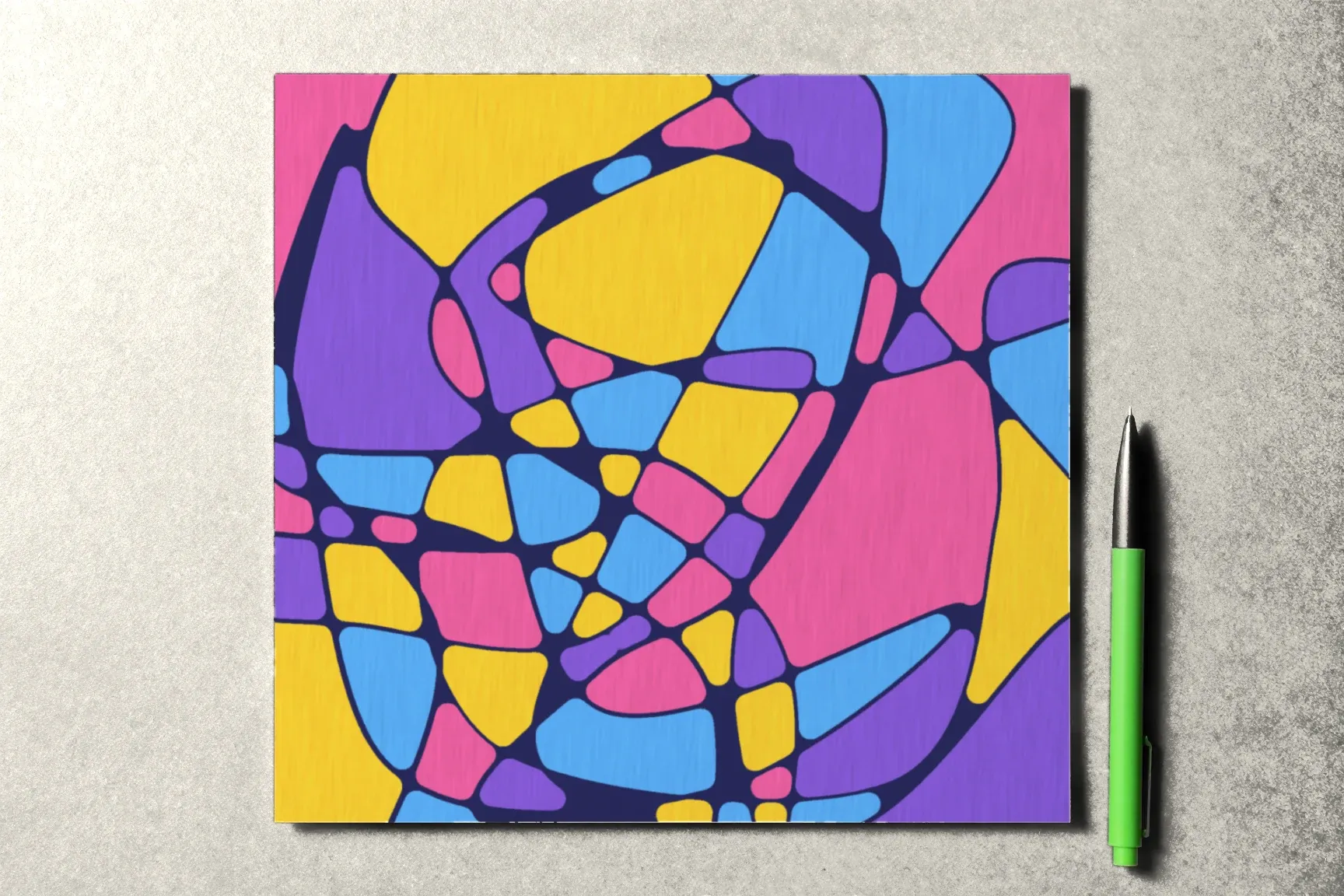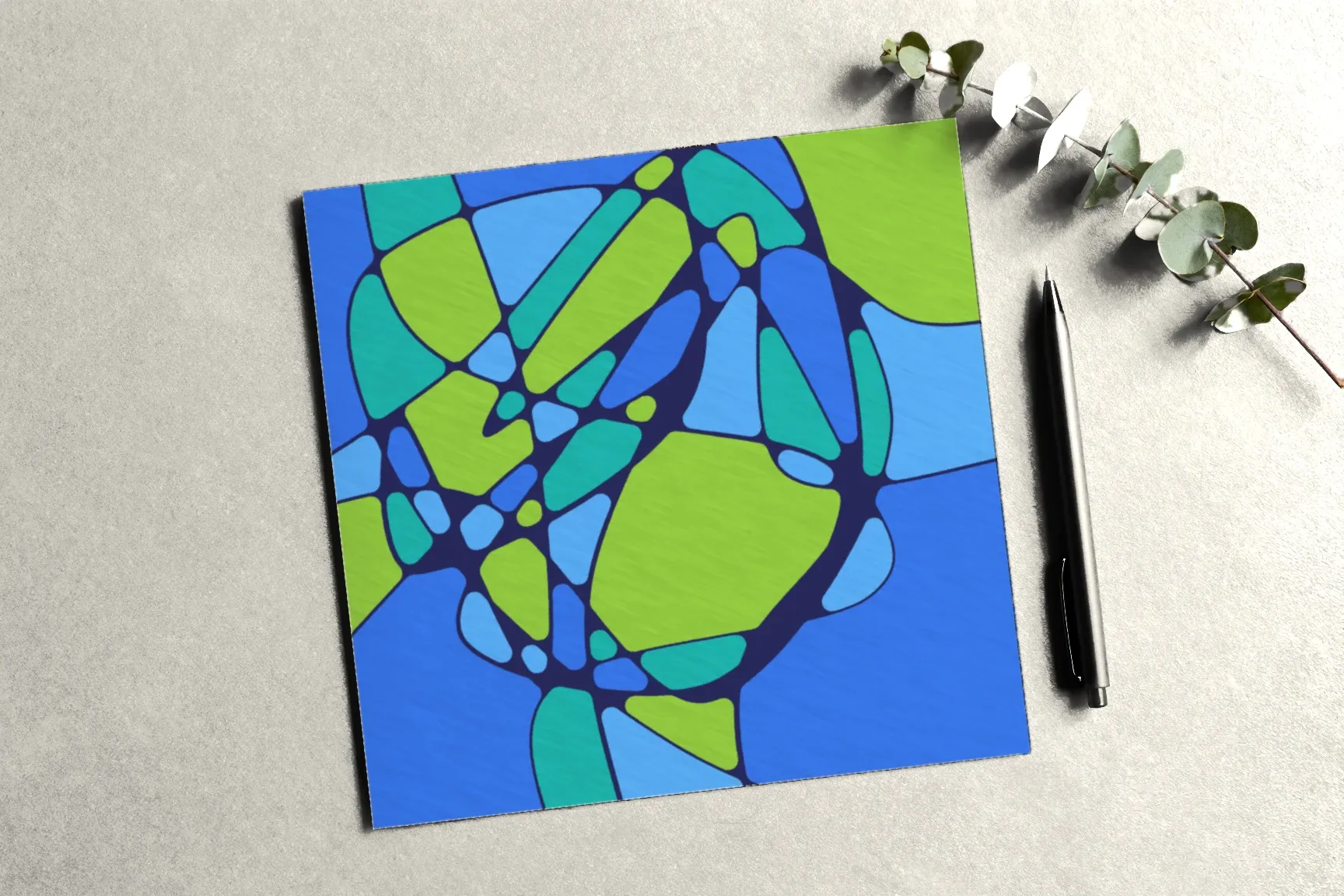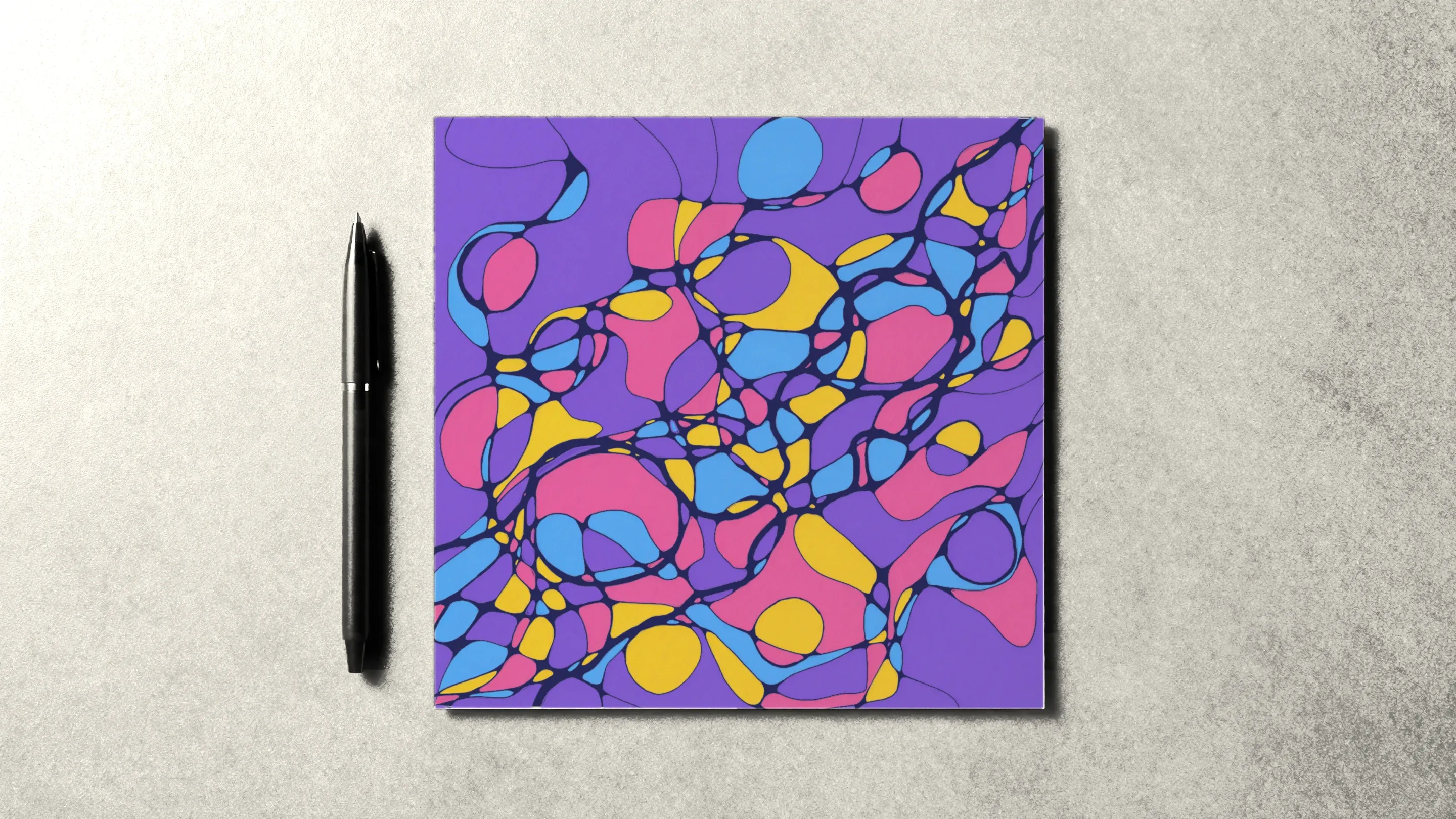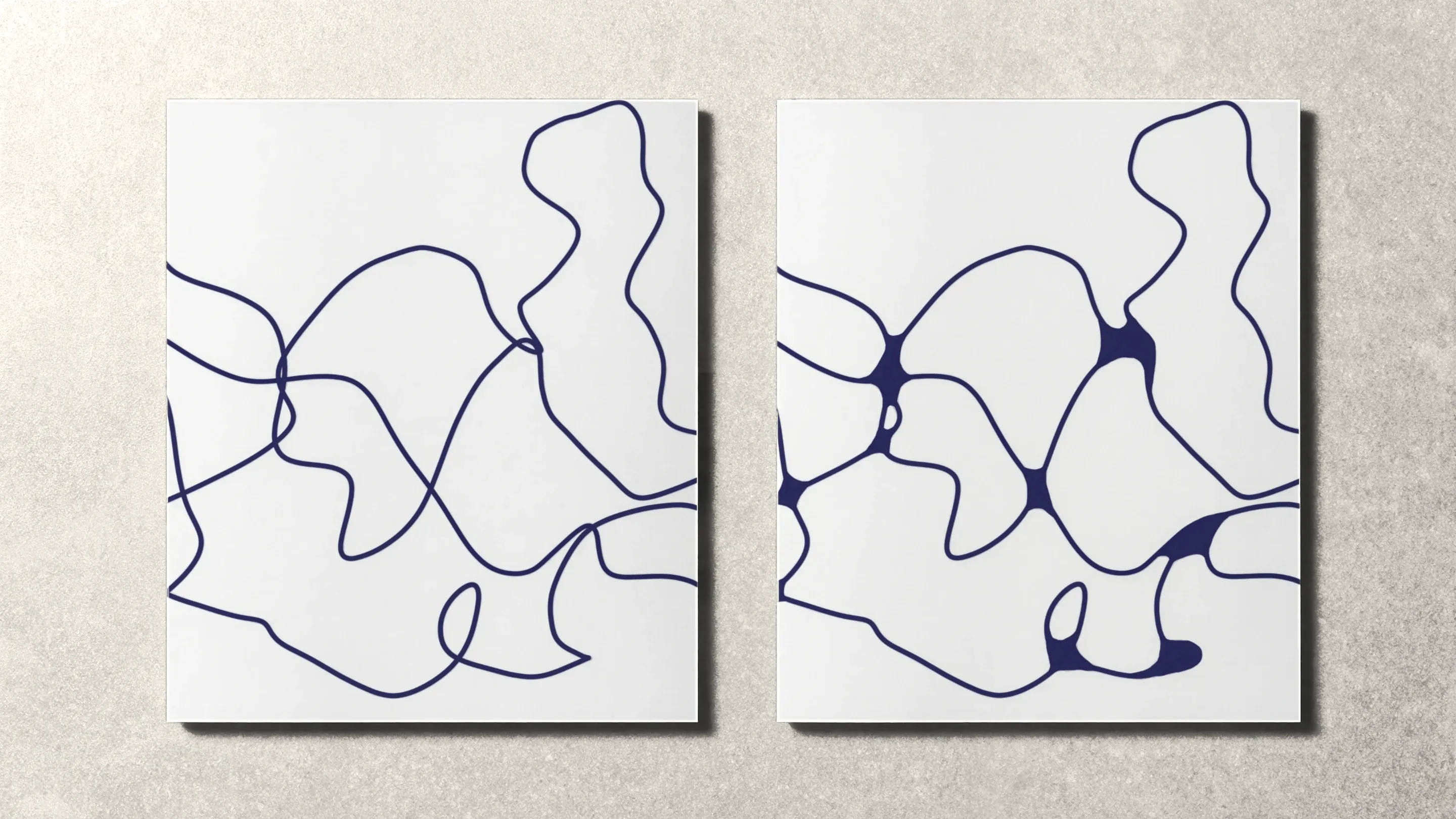
If you’ve seen neurographic art, you’ll recognize the drawings in our course: free lines, rounded intersections, bright colored shapes. So it’s fair to ask whether they’re the same thing. The short answer: yes, the technique is shared. The difference is in the name and in how the learning is set up.
What they share
The steps are identical:
- A free line with no plan, running edge to edge.
- Rounding the sharp corners where lines cross.
- Color in the spaces between the lines.
- Algorithms — sequences of steps built around a theme.
The aim is shared too: drawing not for a pretty picture but for the process itself — to slow down, stay with a thought for a while, and look at it from the outside.
Why two names
Neurographic art is the name the method was introduced under in 2014 by psychologist Pavel Piskarev, and the one most people search for. Transformational drawing is what we call the practice in the Neurojournal course. The name describes what happens on the page: random lines gradually turn into one connected drawing.
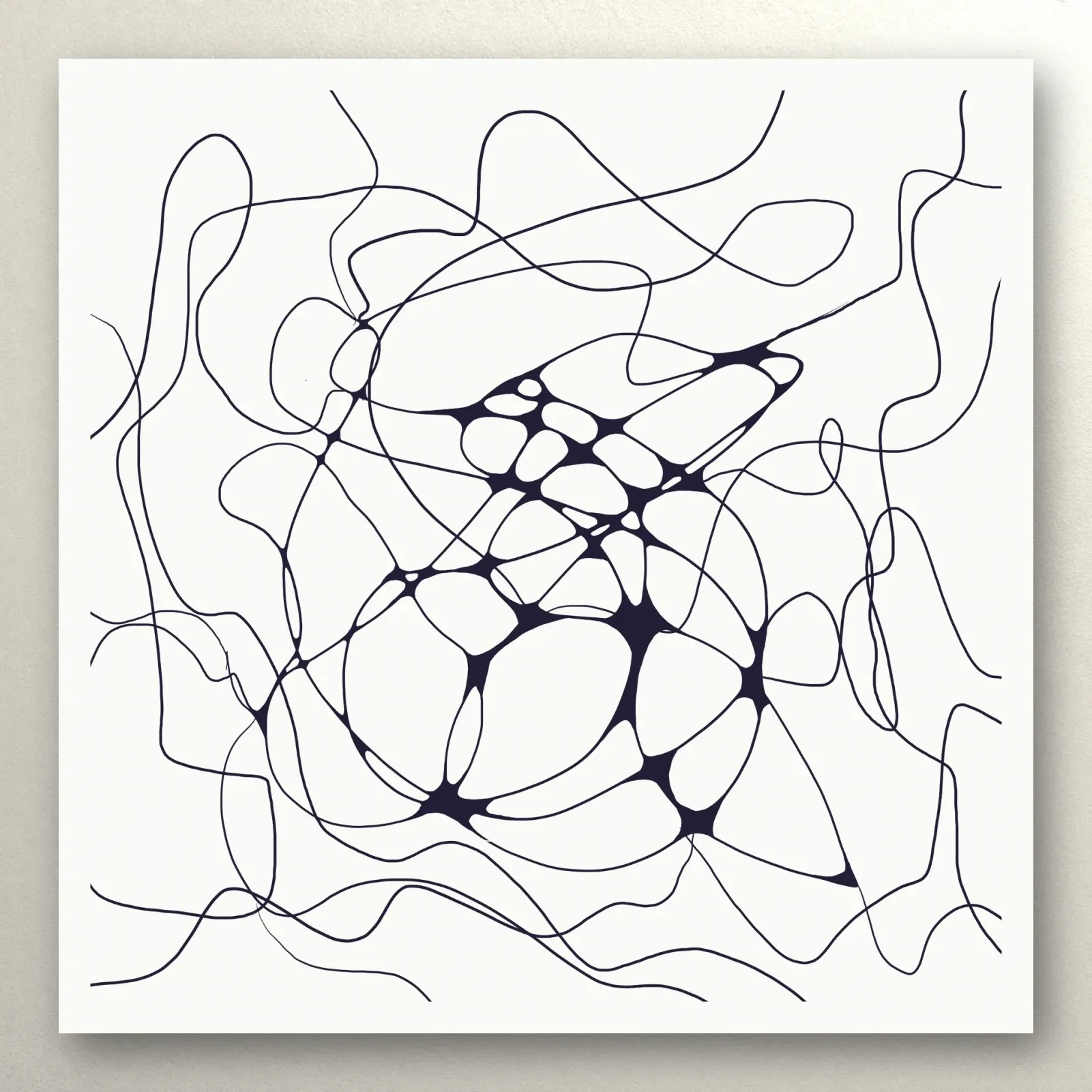
How the Neurojournal course differs
- Self-paced. You go through the lessons on your own schedule, with no class times and no group.
- Two languages. The course is in English and Ukrainian.
- A practice journal. A photo of each drawing and a few lines about how it went, kept in one place — so you can see your practice change over time.
- No “change your life” promises. We don’t claim a drawing will solve a problem. We say it’s a way to give yourself half an hour and see your thoughts from another angle.
What the course is not
We aren’t the method’s official school, and we don’t issue instructor certificates. If you specifically want the original method with certification, look for its author’s school. If you want to learn the technique calmly on your own and draw regularly, that’s what the course is for.
What comes next
What neurographic art is and where it came from is covered in What Is Neurographic Art?, and how to start is in Neurographic Art for Beginners. To see how the course works, the first module is open without an account.