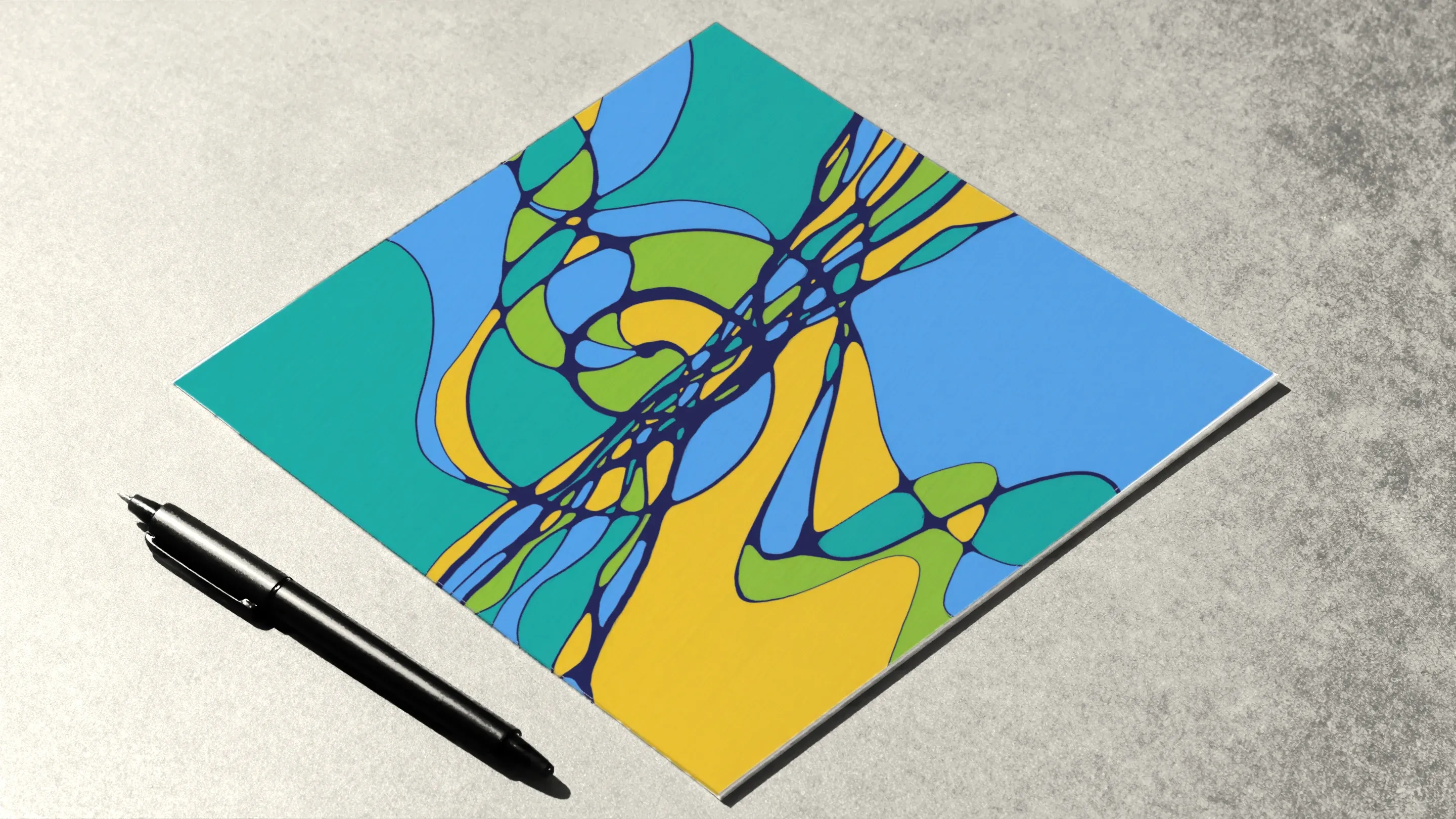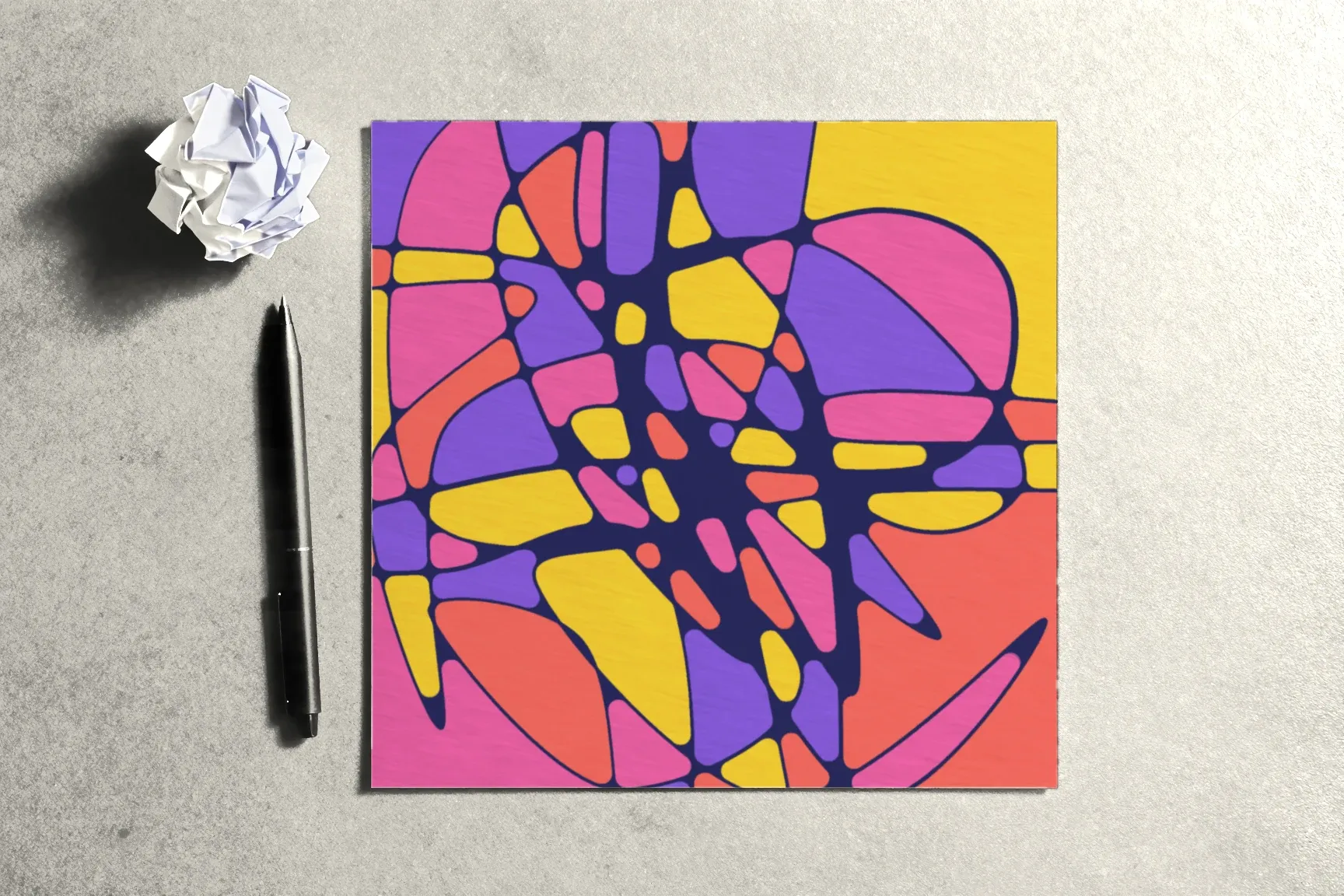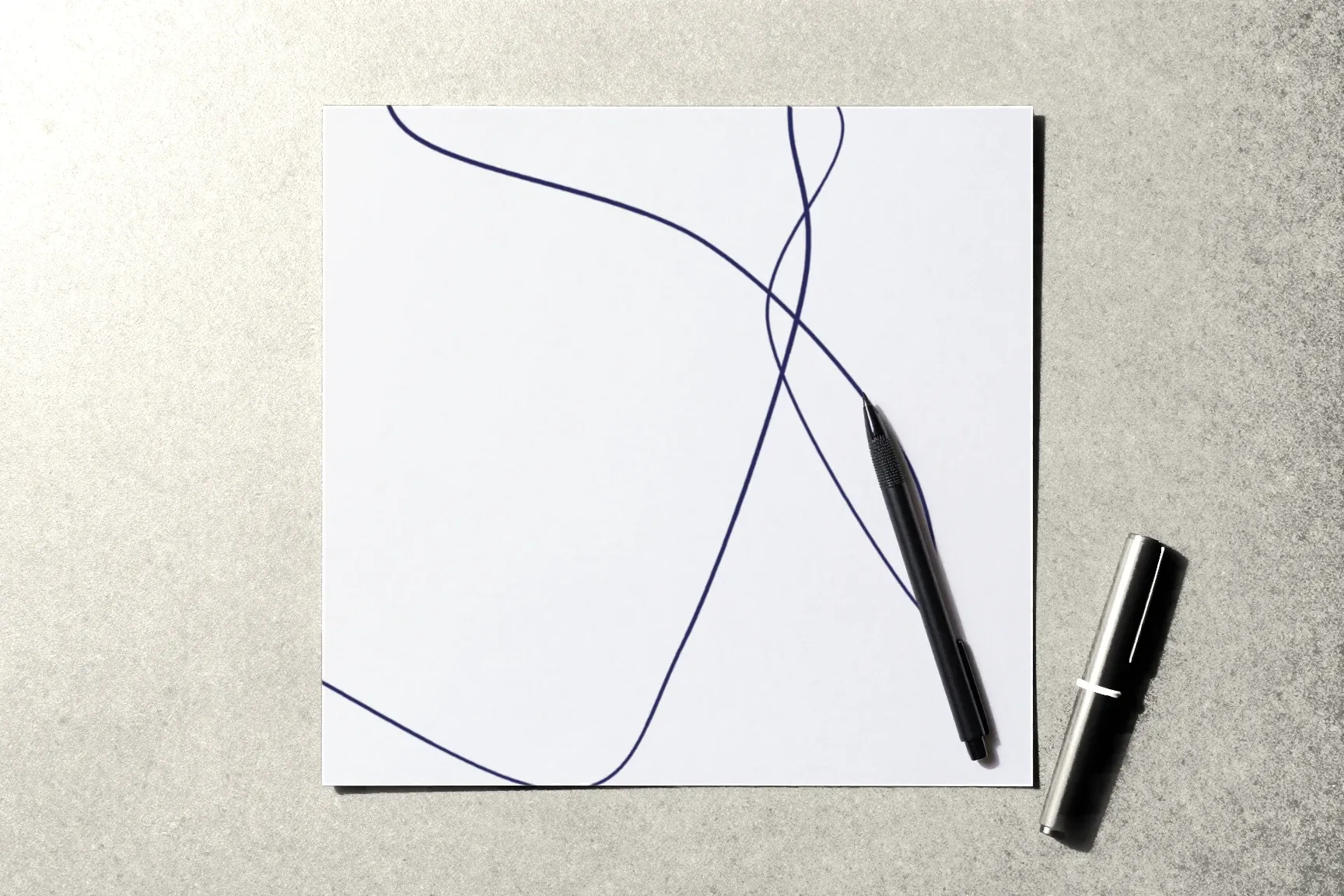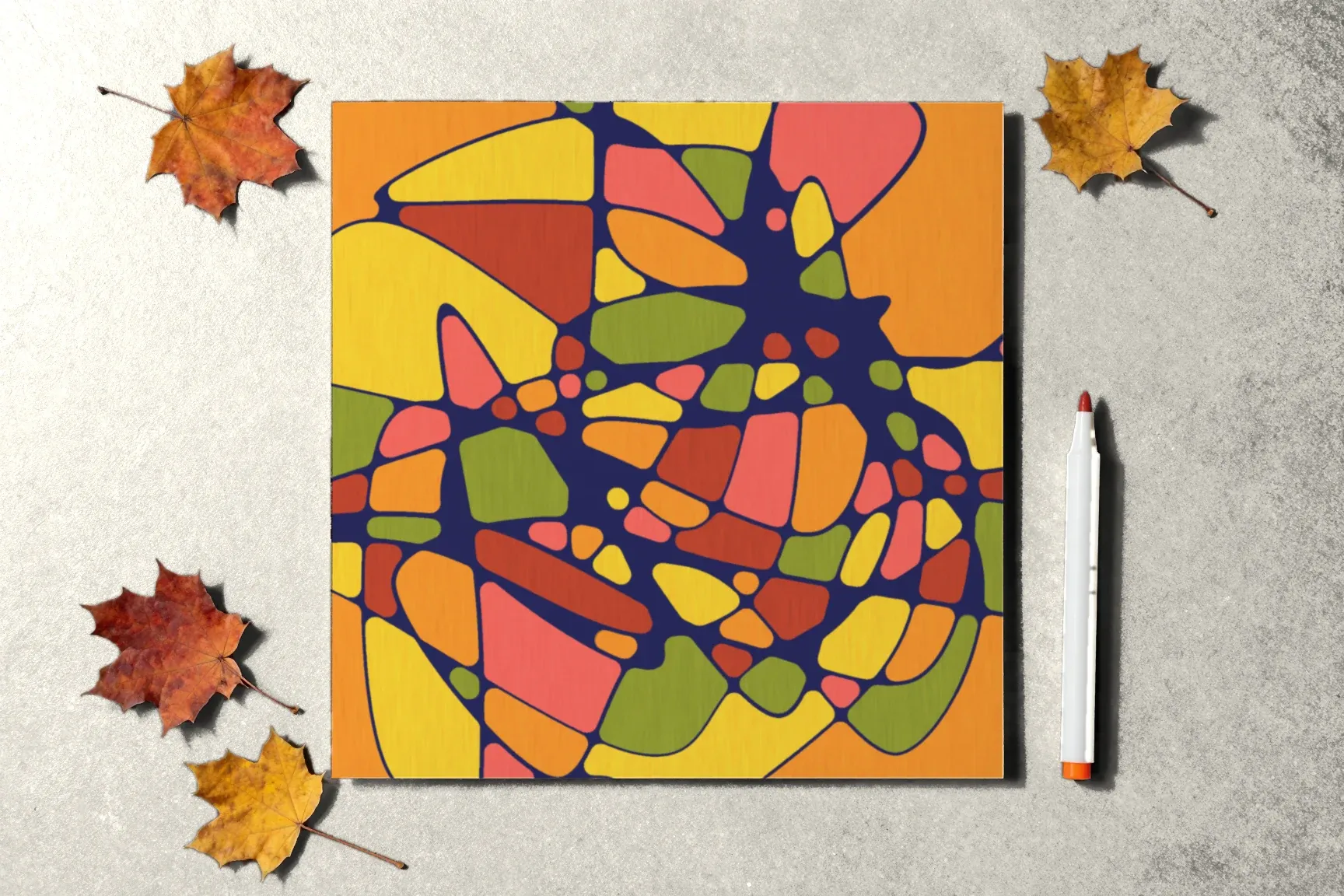
Fall is the season of long evenings, when you want to sit down at the table with a warm drink and give your hands something to do. It’s a good time for transformational drawing: it gets dark early, and the colors outside practically hand you a palette.
Here’s how a theme works in a technique where the line doesn’t depict anything, plus six fall palettes, ten prompts, and a plan for an autumn drawing.
How a theme works when the line depicts nothing
In transformational drawing you don’t draw a leaf or a tree. The line is free; it doesn’t trace any object. A theme works differently here: it sets the mood, the pace, and the colors.
- Mood is what you think about while the line moves — a walk through the park, rain on the window, a warm blanket.
- Pace is how the line moves: slow and drawn-out for a foggy morning, sharper for a windy day.
- Colors come from what you’ve seen. This is where the theme shows most.
So a “fall drawing” is an ordinary drawing in the technique — just with a fall palette and a fall thought in your head.
Six fall color palettes
Three to five markers or pencils per palette are enough. The names are approximate; pick the closest shades you have.
- The park in October. Mustard, ochre, terracotta, olive. Classic fall: warm, with one green accent.
- Late leaves. Rust, burgundy, dark brown, muted yellow. Darker and deeper — it looks great on heavier paper.
- Foggy morning. Warm gray, pale beige, gray-blue, and a single terracotta. A quiet palette where nothing shouts.
- Apple picking. Red, yellow-green, light brown, cream. The juicy, harvest side of fall.
- Evening by lamplight. Honey, orange, navy, inky purple. Warm light against a dark window.
- First frost. Cool gray, slate blue, lilac, and white (the uncolored paper). Fall turning into winter.
A tip: uncolored cells are part of the palette too. White paper between colors gives the drawing room to breathe.
Ten prompts for the line
Pick one before you draw the first line and keep it in mind as you work:
- A path through the park, leaves crunching underfoot.
- A leaf slowly spiraling down.
- Rain on glass: drops running down and merging.
- Wind that suddenly changes direction.
- A warm mug in your hands.
- The walk home as the windows light up.
- Fog over a river in the morning.
- Harvest: a basket, apples, hands.
- The first cold morning, your breath in the air.
- A long evening with nowhere to rush to.
The theme doesn’t have to be “visible” on the page. It’s there for you, not for a viewer.
A plan for a fall drawing
- Choose a palette from the six above and set the markers out.
- Choose a prompt and think about it for a few seconds.
- Draw three to five lines across the whole sheet, edge to edge, at a pace that suits the theme.
- Round every crossing. It’s the longest part — nice to do with rain outside or some music on.
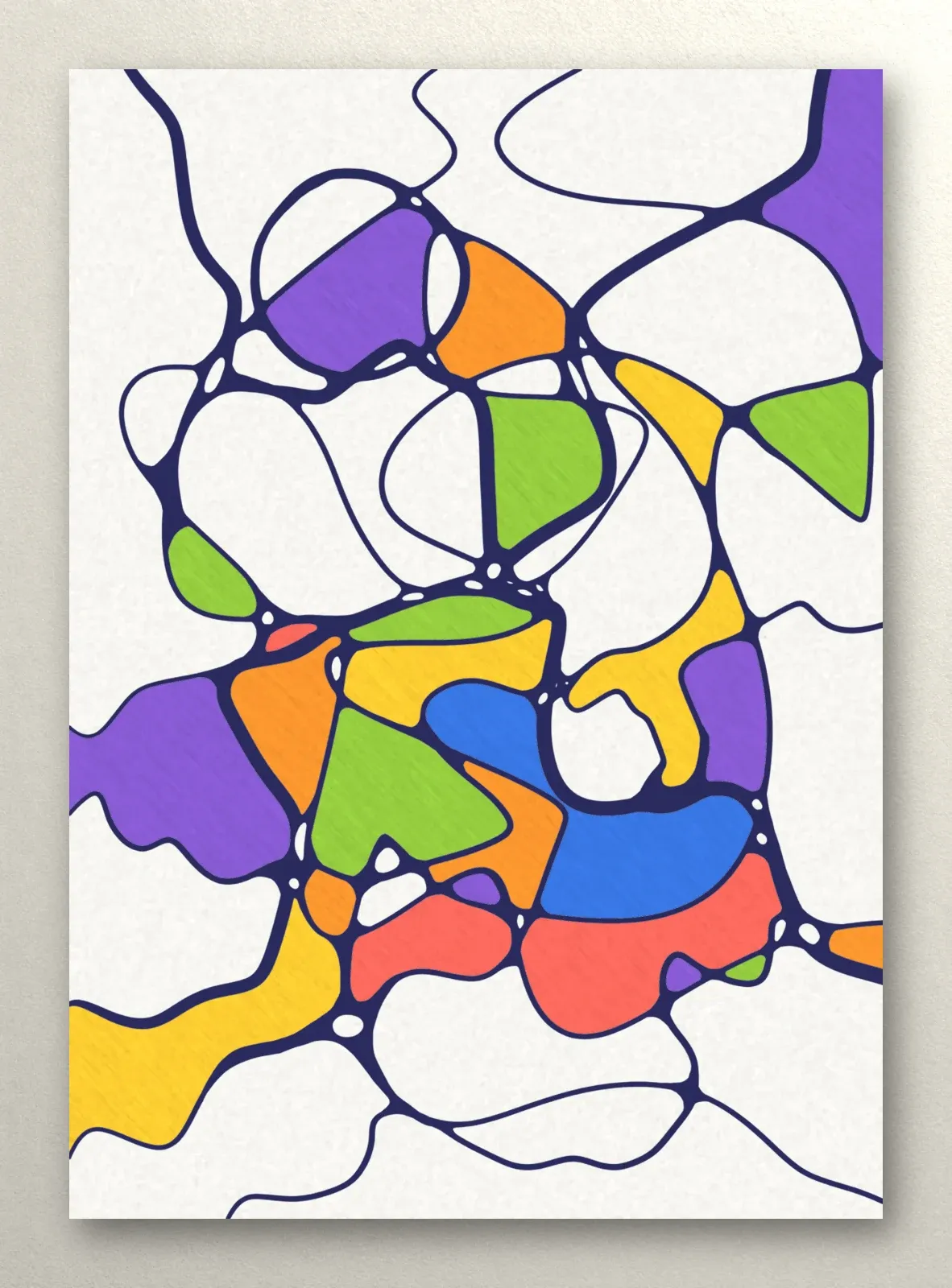
- Color the cells. Start with the palette’s main color: place it in a few cells around the page. Then add the second, the third. Give neighboring cells different colors.
- Leave some cells white if the drawing feels too busy.
- Write a few words: which prompt and palette you chose, what you noticed.
Collect colors on your walks
The best fall palette is your own. On a walk, take photos of a few leaves, a branch with berries, or wet pavement with a puddle. At home, set the photos next to you and pick the markers closest to those colors. Each fall drawing gets a palette of its own — and your practice journal gets a small record of the season: what you saw and how it landed on paper.
What comes next
The lesson on colors in “The alphabet” module of the Neurojournal course goes deeper into coloring a drawing in this technique and choosing colors. If you haven’t tried the technique itself yet, start with What Is Transformational Drawing?, and see Rounding the Intersections, Step by Step for the rounding. The first module of the course is open without an account — start there.