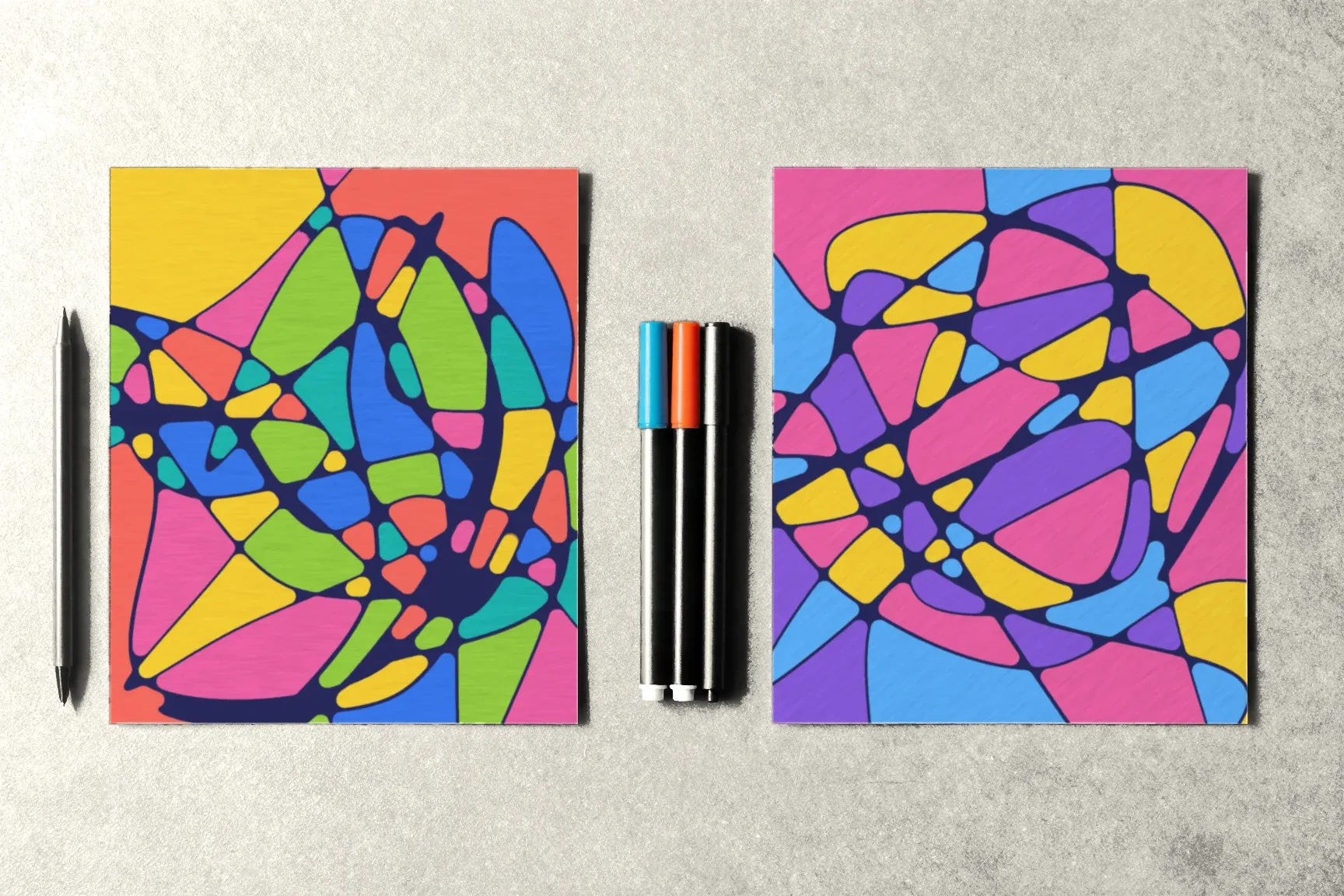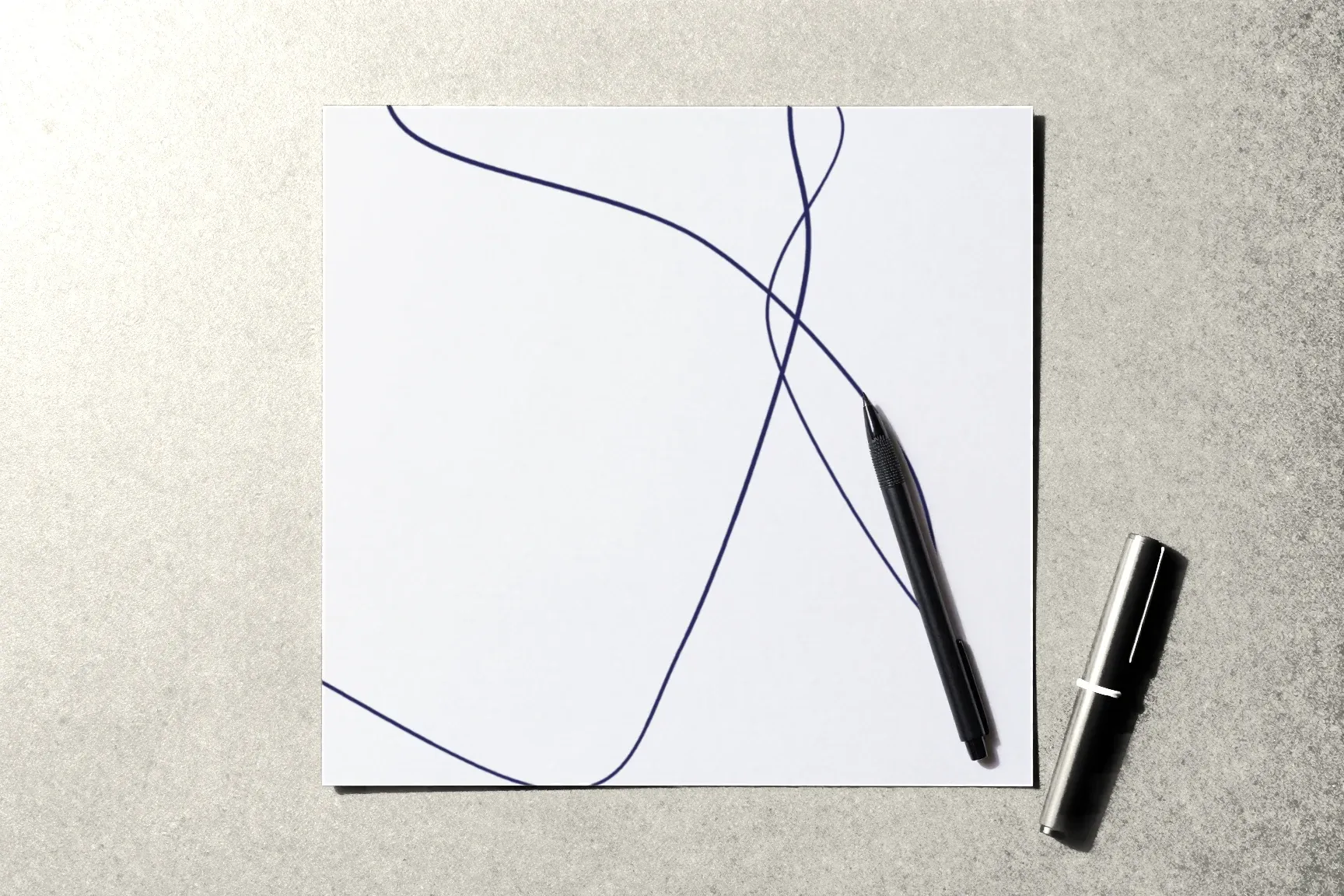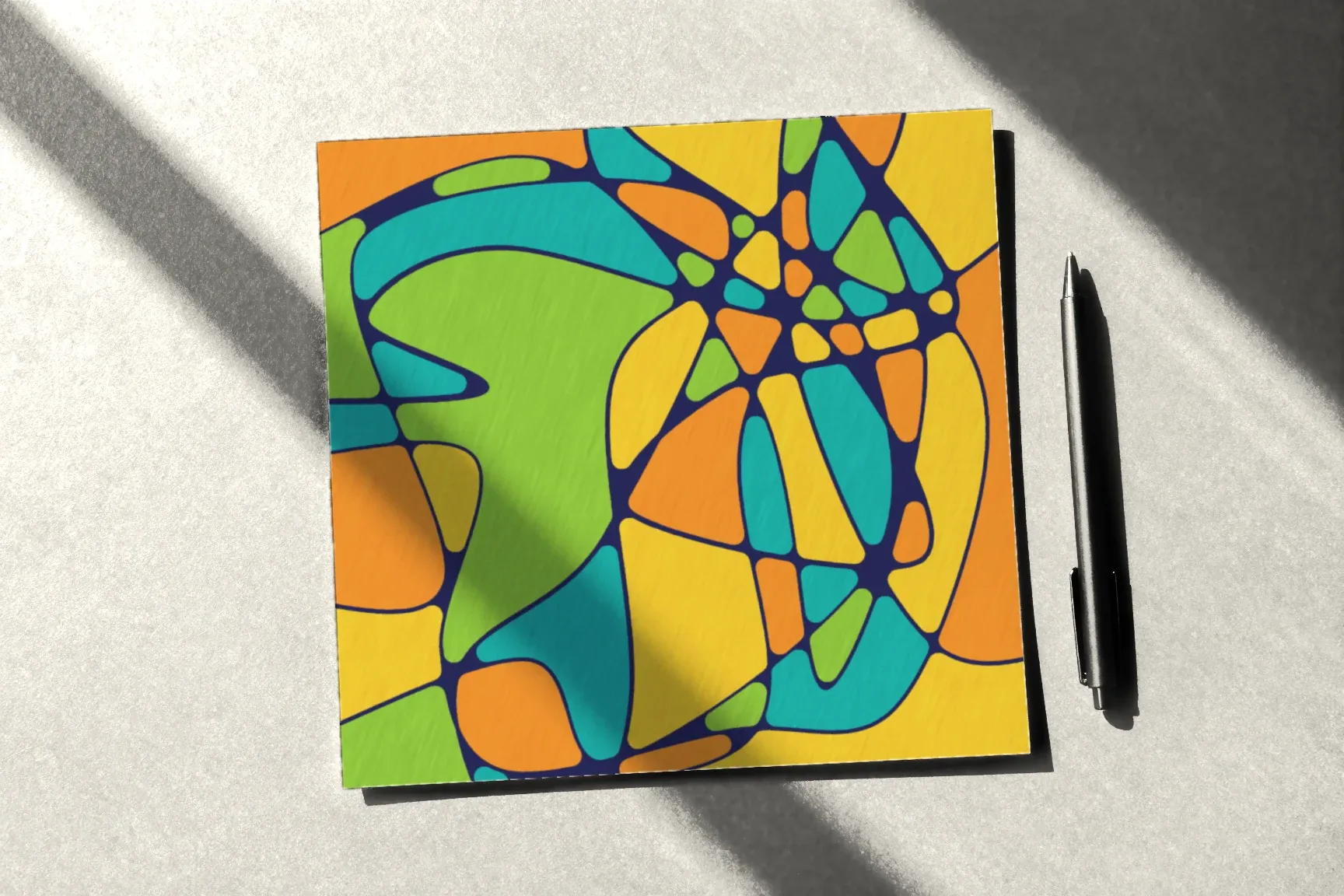
The best time to draw is whenever you actually sit down to draw. But if you get to choose, morning and evening make for very different sessions: different light, a different pace, a different number of free minutes. Here are the strengths of each, and how to find yours.
No promises here: there’s no “scientifically best” time. Just practical differences worth considering.
Morning
Light. Daylight — even, and the best for color: markers look the way they do on the cap, and journal photos come out natural.
Pace. Usually limited: you have things to do, and maybe 20–30 minutes for drawing. So mornings suit short formats: a rounding template, a small page, coloring yesterday’s drawing.
Quiet. If you get up before the rest of the household, this may be the quietest time of your day.
Good for: early birds; people whose evenings are taken; people who like to start the day with something of their own.
Keep in mind: the course suggests finishing the rounding the same day, so a long drawing started at 7 a.m. would have to be finished that evening. It’s better to plan shorter morning pages.
Evening
Light. Artificial. You’ll want a lamp with neutral light off to the side so colors don’t shift. Evening journal photos are harder to make look like the paper.
Pace. Usually more relaxed: the day’s work is done, and you can give a page an hour. Evenings are the most convenient time for algorithms and large formats.
A transition. For many people, evening drawing is a way to separate the workday from free time: close the laptop, put a sheet of paper down.
Good for: people whose mornings are taken; people who enjoy long, unhurried sessions.
Keep in mind: fatigue. If you have nothing left by evening, drawing turns into a chore. On those days, go short or take a break.
Weekends
Weekends are their own option: daylight and free time at once. They’re good for what weekdays don’t leave room for: an algorithm, a large format, looking back over the week’s drawings.
How to choose your time
- Look at your week. Where do you regularly have 30 free minutes?
- Try both. A week of mornings, a week of evenings — then compare your journal entries.
- Tie it to a habit. “After my morning coffee” or “after dinner” works better than “sometime in the evening.”
- Feel free to switch. In winter, when it gets dark early, mornings may suit you better than in summer.
A tip for either
Keep your table ready: paper, pens, and markers in one place. Then neither your 20 morning minutes nor your evening hour goes to hunting for supplies.
What comes next
How to fit drawing into a packed schedule is in 20 Minutes a Day, and how to set up a spot with good light is in A Drawing Corner at Home. The first module of the Neurojournal course is open without an account — start there.