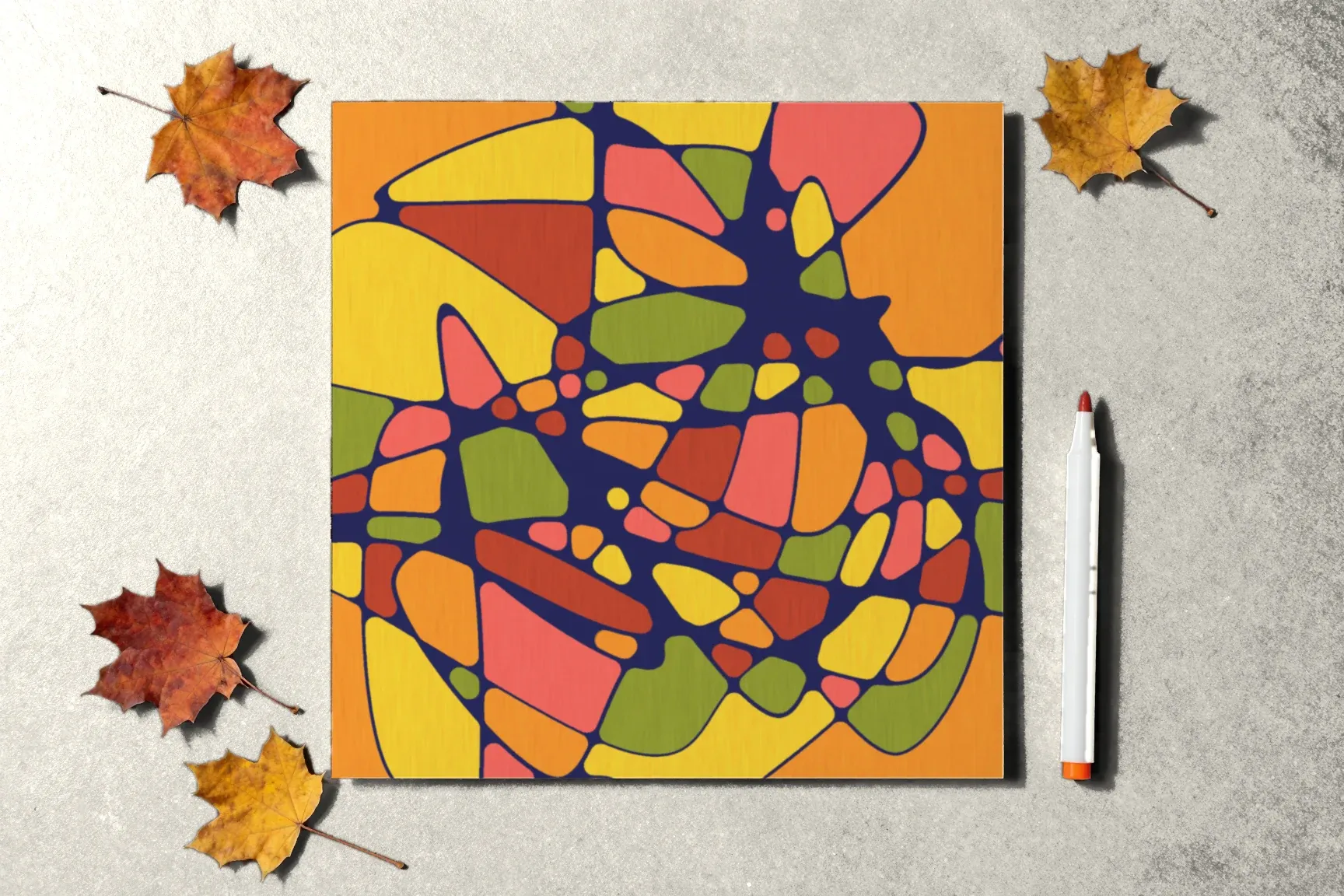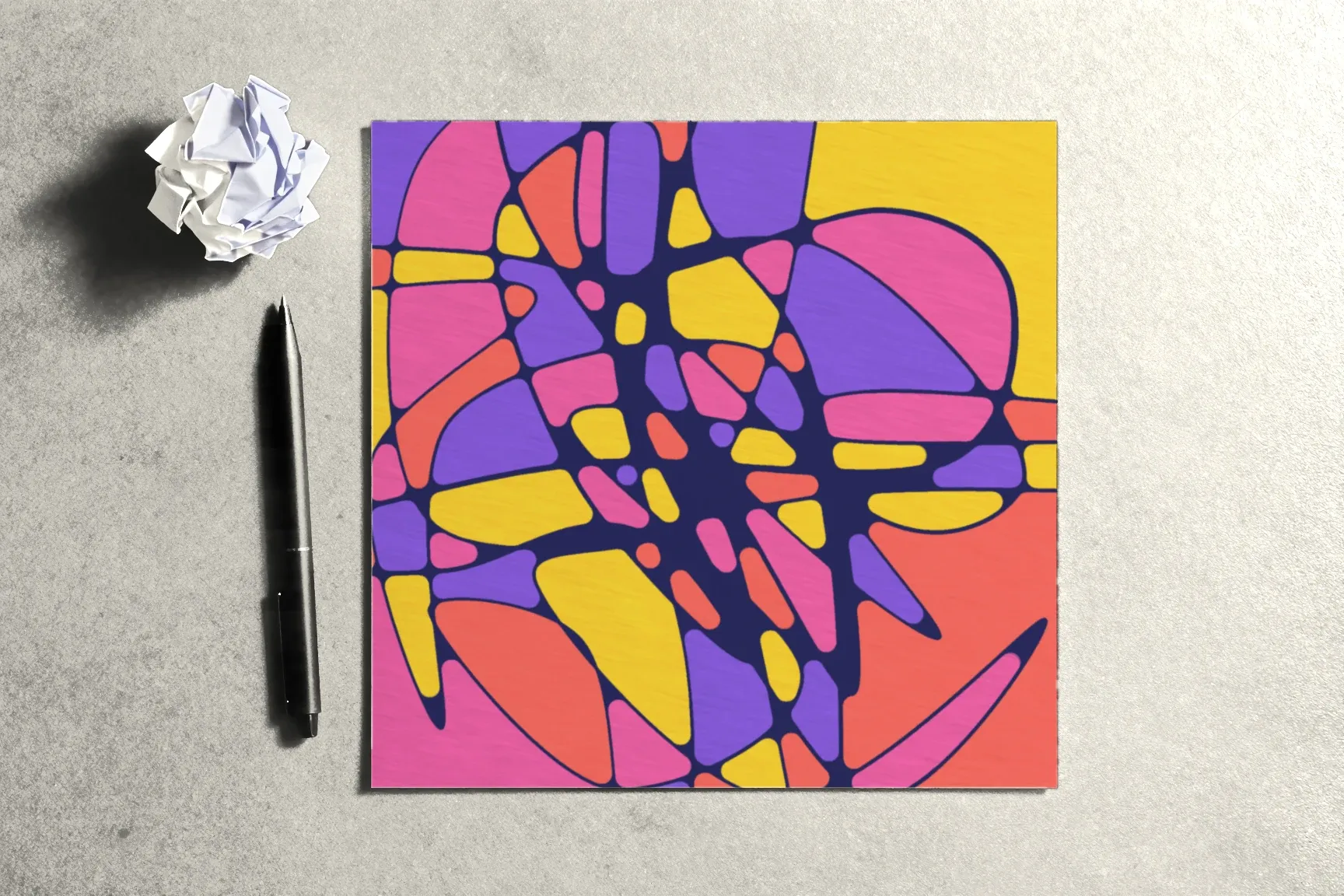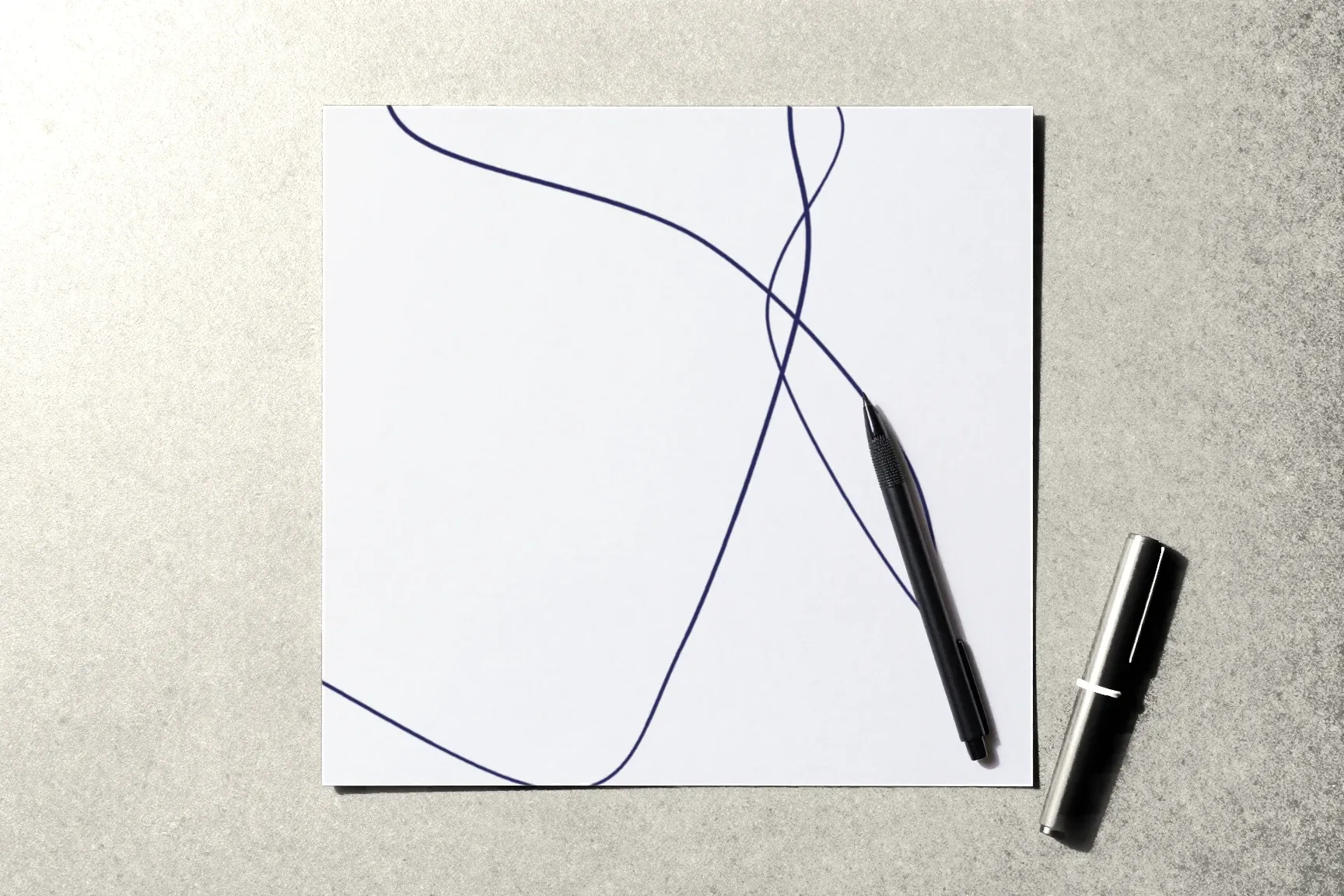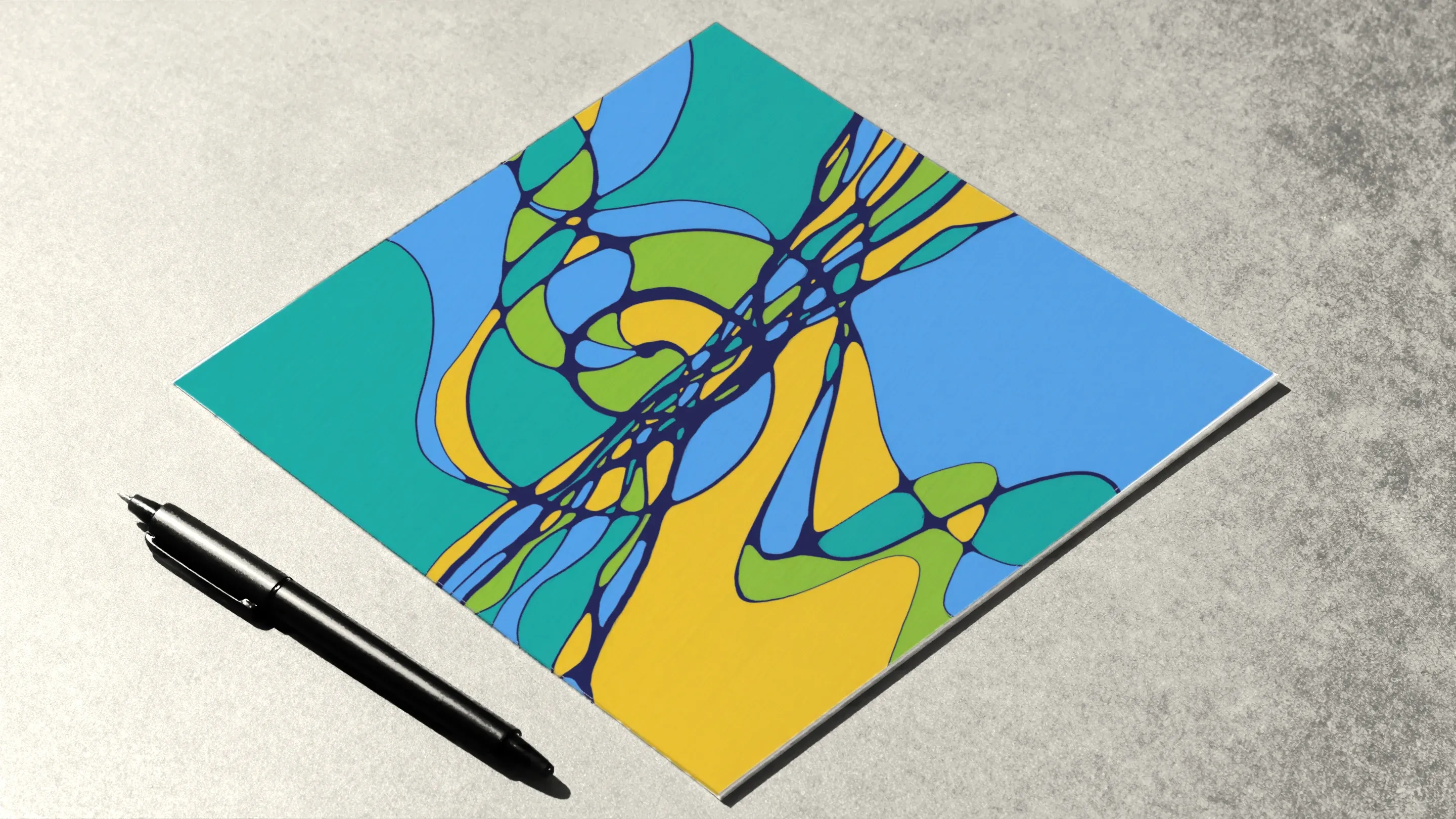
An algorithm is a sequence of steps on a single sheet, where every action has its place. We covered how algorithms work in general, and how to work through one, in What a Drawing Algorithm Is. This article is about the three specific algorithms in the Neurojournal course: how they differ on paper, and how to choose one.
What all three have in common
- The first step is the request. Before you pick up the pen, you put a topic into words: what you’ll be thinking about while you draw.
- Rounding after every new element. Lines, a shape, new lines — and each time, “round all the new intersections.”
- General lines at the end. Two or three lines across the whole sheet that seem to start and end far beyond its edges, then a final rounding.
- Nine or ten steps. One algorithm is one complete drawing, an evening’s work.
Where the algorithms differ is in how the drawing begins and which shape takes center stage.
Algorithm 1: “Overcoming inner limitations”
What dominates the page: a sharp release of lines that gradually dissolves, and a circle.
The steps:
- Request: a topic you want to work with, rated from 1 to 10.
- Release: a sharp, fast, spontaneous line on a clean sheet.
- Rounding.
- Integration: new lines fill the empty space until the release no longer stands out.
- Rounding.
- A circle, its place and size chosen intuitively.
- Rounding.
- General lines.
- Rounding.
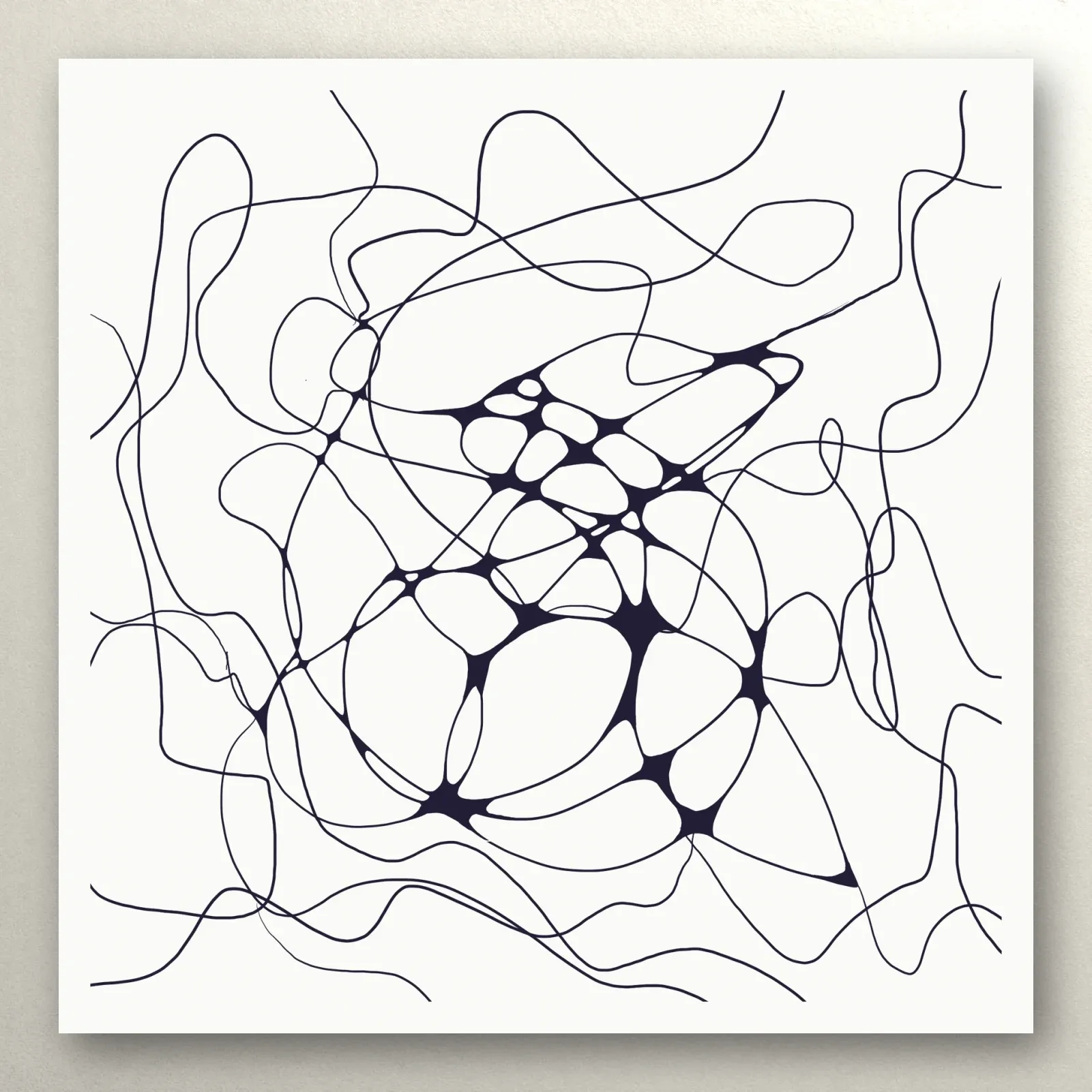
What sets it apart: it’s the only algorithm that starts with a sharp, spiky tangle. Everything after is built around it, and the course’s frames show the tangle getting lost, step by step, among the new lines.
Algorithm 2: “A lucky coincidence of circumstances”
What dominates the page: a bundle of lines, a spiral, and a thick circle at its center.
The steps:
- Request: an area of life or a situation you’ll think about. The course suggests giving this step 5–10 minutes.
- Lines: a bundle of lines across a clean sheet.
- Spiral: a twisting spiral through the lines already drawn, clockwise.
- Rounding.
- Integration: new lines fill the empty space.
- Rounding.
- A circle inside the spiral — thick and noticeable.
- Rounding.
- General lines.
- Rounding.
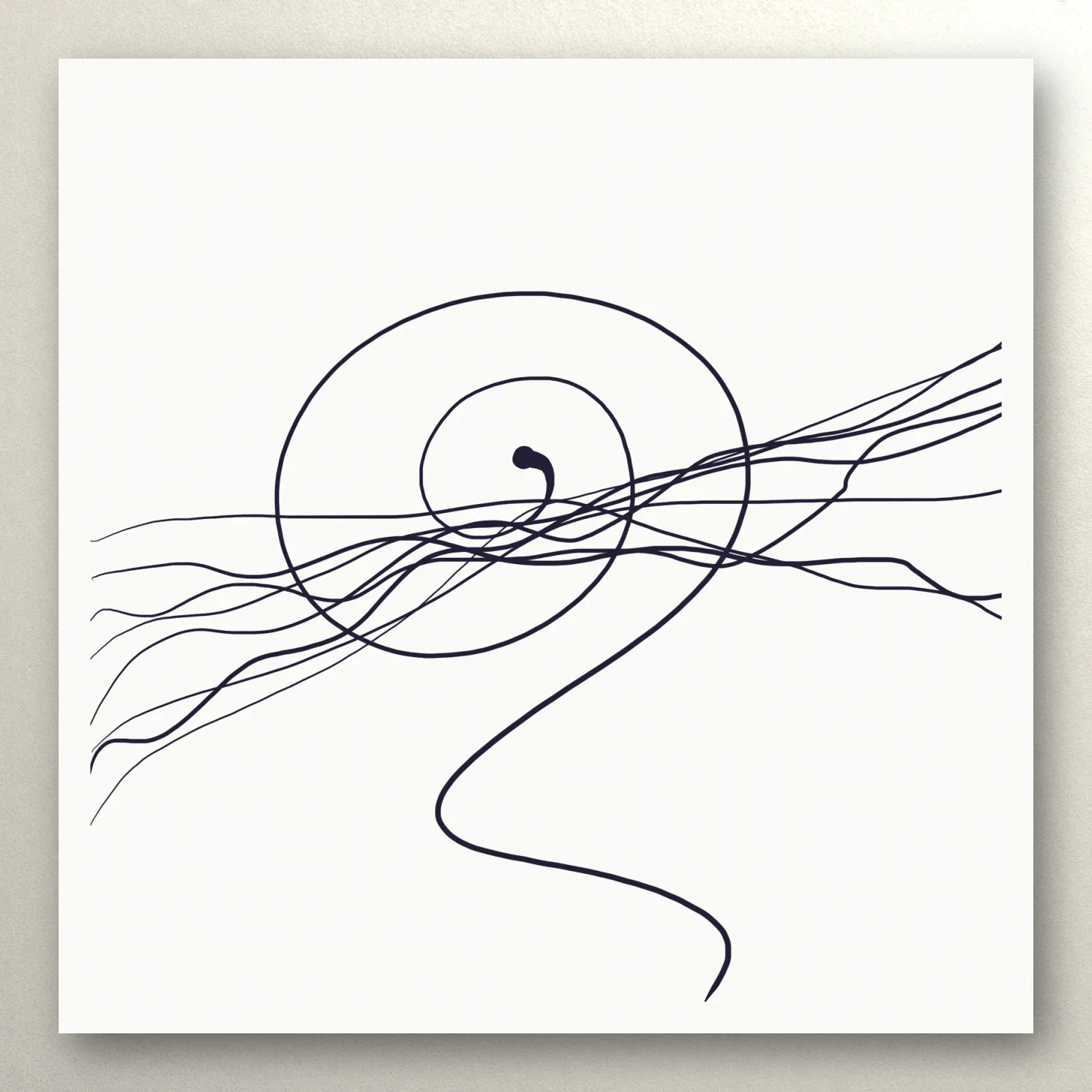
What sets it apart: it’s the longest of the three and the only one with a spiral. The spiral gives the drawing movement from the edge toward the center, and the thick circle inside becomes its most striking point.
Algorithm 3: “Making a dream come true”
What dominates the page: two circles joined by lines, with smaller circles around each.
The steps:
- Request: a dream you’ll think about.
- Me and the dream: two circles on a clean sheet.
- Lines that pass through both circles and connect them.
- Rounding.
- Resources and opportunities: smaller circles around each of the two main ones.
- Lines connecting all the circles.
- Rounding.
- General lines.
- Rounding.
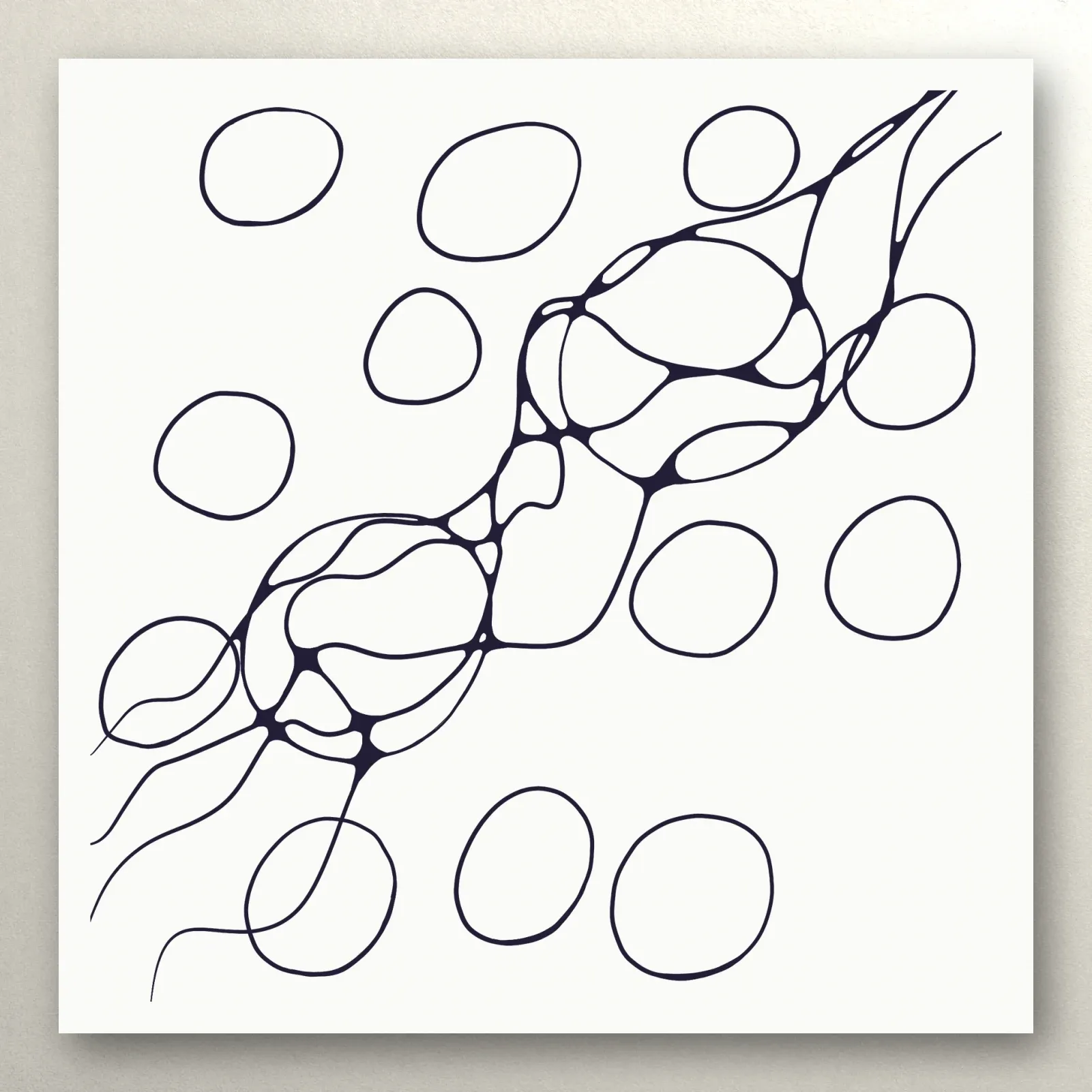
What sets it apart: it has the most shapes. The drawing is a network of circles, and rounding the crossings between lines and circles takes up most of the time.
How to choose an algorithm
- By how you want the page to begin. A sharp tangle, a spiral, or two circles make for very different first minutes of drawing.
- By the topic you want to think about. An algorithm’s name is the theme the course pairs it with. If it speaks to you, start there.
- By time. The second algorithm is one step longer, and the third has the most rounding around circles.
- In order. If you’re not sure where to start, go through all three in the course’s order, one per evening.
Coming back to an algorithm
You can do the same algorithm many times. Each pass gives you a new drawing, because a free line never repeats itself. It’s worth saving a photo of each pass in your practice journal along with the topic you chose: after a month you can lay them side by side and see how the drawings changed.
What comes next
The algorithms make up the “Algorithms” module of the Neurojournal course: a lesson on themed algorithms, then three algorithms with a frame for every step. The first algorithm opens with a subscription’s free days, and the second and third after them; terms are on the subscription page. Before the algorithms, it’s worth being comfortable with rounding and shapes.