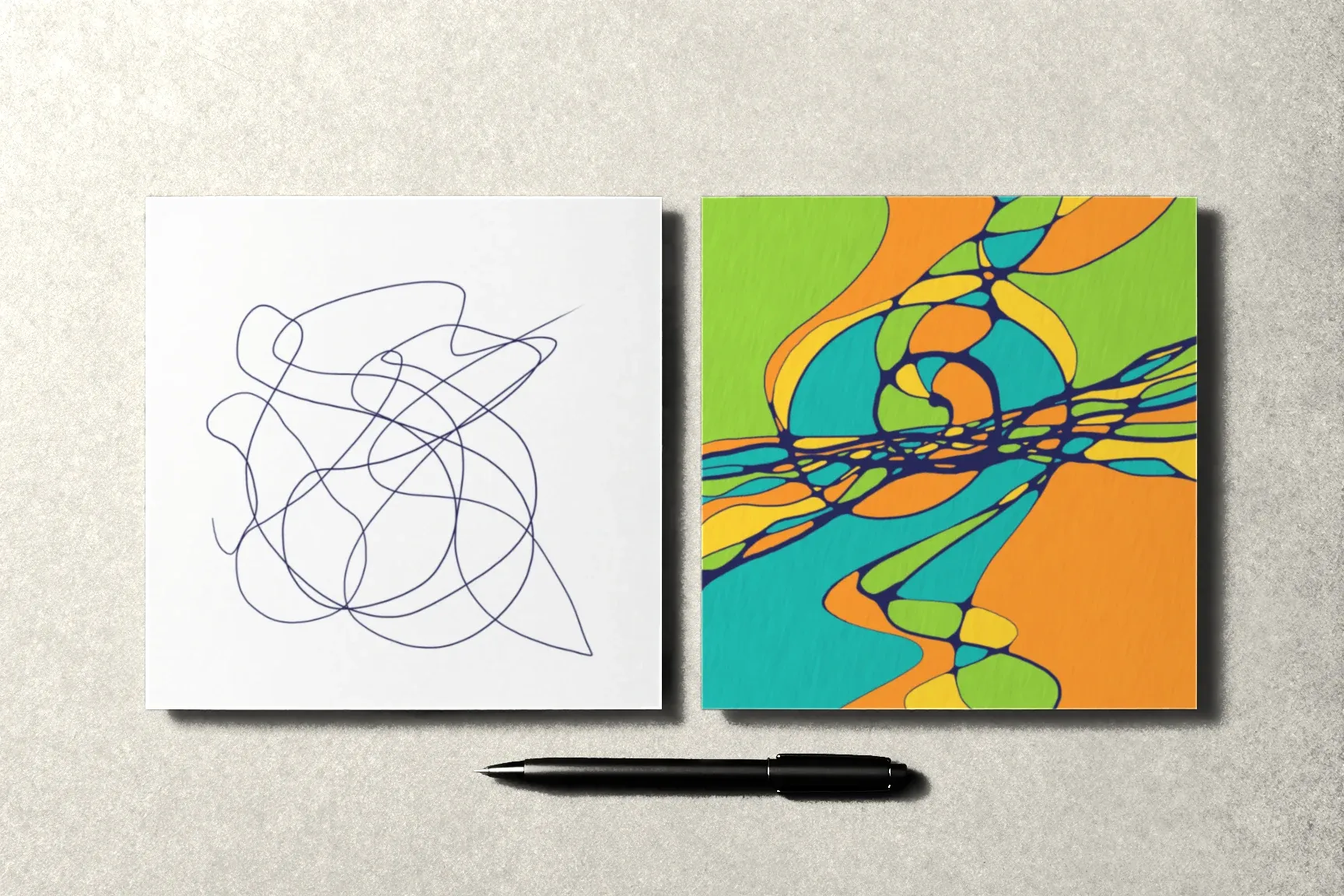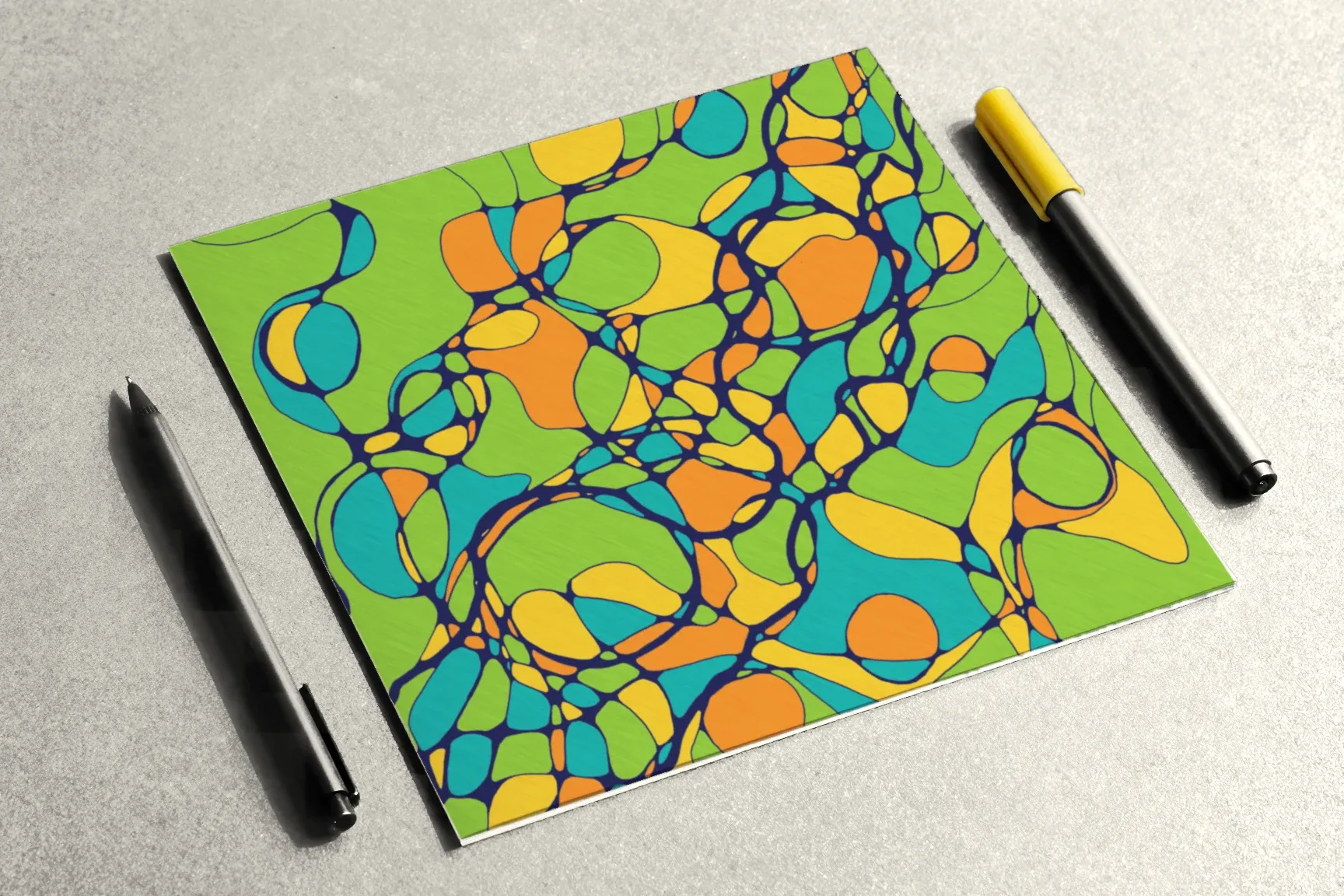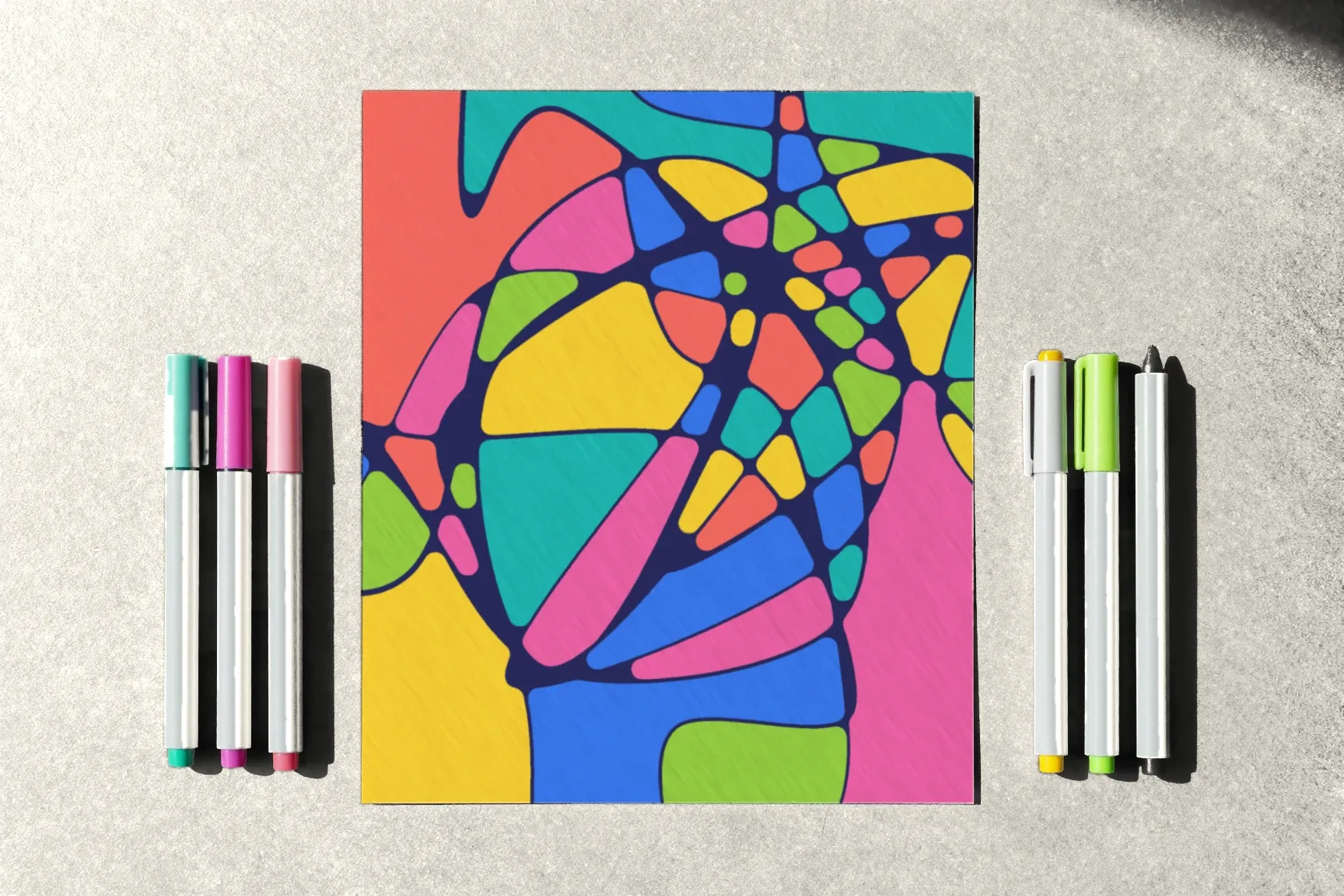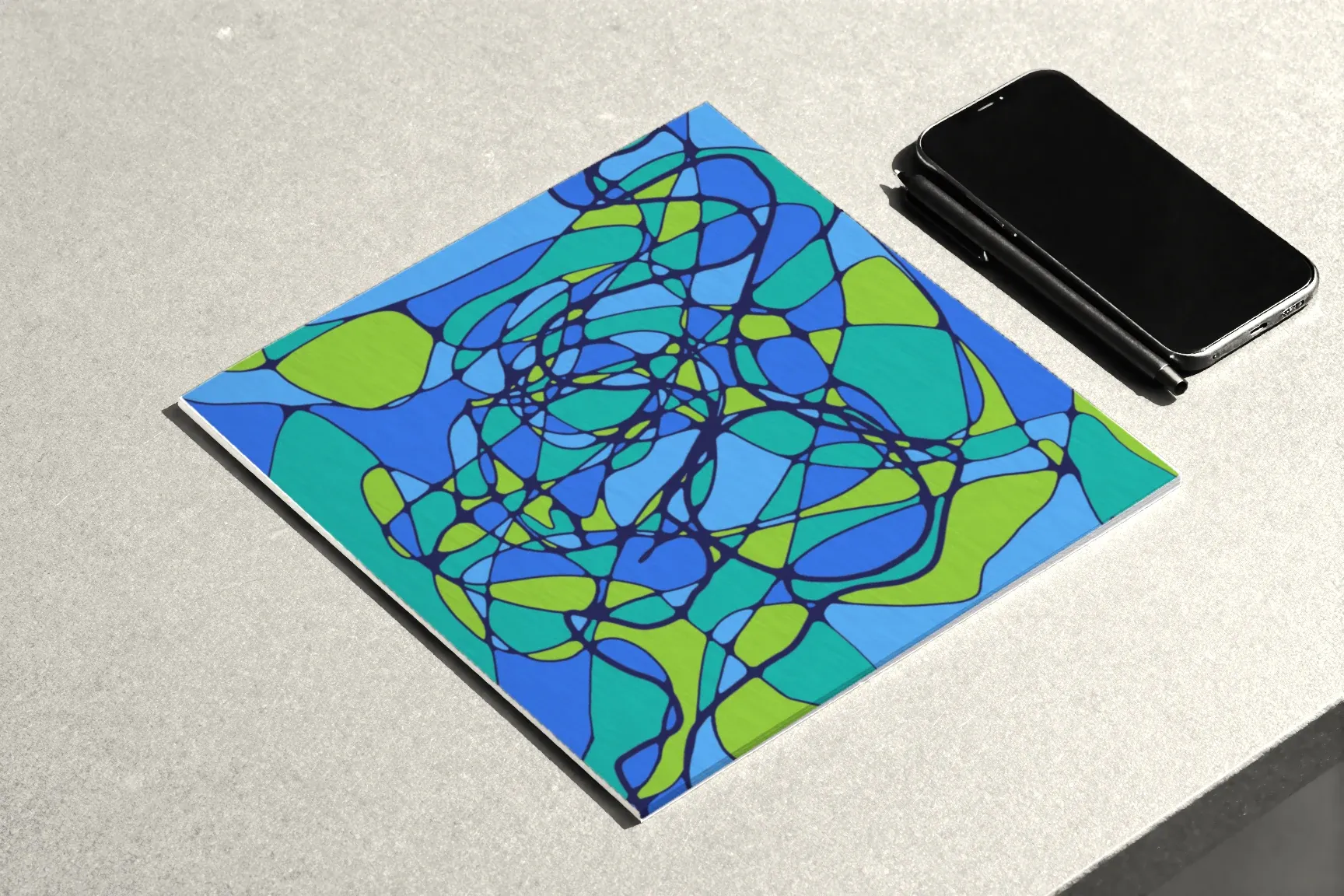
Before you subscribe to any course, it’s worth knowing whether it’s for you. This article is an honest attempt to answer that question about Neurojournal: who the course suits, who it doesn’t, and what you can try for free before deciding.
The short version
- A self-guided course in transformational drawing: the line, rounding, shapes, color, and three themed algorithms.
- Three modules, twelve lessons: text, diagrams, step-by-step frames for the algorithms, printable sheets.
- You draw on paper; the lessons are read in a browser on your phone or computer.
- A private practice journal: photos of your drawings with a few words, visible only to you.
- In English and Ukrainian.
- No schedule and no group: you go at your own pace.
Who it will most likely suit
- People who have always wanted to draw but “can’t.” The course starts with a single line and doesn’t require sketching skills or color theory.
- People looking for something to do away from screens. The drawing itself happens on paper; your phone is only for the lesson and a photo.
- People who enjoy slow handwork. Rounding the crossings is careful, unhurried work, and many people end up liking that part most.
- People who like learning on their own. You choose when and how much to draw, and you can come back to any lesson.
- People curious about the technique itself: how a chaotic set of lines turns, step by step, into a coherent pattern.
Who it most likely won’t suit
- If you want to learn realistic drawing. Portraits, perspective, shading, still lifes — that’s not this course. There’s no object to depict here.
- If you need a live instructor. In a self-guided course, nobody looks at your page and offers pointers. There are diagrams, step-by-step frames, and your own journal, but no feedback.
- If you’re interested in digital drawing. The course is built on pen-and-paper work; no tablet or stylus is involved.
- If you’re looking for therapy or treatment. The course teaches a drawing technique and isn’t therapy. It doesn’t treat anything and isn’t a substitute for care from a doctor or a licensed mental health professional.
What you can try for free
The first module, “Getting started,” is open without signing up. Its two introductory lessons explain what the technique is and how a session goes. After them, it’s worth trying one page:
- three free lines across the whole sheet;
- round every crossing;
- add color if you like.
There’s a step-by-step plan for that evening in How to Start Drawing as an Adult. If you want more afterward, the course is probably for you. If rounding felt tedious and the free line felt pointless, that’s a useful answer too — and it cost you nothing.
What a subscription opens
A subscription starts with free days. They open “The alphabet” — five lessons, one for each element of the technique — and the first algorithm. The second and third algorithms and the closing lesson open after the free days. You can cancel any time and keep access until the end of the period you’ve paid for. Prices and terms are on the subscription page.
Common doubts
“I’m not an artist.” The course is designed for exactly the people who don’t draw. The line here doesn’t depict anything, so it can’t “not look right.”
“I don’t have much time.” A lesson takes a few minutes to read, and a drawing can take 20–40 minutes. Two or three evenings a week are enough to keep moving. How to fit a session into a short evening: 20 Minutes a Day.
“Do I need expensive supplies?” No. Paper, a black pen, and a few markers. Details in What You Need to Start Drawing.
“What if I quit?” It happens, and you can come back anytime: your progress and journal stay in your account until you delete them. The habits that help you stick with it are in How Not to Quit After a Week.
How to decide
The simplest way is to go through the free module and draw one page. It takes an evening and tells you more than any description could. For a detailed tour of the course, see How the Neurojournal Course Works.