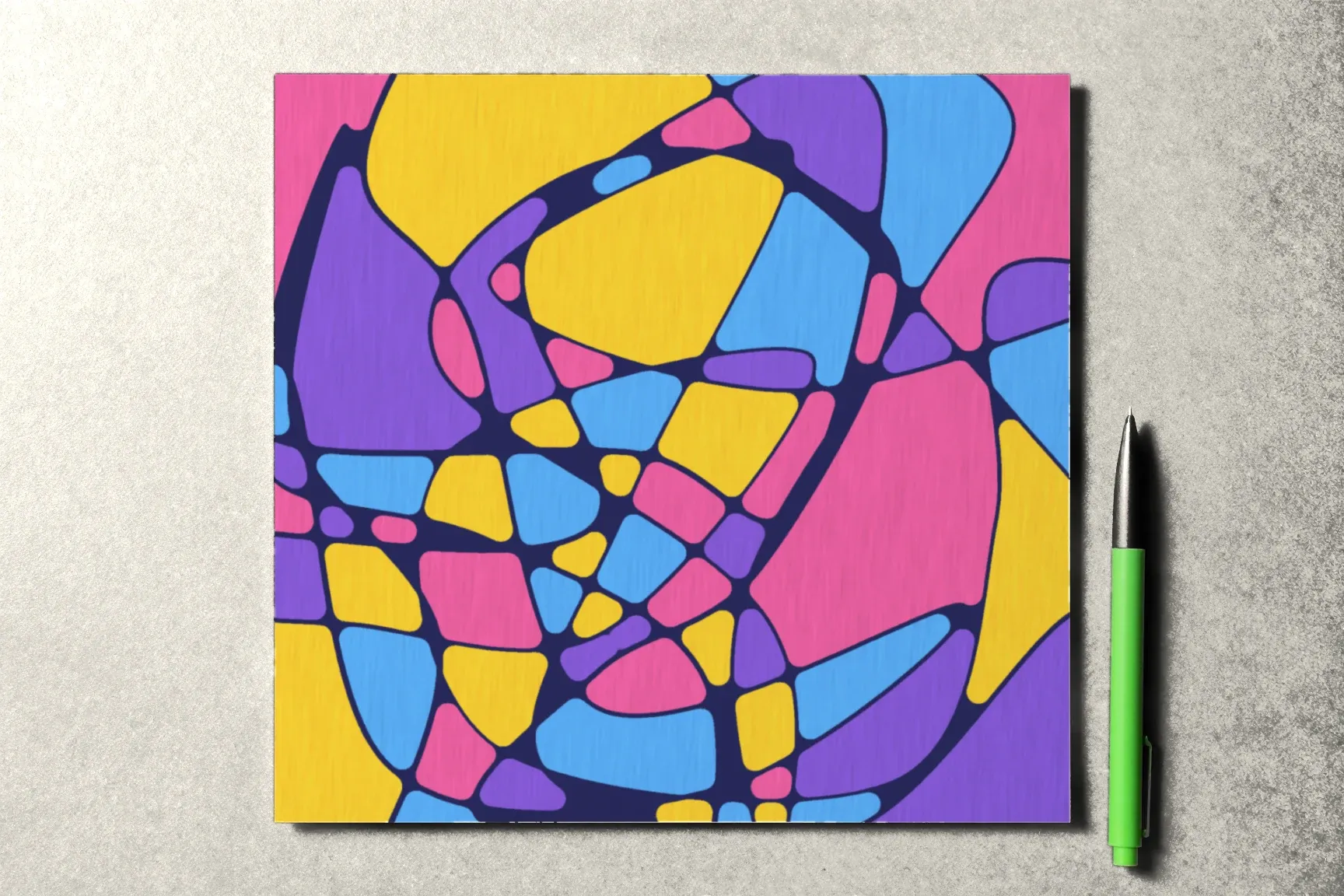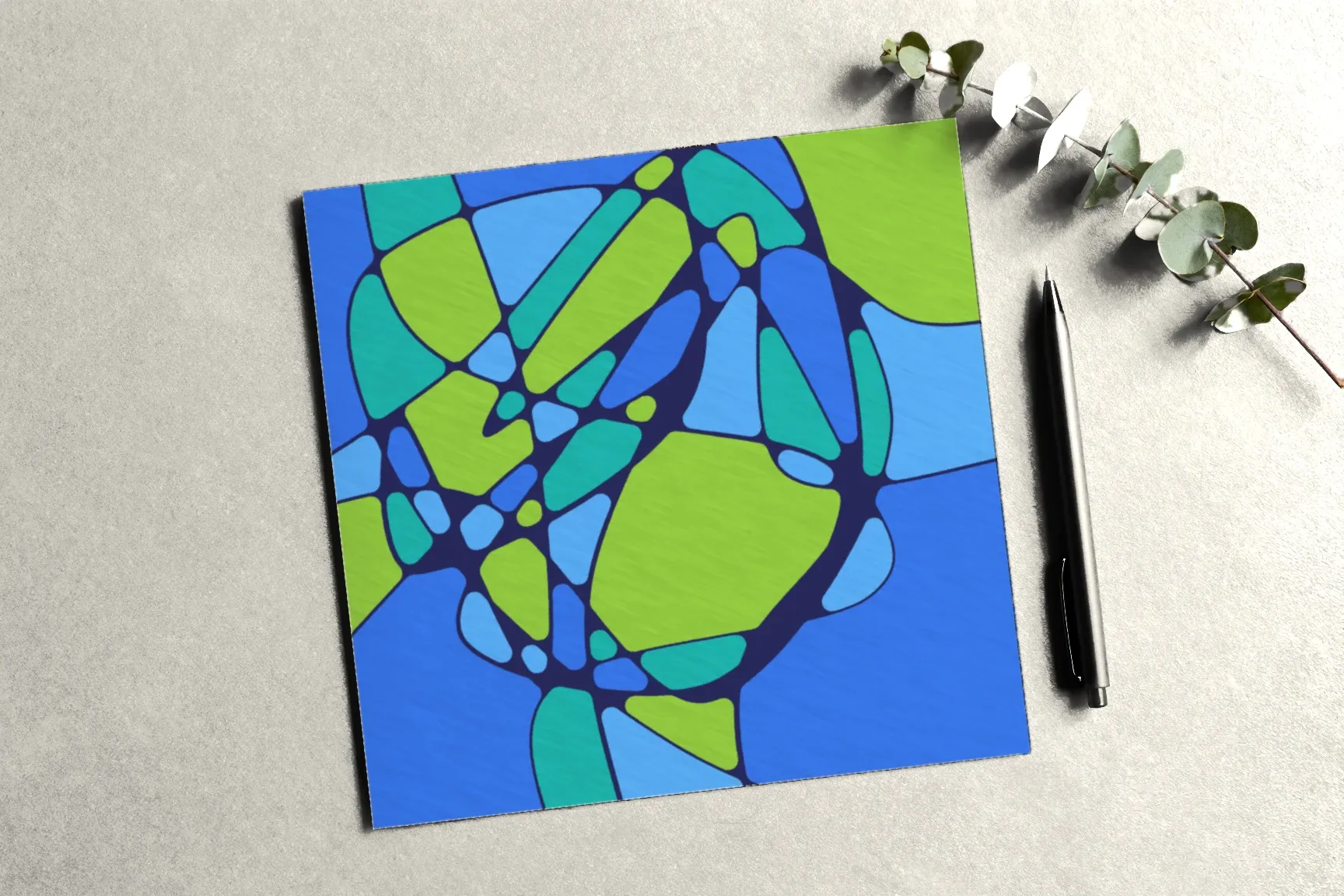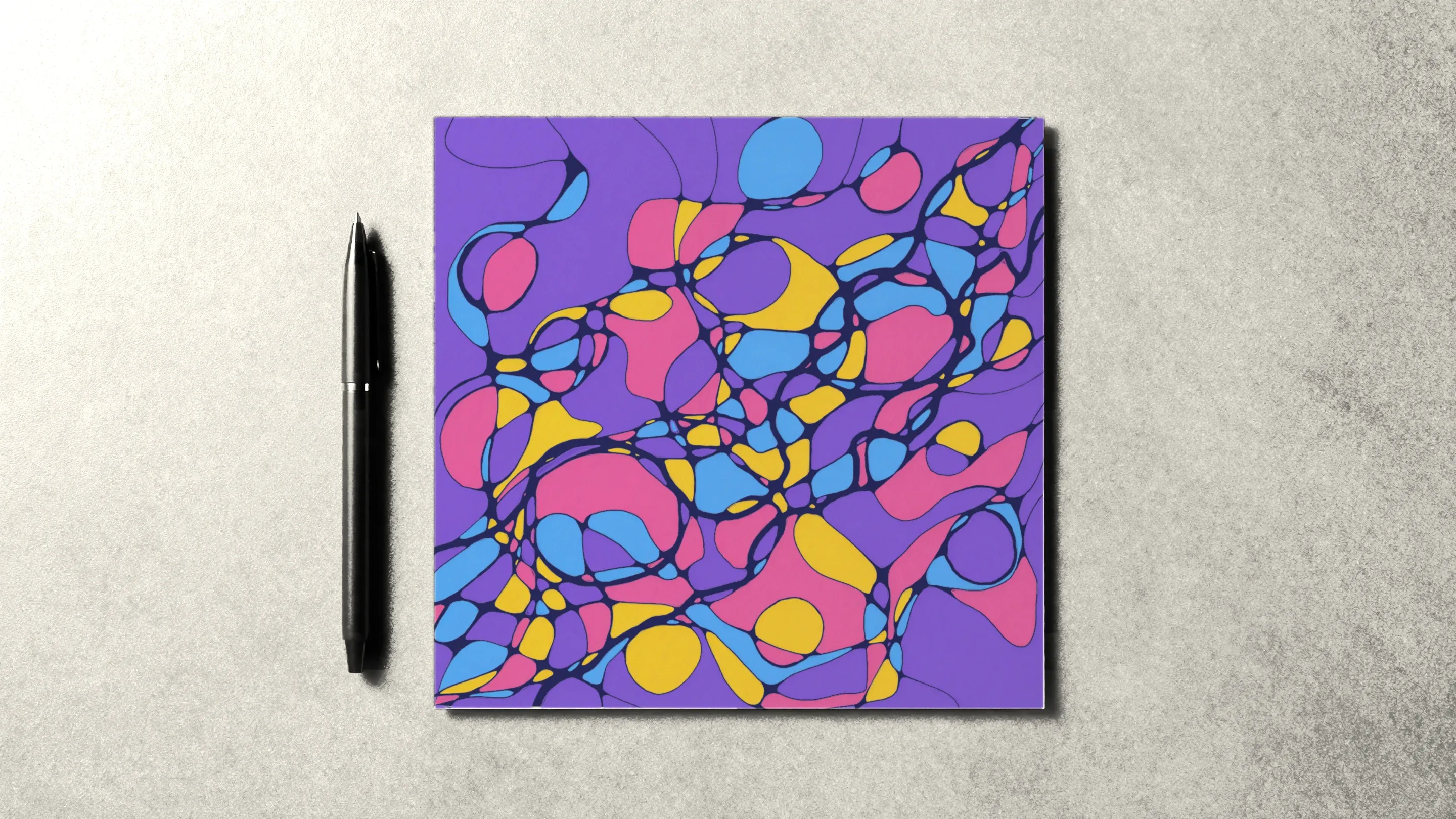
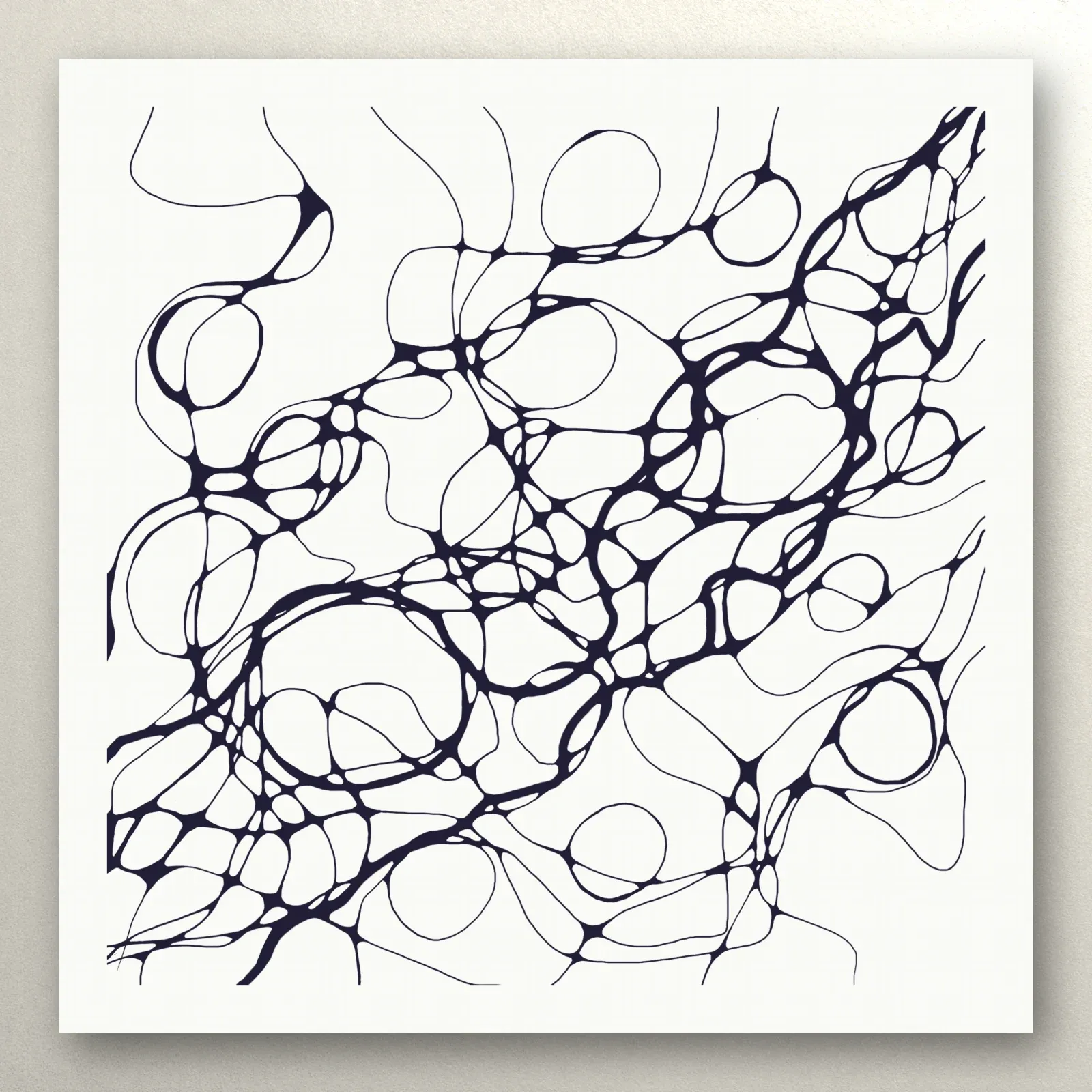
Neurographic art is a way of drawing without a plan. You run a free line across the whole page, round off the corners where lines cross, and color the shapes that appear. You don’t need to know how to draw: there is no correct result to measure yours against.
Where the name comes from
The method was described in 2014 by psychologist Pavel Piskarev. The “neuro” in the name is part of the idea: he tied drawing to the way we think and suggested working through what holds us back on paper. Within a few years the practice spread far beyond its original school. In English it’s searched for as neurographic art, and there are thousands of drawings in the style online.
It helps to separate the name from a promise. “Neuro” describes an approach, not a proven effect on the brain. What research actually says about drawing and how we feel is a topic for its own article.
Three steps: line, rounding, color
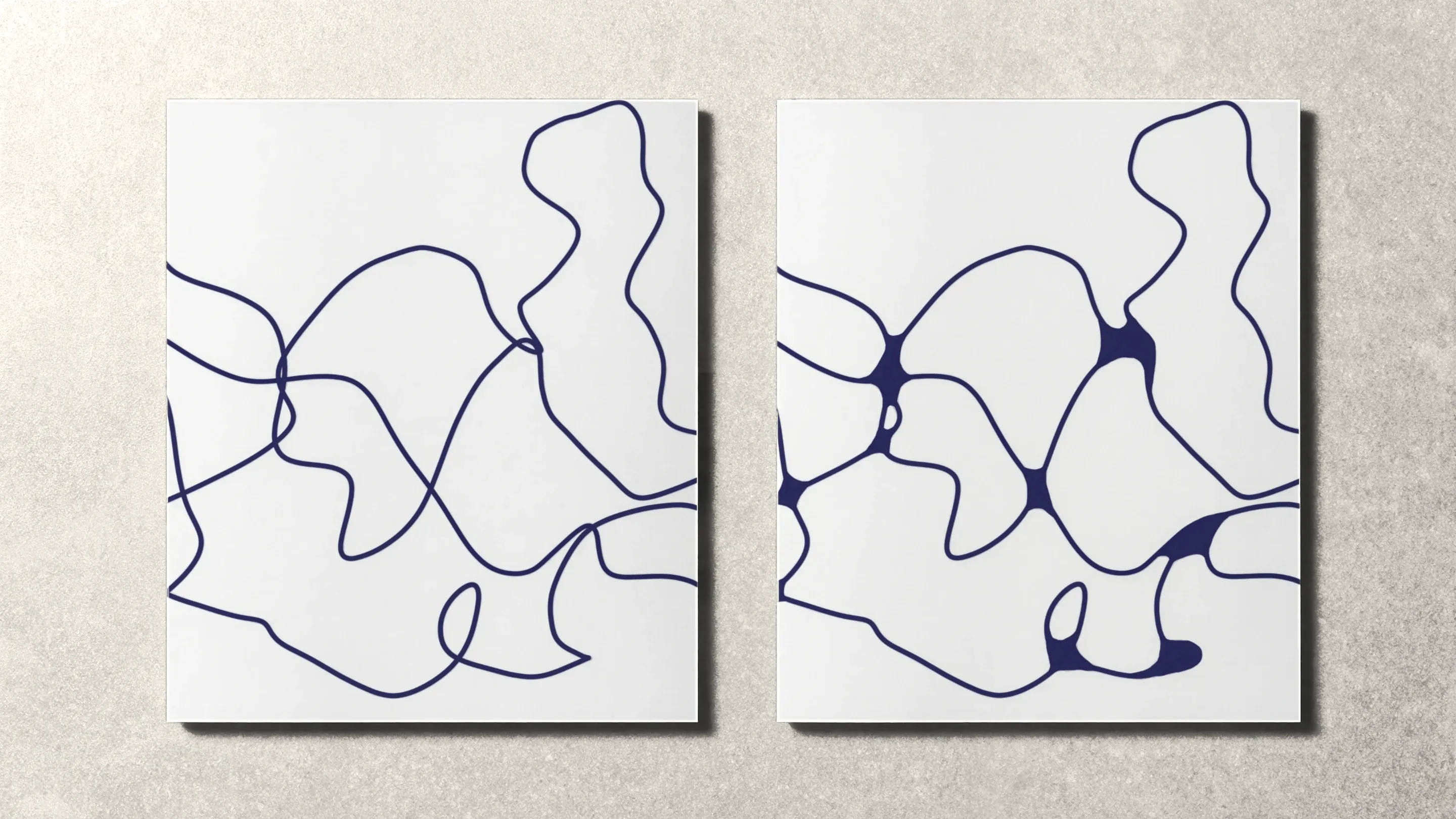
Line. The first line is free and unplanned. It starts off the edge of the page and ends off the edge, turning, looping and crossing itself. You draw it slowly, without lifting your hand.
Rounding. Wherever lines cross, they form sharp corners. You soften each one by adding a small curve at the intersection, so the corner becomes smooth. This step changes the drawing the most: tangled lines start to read as one connected web.
Color. The spaces between the lines are filled with color — all of them, some of them, or none. Neighboring shapes usually get different colors.
What an algorithm is
Besides free drawing, neurographic art has algorithms — sequences of steps built around a theme. One might start from an “obstacle” on the page and grow the drawing around it, step by step. An algorithm doesn’t tell you what to draw. It sets the order of the steps, and the lines stay yours.
What it is not
It isn’t art therapy: there’s no licensed professional in the room, and a drawing doesn’t replace treatment. It isn’t a test of talent: there’s no good or bad outcome. And it isn’t a coloring book: you make the outline yourself instead of filling in someone else’s.
For many people, neurographic art is a way to slow down and move their attention from their thoughts to the page for half an hour. That alone is a good reason to try it.
Neurographic art and transformational drawing
In the Neurojournal course we call this practice transformational drawing. The steps are the same: the free line, rounding, color, and themed algorithms. How we teach it is covered in our article on the technique.
What comes next
The technique is broken down step by step in What Is Transformational Drawing?, and how to draw your first line is in The First Line. The first lesson of the course is open without an account — start there.