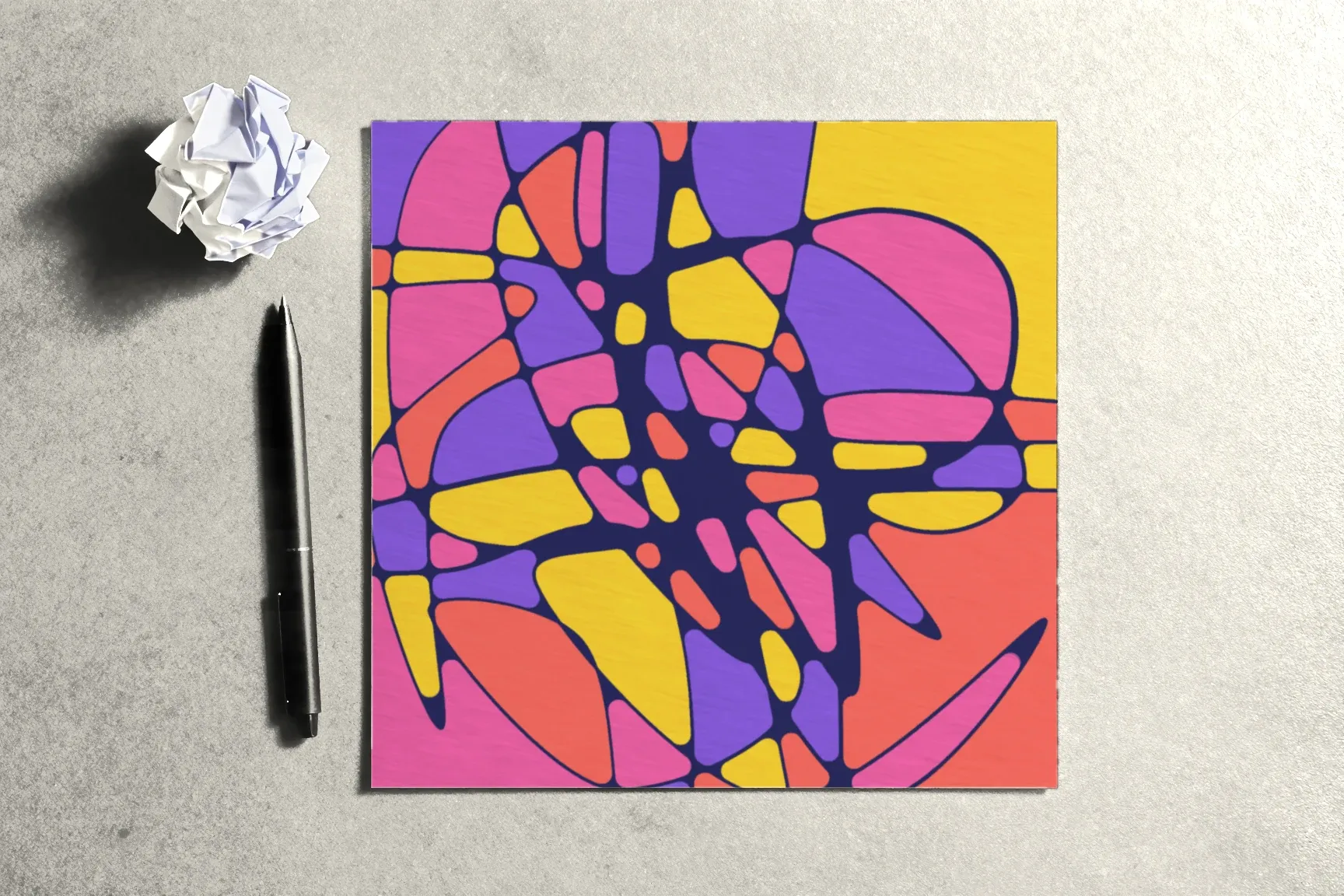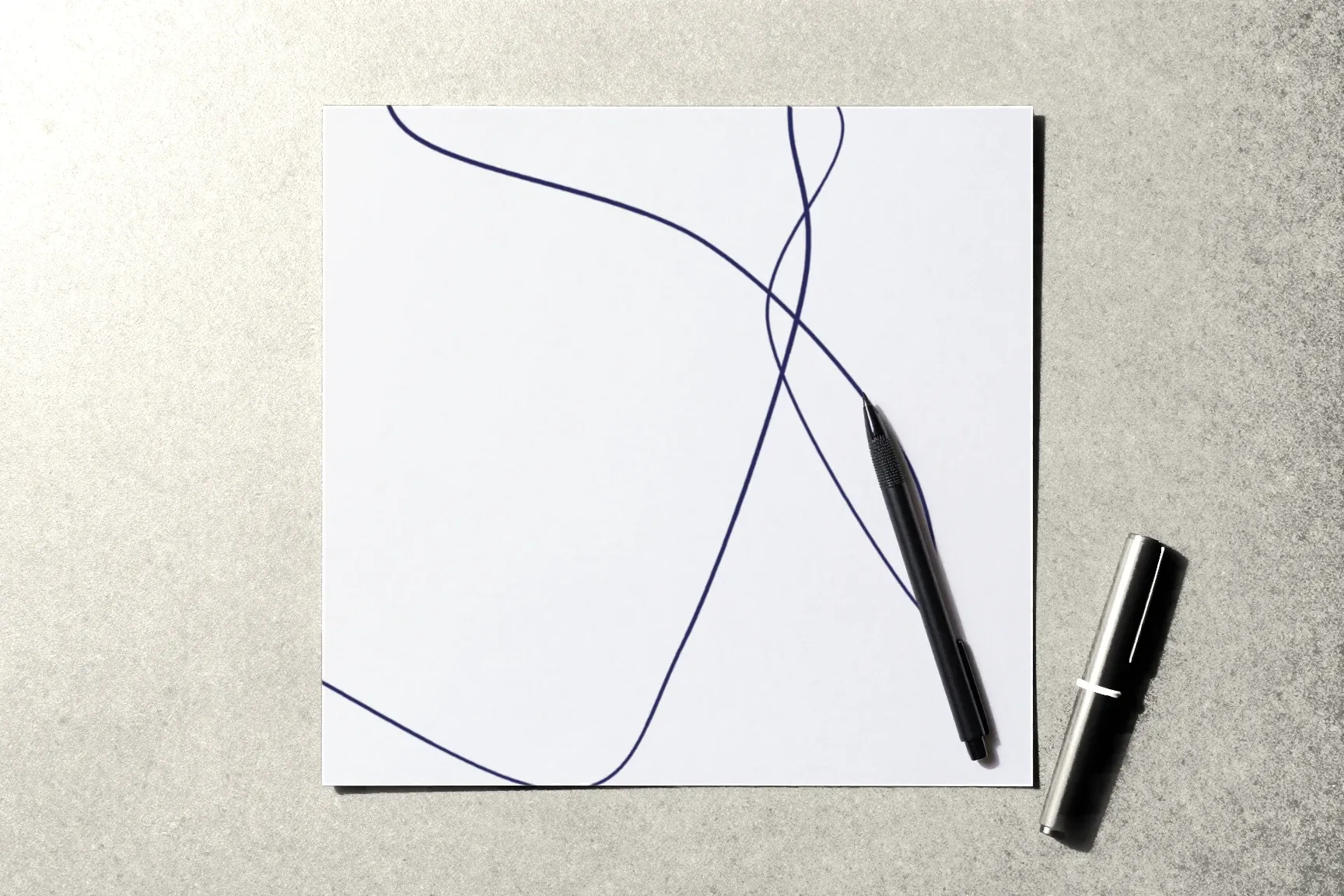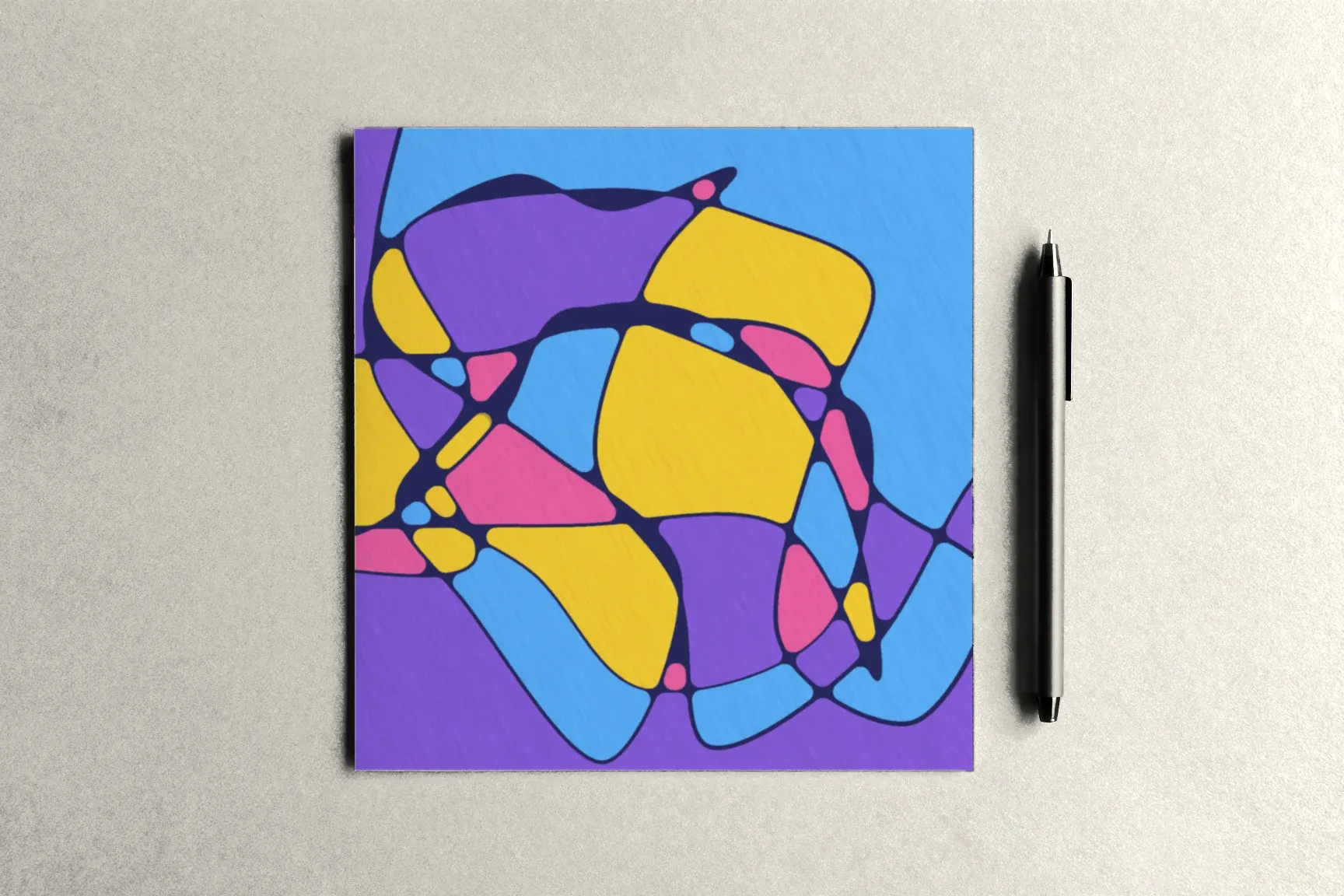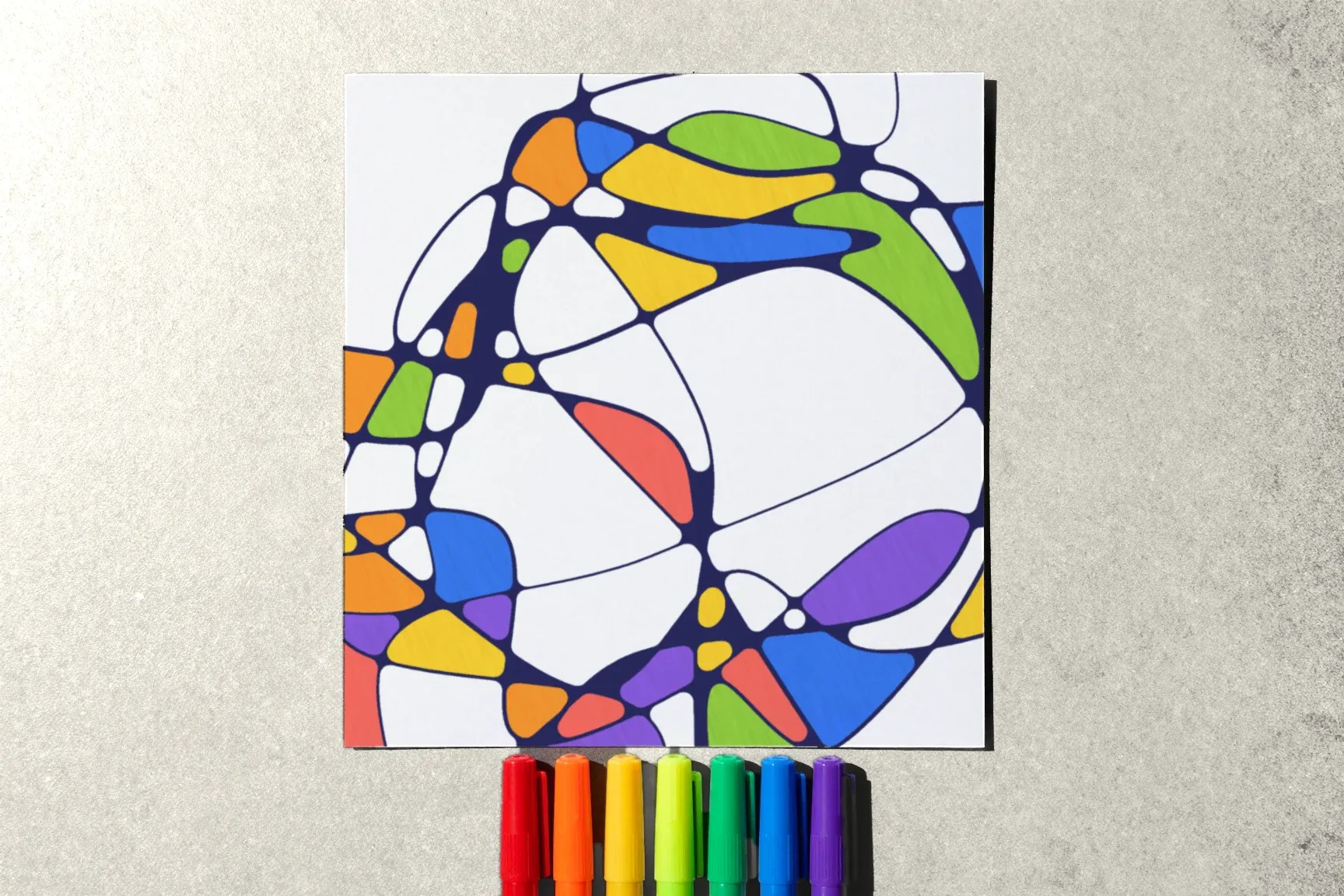
One try isn’t enough to make the technique feel familiar, and jumping straight into the algorithms is too much. A week of short sessions sits in between: one step of the technique each day, and at the end, a complete drawing and a look back at what you made.
Here’s a seven-day plan, 20–40 minutes a day. You can start on any day of the week, and if you miss a day, just pick up where you left off.
What you’ll need for the week
- 10–15 sheets of paper, preferably 120 gsm or heavier;
- a black 0.3–0.5 mm fineliner for lines and a bolder pen for rounding;
- 4–6 colored markers or pencils;
- scrap paper for warming up;
- your phone, to photograph each page, or a practice journal.
More on the kit in What You Need to Start Drawing.
Day 1: your first page
Time: 30–40 minutes.
Draw three free lines across the whole sheet and round every crossing. Nothing else. The goal of day one is to go through the two main steps from start to finish and see how the drawing changes.
If the technique is brand new to you, start with What Is Transformational Drawing?
Day 2: the line
Time: 20–30 minutes.
Five minutes of warm-up on scrap paper: a line with your eyes closed, a line with your other hand. Then a fresh sheet — four or five lines, each running edge to edge. Watch that the curves don’t repeat. Round the crossings.
Helpful reading: The First Line and A 5-Minute Warm-Up.
Day 3: rounding
Time: 20–30 minutes.
Today the focus is rounding. Use a template with the lines already drawn from the course (you can print it), or quickly draw five or six lines without thinking about them — today they’re just raw material. Round every crossing, paying attention to the depth of each curve and the order you work in. At the end, turn the page around and look for missed corners.
Helpful reading: Rounding the Intersections, Step by Step and 7 Rounding Mistakes and How to Fix Them.
Day 4: shapes
Time: 30–40 minutes.
A new sheet: three lines, rounding. Then a circle — freehand, wherever your hand wants to put it. Run one or two lines through it to the edge of the page and round the new crossings. If you have time, add a triangle or a square.
Helpful reading: Shapes on the Lines.
Day 5: color
Time: 30–40 minutes.
Take one of the pages from the previous days and color it. Choose three to five colors, spread each one across the whole page, and give neighboring cells different colors. Leave a few cells white.
Helpful reading: How to Color Your Drawing and Fall Drawing Ideas.
Day 6: a free page
Time: 40–60 minutes.
Everything together, however you like: warm-up, lines, rounding, a shape, color. No assignments today except one: finish the page. For how to tell when it’s done, see How to Know When a Drawing Is Finished.
Day 7: a look back
Time: 15–20 minutes.
Don’t draw anything. Lay out all the week’s pages side by side, from first to last, and look at them together. A few questions worth answering in writing:
- How is the first page different from the last?
- Which step came most easily, and where did your hand hesitate?
- Which page do you like best, and why?
- What do you want to try next: a denser drawing, different colors, an algorithm?
Photograph the pages and keep your answers together with the photos.
If you miss a day
No problem. Just continue from the day you stopped at. The plan is built for a week, but it can stretch to two — what matters is the sequence, not the dates.
After the week
If you enjoyed the week, the next step is the algorithms: sequences of nine or ten steps where every action has its place. More on them in What a Drawing Algorithm Is. For a structured path lesson by lesson, there’s the Neurojournal course: the first module is open without an account — start there.